Vintage Bale Profit Calculator: Honest Numbers Before You Buy
Most bale profit calculators online stop at "buy low, sell high." They don't tell you what to do with the 30% of your bale that's Grade B, how platform fees eat into your margin, or why a bale of…
By Patrick Libanon — founder, Excellent Vintage · Bovenkarspel, since 2012
Most bale profit calculators online stop at "buy low, sell high." They don't tell you what to do with the 30% of your bale that's Grade B, how platform fees eat into your margin, or why a bale of jeans earns less per kilo than a bale of shirts even though they weigh the same. This guide does.
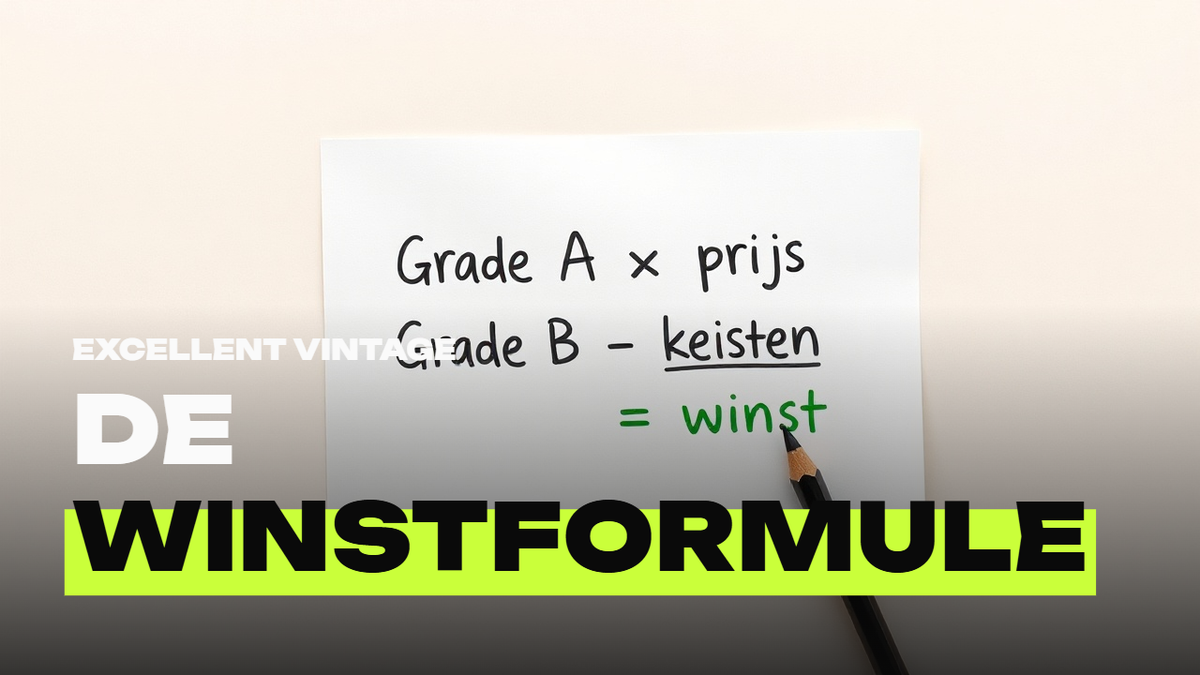
The formula in one place (40–55 words)
Profit per bale = (Grade A pieces × average Grade A selling price) + (Grade B pieces × average Grade B selling price) − bale cost − platform fees − packaging − shipping
That's it. Everything below fills in each variable with realistic, checkable figures.
Why most profit estimates are wrong from the start
Here's what the blogs selling you the dream don't explain: there are two fundamentally different bale models, and they require different math.
By weight. The bale weighs ~45 kg. Piece count follows from category. Patrick at Excellent Vintage — who has been handling bales since the warehouse opened in Bovenkarspel in 2012 — will tell you upfront: a T-shirt bale at roughly 5 pieces per kilo gives you around 225 items. A denim bale at ~0.7 pieces per kilo gives you around 31 items. Same weight, completely different unit economics.
By piece. Some bales come with a fixed count rather than a fixed weight. A Ralph Lauren shirt bale is 200 shirts. A Tommy Hilfiger sweater bale is 100 sweaters. Weight doesn't land precisely at 45 kg — the piece count is what matters, and that's what you model.
Conflating the two models is one of the most common reasons beginners miscalculate. Know which type you're buying before you run a single number.
Building your profit model, step by step
Let's run a complete example: a T-shirt bale, sold by weight, 45 kg.
Step 1 — Count your pieces At ~5 T-shirts per kilo, 45 kg = ~225 pieces.
Step 2 — Apply the grade split At Excellent Vintage, a standard bale averages 70% Grade A (no defects) and 30% Grade B (minor defects). On 225 pieces: 157 Grade A + 68 Grade B.
Step 3 — Estimate realistic selling prices This is where honest analysis matters. On Vinted, listing prices for vintage T-shirts span a wide range depending on brand and condition. For illustrative purposes: Grade A pieces without a recognizable brand might land at €8–12; Grade B at €3–6. Name-brand items — Levi's, Ralph Lauren, Carhartt — push those averages up significantly.
Step 4 — Gross revenue Using midpoints as illustration:
- Grade A: 157 × €10 = €1,570
- Grade B: 68 × €4 = €272
- Gross: €1,842
Step 5 — Subtract real costs
- Bale cost: get a quote from your wholesaler — ask Excellent Vintage via WhatsApp or during a visit
- Vinted commission: ~5% platform fee + €0.70 per listing → on €1,842 gross: ~€95
- Packaging (bags, labels, tape): ~€30 per bale
- Shipping: ~€3.50 per parcel with business PostNL/Sendle rates → 225 × €3.50 = ~€787
Step 6 — Net profit Assuming a bale cost of €700 (illustrative placeholder — your actual quote will differ by category and volume): €1,842 – €700 – €95 – €30 – €787 = €230
That's a slim margin. Now watch what happens when you move to brand T-shirts at €14 average for Grade A:
- Grade A: 157 × €14 = €2,198
- Grade B: 68 × €5 = €340
- Gross: €2,538
- Net after same costs: €926
Brand selection is the single biggest lever in your profit calculation — not shipping tricks, not platform hacks.

Category matters more than bale weight
The category you pick changes your unit economics completely. Here's what the math looks like across four common categories from a 45 kg by-weight bale:
Figures before platform fees, shipping, and bale cost. Per-piece bales (e.g., 200 RL shirts) use the stated count — not the kg ratio.
Jeans have the lowest piece count and the widest price variance. T-shirts have the highest piece count but the most competition on Vinted. Sweatshirts offer the best upside per piece — but you have fewer of them, so a bad batch stings harder.
The Grade B problem — and how to solve it
A third of your bale is Grade B. The reflex is to dump it cheaply. That's a mistake that costs real money.
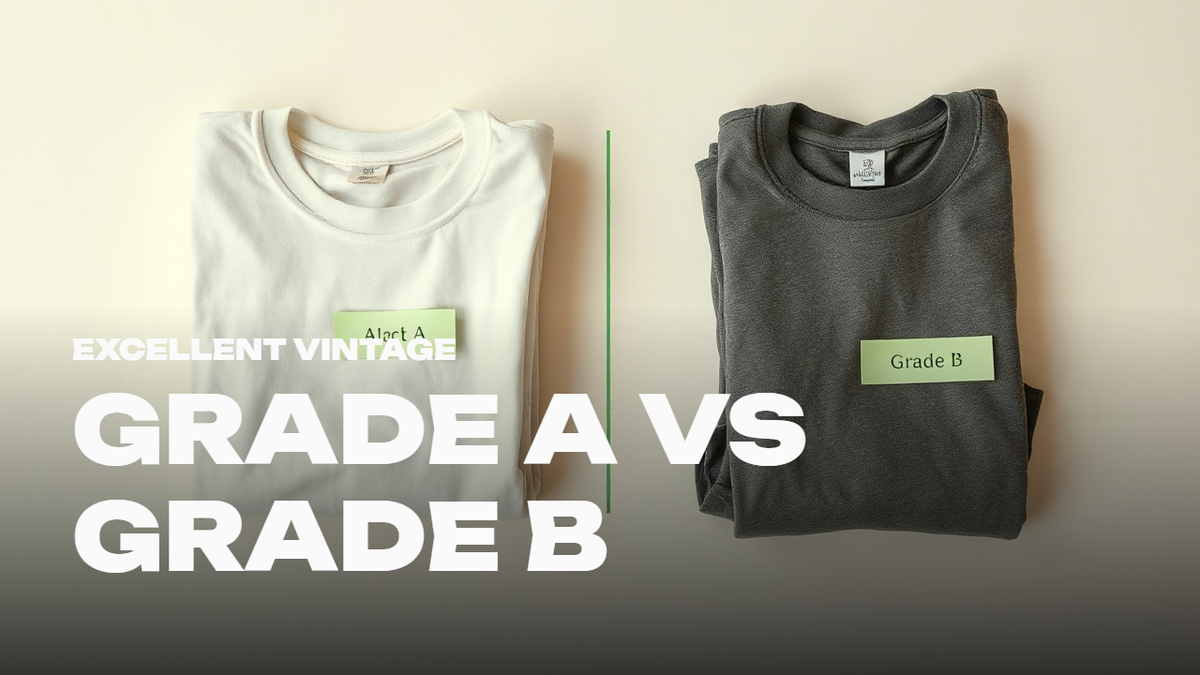
Grade B at Excellent Vintage means a minor defect — a small stain, light fading, a loose thread. The garment is wearable. Patrick has watched resellers over twelve years handle this in three ways:
Bundle selling. Three Grade B T-shirts for €9 moves faster on Vinted than three individual €3 listings. Less friction, comparable revenue.
Platform arbitrage. Grade B Carhartt or Levi's denim — worn, used-looking, beat up — sells well on Whatnot livestreams where "character" is a feature, not a flaw. The same item might sit for weeks on Vinted at €4.
Upcycling margin. Grade B pieces become raw material for print-on-demand overlays or patchwork. Outside the bale calculator, but a legitimate second revenue layer.
The resellers who treat Grade B as a loss have a broken model. The ones who build a Grade B strategy see margins 15–25% higher than their calculation predicted.
Platform breakdown: where your bale earns more
The same bale, sold across different platforms, produces different net margins. Here's the honest comparison:
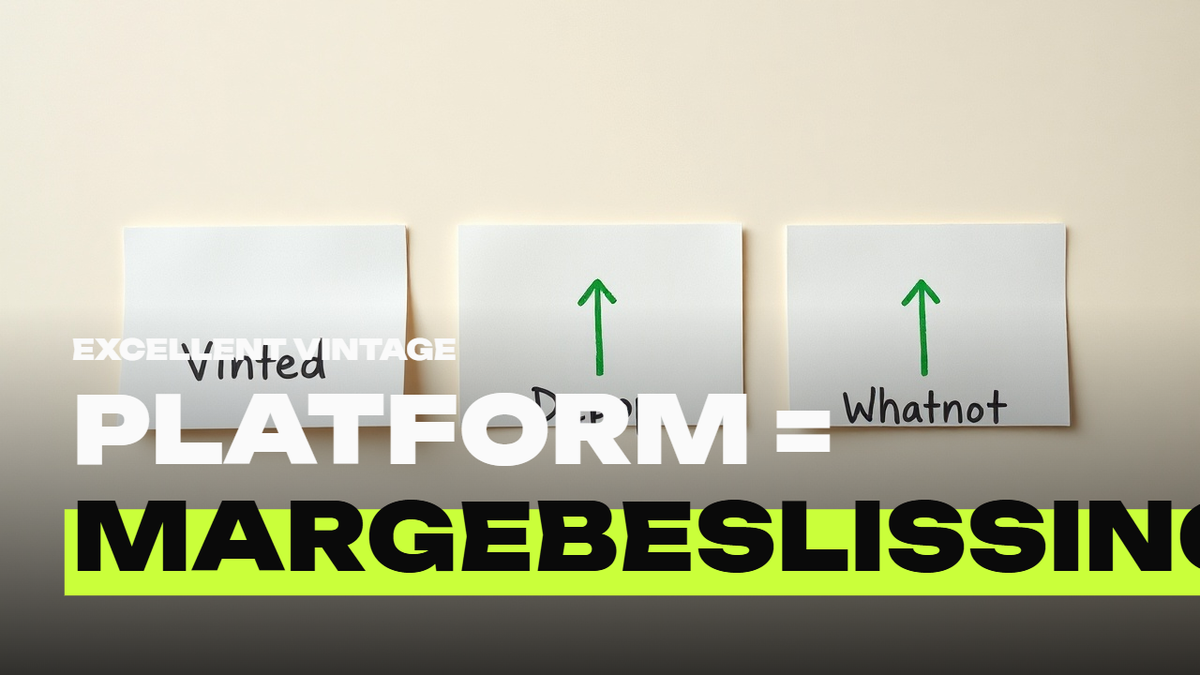
Vinted: large NL/BE audience, low barrier to sell, ~5% fee + €0.70 shipping insurance per parcel. Best for volume — you need to move 225 pieces as fast as possible. Lower average price per item, but the throughput is there.
Depop: higher average selling price for fashion-forward pieces, international exposure, but slower velocity in the Netherlands. Best for 25 kg bags of niche premium US mix (Hawaiian shirts, workwear) rather than bulk T-shirt bales.
Whatnot / live selling: this is where sport and techwear brands (Nike Tech, Adidas Originals, The North Face Nuptse) earn a premium. A single Ralph Lauren Polo Bear sweater that sits on Vinted at €45 can draw bids to €80–120 on a livestream where the context is right. Patrick calls this the "stream stopper" effect — one iconic piece drives the entire session's engagement.
Your bale calculator is partly a platform selection tool. Splitting your inventory across channels by category and condition consistently outperforms single-platform selling.
The costs resellers forget to model
Shipping is bigger than you think. On a T-shirt bale, 225 parcels at €3.50 each = €787. That's often more than the bale cost itself. Volume resellers who negotiate PostNL business rates or use Vinted's in-app labels consistently cut this by €0.50–1.00 per parcel — which compounds to €112–225 per bale.
Time has a price. Sorting, photographing, listing, and shipping 225 items takes hours. If you're a part-time reseller treating those hours as free, your profit calculation is optimistic. The Pre-Loved secondhand industry income survey (2025, n=60+ business owners) found that 81% of full-time resellers earn below a living wage — often working 80+ hours per week. That doesn't mean bales aren't profitable; it means time must be in the model.
Grade B is not zero. Modeling it as zero — either pricing it at €0 or throwing it away — inflates your apparent loss and depresses your margins. It has value if you route it correctly.
B2B VAT. If you're buying from a Dutch wholesaler with a valid KvK number and EU VAT number, the reverse charge (btw verlegd) applies — you pay no VAT at point of purchase. Your bale cost is net of VAT, which is the figure you use in your profit model. Selling side VAT treatment depends on your business structure — consult your accountant, this article isn't tax advice.
Don't rely on one bale
Patrick has processed 15 to 20 tonnes per month in Bovenkarspel since Excellent Vintage opened in 2012. One thing he tells every new reseller visiting the 2,500 m² warehouse: the averages hold across batches of ten bales, not across one. One bale with an unusually high Grade A ratio will make your model look better than it is. One with more Grade B than average will make it look worse.
The honest calculator is built on batches, not on single events.
Frequently asked questions
How much profit can you realistically make from a vintage bale?
On a 45 kg T-shirt bale (70/30 Grade A/B, ~225 pieces), with brand items averaging €14 per Grade A piece on Vinted, gross revenue before costs lands around €2,500. After platform fees (~5%), shipping (~€787 for 225 parcels), and packaging (~€30), a bale bought at €700 yields roughly €900 in net profit. Category, brand selection, and platform mix each shift this number significantly.
What is the grade split on a typical vintage clothing bale?
At Excellent Vintage, a standard bale averages 70% Grade A (no defects) and 30% Grade B (minor defects). A 25 kg bag of "mix premium US" (niche premium) runs approximately 90% Grade A and 10% Grade B. Grade C items (holes, bleach damage) are handled separately and are not included in standard bales.
Is a by-weight bale or a by-piece bale better for resellers?
Neither is inherently better — it depends on category and strategy. Per-piece bales (e.g., 200 Ralph Lauren shirts) are more predictable: you know exactly what you're getting. Per-weight bales give you more flexibility in category selection during a warehouse visit. What matters most is knowing which model you're buying and applying the correct math.
What are the biggest costs in a vintage bale business?
Shipping is typically the largest line item when selling at volume — 225 parcels at €3.50 each is €787, often exceeding the bale cost. Platform fees (~5% on Vinted), packaging, and your own time are the next biggest factors. Many beginners model bale cost and platform fees correctly but underestimate shipping.
The number that matters most
You can model every variable in this calculator — pieces per kilo, Grade A/B split, platform fees, shipping rates. The one variable you still need to get from a wholesaler is the bale cost. That figure shifts everything else.
At Excellent Vintage, with 14 containers arriving per year from 3 US and 6 EU sourcing partners, the inventory is real and the pricing reflects actual market conditions — not theoretical blog estimates. Patrick discusses bale pricing directly, either on WhatsApp or during a warehouse visit in Bovenkarspel.
Ready to run your actual numbers? Start by exploring our vintage wholesale offer or book a warehouse visit — Patrick prepares bale options matched to your target category and budget before you arrive.
Want more on building your reselling income? See also how to grow from €1,000 to €3,000 per month reselling vintage and the five mistakes new vintage resellers make.
Read also: everything about starting vintage reselling with €1,000.
Ready to buy?
Visit our warehouse · no deposit required · free cancellation.