Visiting a Vintage Wholesale Warehouse in the Netherlands: A Guide for Foreign Buyers
If you resell vintage anywhere in northern Europe, the sourcing trail keeps pointing to the same place: the Netherlands. It is one of the continent's real hubs for secondhand and vintage clothing at…
By Patrick Libanon — founder, Excellent Vintage · Bovenkarspel, since 2012
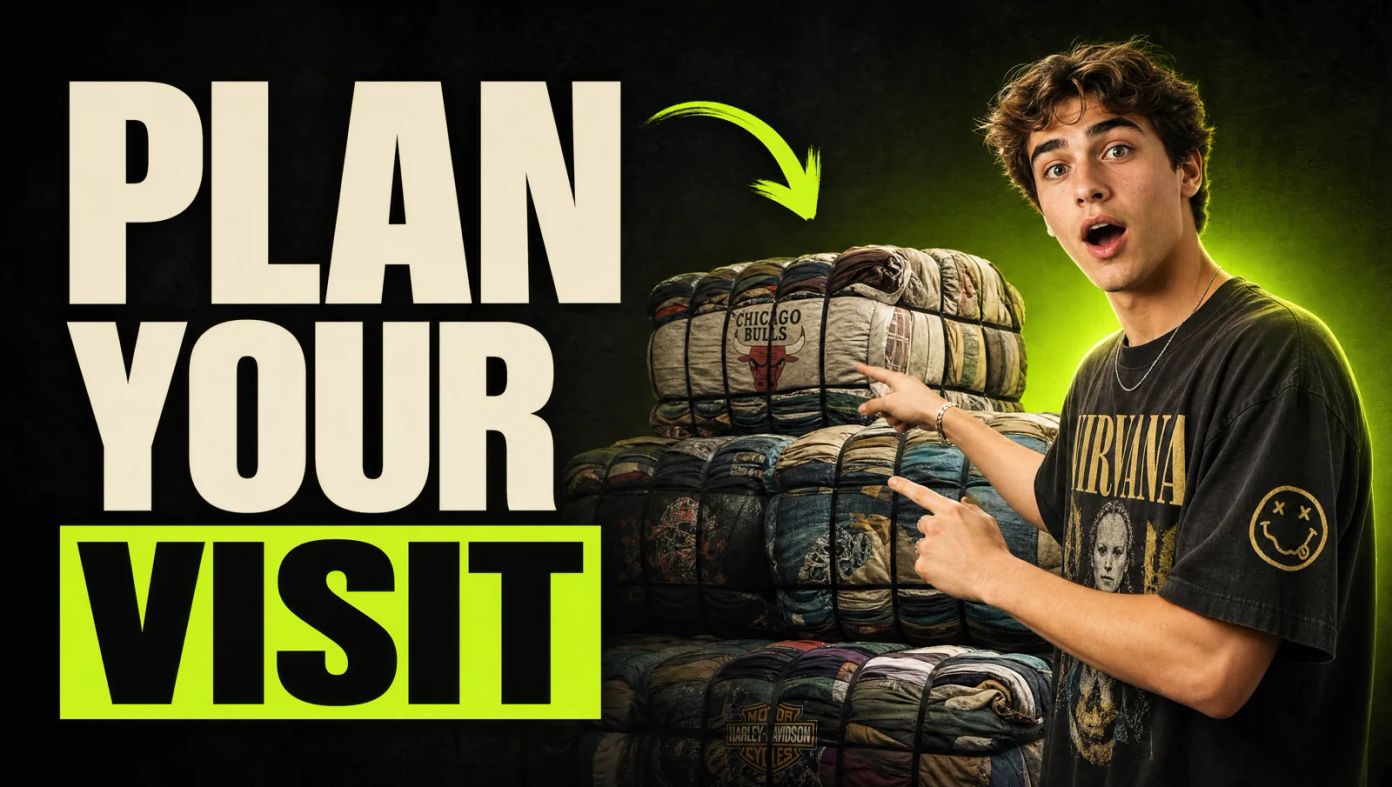
If you resell vintage anywhere in northern Europe, the sourcing trail keeps pointing to the same place: the Netherlands. It is one of the continent's real hubs for secondhand and vintage clothing at volume — the containers land here, the sorting happens here, and the bales that feed resellers across Germany, Denmark and beyond get made up here. So for a buyer based abroad, a question comes up early: is it worth actually travelling to a Dutch warehouse to source in person, or should you just order online and hope for the best?
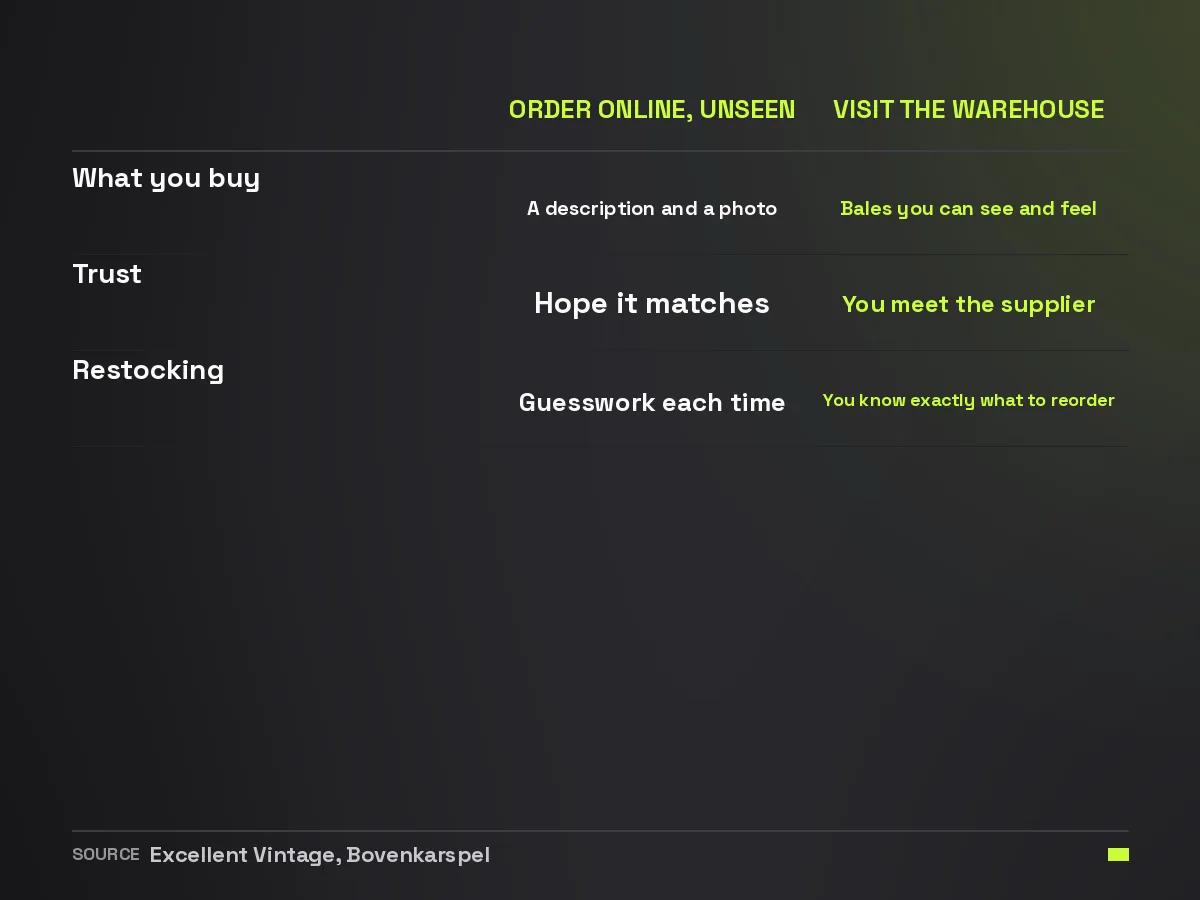
Having a physical warehouse to walk into is exactly what separates a considered purchase from a gamble. You get to see the stock, feel the quality, and shake the hand of the person you're buying from before any money changes hands. This guide walks a foreign buyer through what that trip looks like: how to reach the warehouse, what a visit actually involves, how the VAT works when you're based in another EU country, and why you buy whole bales here — sorted by brand and grade — rather than piece by piece.
Excellent Vintage has run from a 2,500 m² warehouse in Bovenkarspel, in the north of Holland, since 2012. Patrick, who runs the operation and welcomes every visitor personally, has been in the trade for 32 years and speaks English directly — no interpreter, no chatbot. Between 15 and 20 tonnes of clothing move through the floor each month.
Why source vintage from the Netherlands
The Netherlands sits at the centre of Europe's vintage supply chain for a practical reason: the goods flow through it in serious quantity. Our own intake runs to fourteen containers a year — eight to fourteen tonnes each — arriving monthly from three US partners on the East, South and West coasts and six European ones. That constant stream of American and European stock is what lets a warehouse here sort at scale and offer bales made up of a single brand and a known grade, rather than a random pile.
For a buyer coming from Germany or Denmark, there is a second advantage on top of the supply: it's all inside the EU. There are no customs duties on an intra-EU purchase, and the paperwork is straightforward. You're not importing from another continent and dealing with a customs broker; you're buying from a neighbouring EU country and driving or flying home. That combination — deep, fresh supply plus frictionless intra-EU trade — is why the trip is worth making rather than sourcing further afield.
Reaching the warehouse from abroad
Bovenkarspel is easier to reach than its name suggests. If you're flying in, Amsterdam Schiphol is the obvious gateway. From the Amsterdam area the warehouse is about 45 minutes by car, or roughly an hour by direct train from Amsterdam to Bovenkarspel-Grootebroek station — so even without a car you can get to the floor and back in a day. If you're driving up from Germany, you're simply following the motorway network into the north of Holland and parking free of charge at the door.
That accessibility matters more than it looks. A sourcing trip that takes a single day — fly or drive in, spend a couple of hours on the floor, head home with a car full of bales or a quote in hand — is something you can repeat whenever your stock runs low. It turns a one-off expedition into a supplier relationship you can actually maintain from another country.
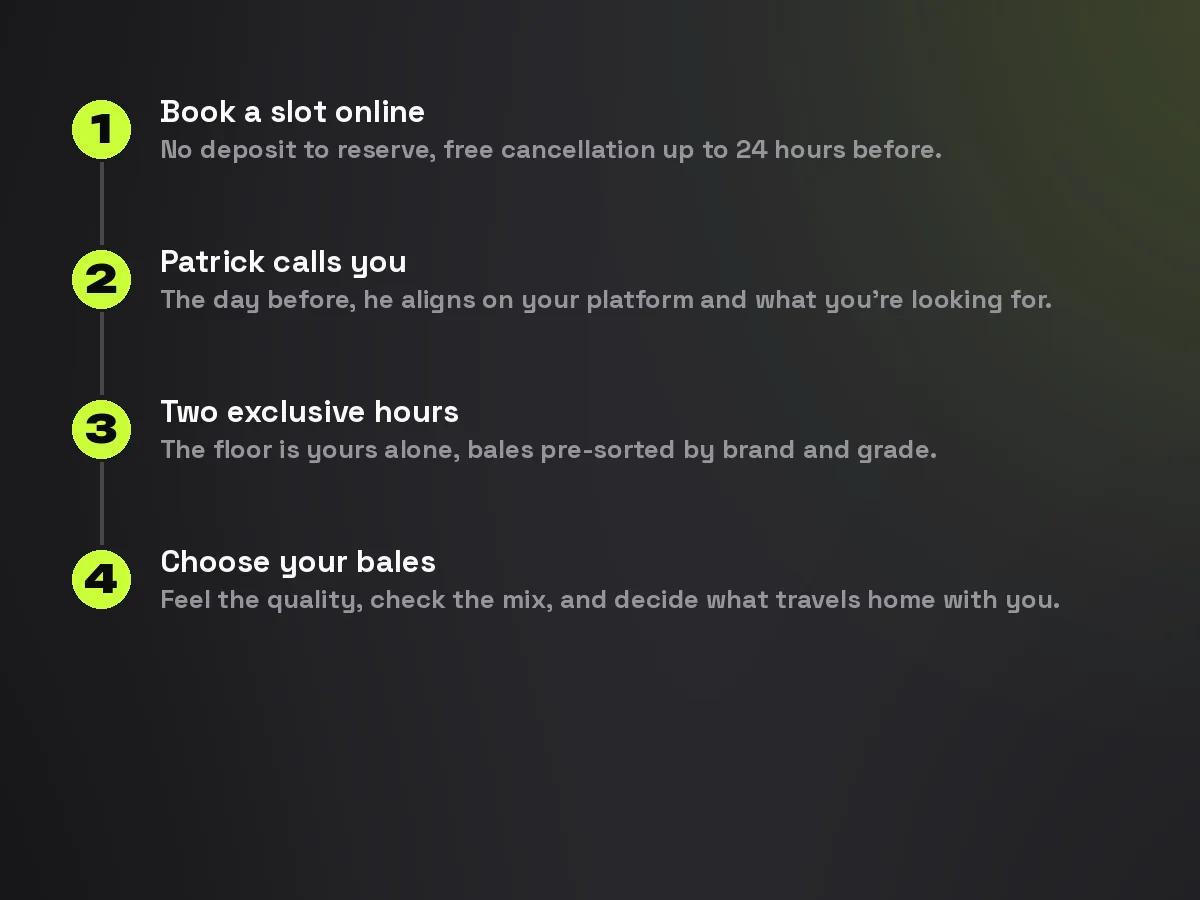
Plan your sourcing trip to the Netherlands Tell Patrick which platform you sell on and the volume you run, and he'll have the right bales ready when you arrive. No deposit, free cancellation up to 24 hours, and the floor is yours for two exclusive hours. Book a warehouse visit
What a visit actually involves
We work strictly by appointment, and that's deliberately in your favour. Walk in unannounced and you'd be sharing the floor with three other buyers, with nobody free to help you properly. Book a slot and the warehouse is yours for two hours. Patrick sets aside the bales that fit your profile — already sorted by brand and grade — so you're not digging through a mountain but looking straight at what's relevant to your audience.
Booking carries no friction. You don't put down a deposit to hold a slot, and you can cancel free of charge up to 24 hours before if your plans change. The day before your visit, Patrick calls you to align on what you sell and where — so the right selection is waiting when you arrive rather than costing you your two hours in searching. If you want to know exactly how a visit unfolds before you commit to the drive, we've written it up in detail in what to expect when visiting the warehouse.
Why you choose bales, not handpicked pieces
At a wholesaler you choose at bale level, not piece by piece — and there's a logic to that which works in your favour. With 15 to 20 tonnes moving through the floor each month, picking every garment individually simply wouldn't be possible, and it isn't necessary: the sorting is already done. Because the intake is separated by brand and grade before you arrive, you're choosing a predictable, defined unit rather than gambling on a rummage.
What you do on the floor is assess and decide. You see the bales opened up, feel the fabric quality, check the density and the size spread, and choose which bales suit your platform and audience. A Whatnot streamer working at pace makes a different call than someone building a curated Depop boutique. The floor is the same; your strategy decides what goes home with you.
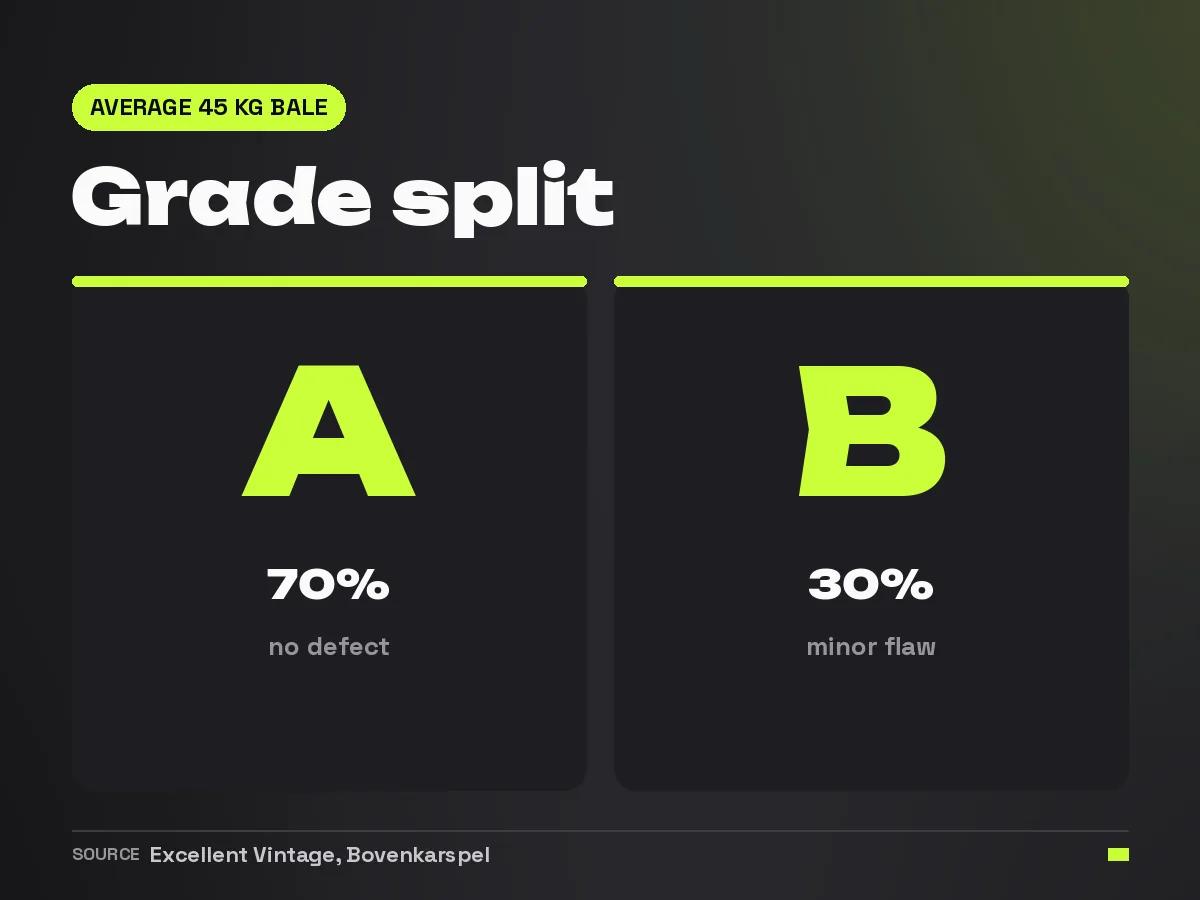
The bales themselves stay transparent. A 45 kg bale averages 70% Grade A — garments with no defect — and 30% Grade B with a minor flaw. Serious damage like a hole or a bleach mark falls under Grade C and is kept separate, never slipped in among your good stock. If you want the full mechanics of formats, grades and the sorting process, our complete guide to vintage wholesale clothing in the Netherlands lays it all out.
VAT and paperwork for an EU buyer
If you're a registered business elsewhere in the EU, the VAT side is simpler than many first-timers expect. On a B2B sale within the EU, VAT is shifted to the buyer under the reverse-charge mechanism — provided you have a valid company registration and EU VAT number. All of our markets sit inside the EU, so there are no customs duties on an intra-EU purchase and no import formalities to arrange. Bring your VAT number and the invoicing follows the standard intra-EU route.
Beyond that general principle, tax rules depend on your own country and situation, and we don't invent them — check with your accountant or ask us and we'll point you the right way. Payment on the day can be a SEPA transfer, card without surcharge, or cash on site, all excluding VAT. If this is your first bulk purchase and you want the groundwork, how to buy your first vintage clothing bale covers the basics.
Prefer to sound it out first over WhatsApp? Not sure whether to travel in or start with a video call? Message Patrick. He answers himself, usually within an hour on weekdays, in English. Message Patrick
Can't travel yet? Buy by video call
Not every buyer can make the trip straight away, and that's fine. If you can't get to Bovenkarspel, Patrick walks the bales with you over a WhatsApp video call — showing you what's on the floor, explaining the composition, making a quote and shipping it out. Heavy bales, fast shipping: that promise holds whether you come in person or buy remotely.
Even so, most serious buyers come in at least once. Seeing the warehouse, meeting Patrick, feeling the quality of the denim and cotton in your own hands — that's what builds the trust you then reorder on from another country for months. One visit turns an online name into a supplier you know.
Frequently asked questions
Can foreign buyers visit a vintage wholesaler in the Netherlands?
Yes. Buyers from Germany, Denmark and across the EU are welcome by appointment. The warehouse is in Bovenkarspel, about 45 minutes from Amsterdam by car or an hour by direct train. You book a slot with no deposit, get the floor exclusively for two hours, and Patrick — who speaks English — welcomes you personally and has bales ready that match your platform.
Do I pay VAT when buying vintage bales as an EU business?
If you have a valid company registration and EU VAT number, the sale falls under the reverse-charge mechanism, so VAT shifts to you as the buyer. All our markets are inside the EU, meaning no customs duties on an intra-EU purchase. Bring your VAT number; for anything specific to your country, check with your accountant or ask us.
Do I handpick pieces or buy whole bales?
You buy whole bales, not handpicked pieces. With 15 to 20 tonnes moving through the floor monthly, piece-by-piece picking isn't feasible — and it isn't needed, because the stock is pre-sorted by brand and grade. On the floor you assess quality and the size mix, then choose which bales fit your platform and audience.
How do I get to the warehouse from abroad?
Fly into Amsterdam Schiphol, then it's about 45 minutes on by car from the Amsterdam area, or roughly an hour by direct train from Amsterdam to Bovenkarspel-Grootebroek. Driving from Germany, you follow the motorway network into the north of Holland and park free at the door. A visit fits comfortably into a single day.
Ready to plan your visit?
The Netherlands is where Europe's vintage supply concentrates, and sourcing in person is what turns an anonymous online order into a supplier you trust. A single day — fly or drive in, two exclusive hours on the floor, home with a car full of bales — and you're buying from stock that's pre-sorted by brand and grade, from someone who welcomes you himself and speaks your language.
Want to see which bales are on the floor now and which suit your platform? Book a visit or message Patrick. There's more about what we offer on our wholesale page, and who we are on about Excellent Vintage.
See the bales in Bovenkarspel Book two exclusive hours on the floor. No deposit, free cancellation up to 24 hours, and Patrick calls you the day before to prepare your visit. About an hour from Amsterdam Schiphol. Book a warehouse visit
Ready to buy?
Visit our warehouse · no deposit required · free cancellation.