How Much Does a Vintage Clothing Bale Cost in the Netherlands?
Vintage clothing bale prices in the Netherlands vary by format (12.5 kg to 50 kg), grade (A, B or C), brand category and season. There is no fixed price list — each bale is individually priced based…
By Patrick Libanon — founder, Excellent Vintage · Bovenkarspel, since 2012
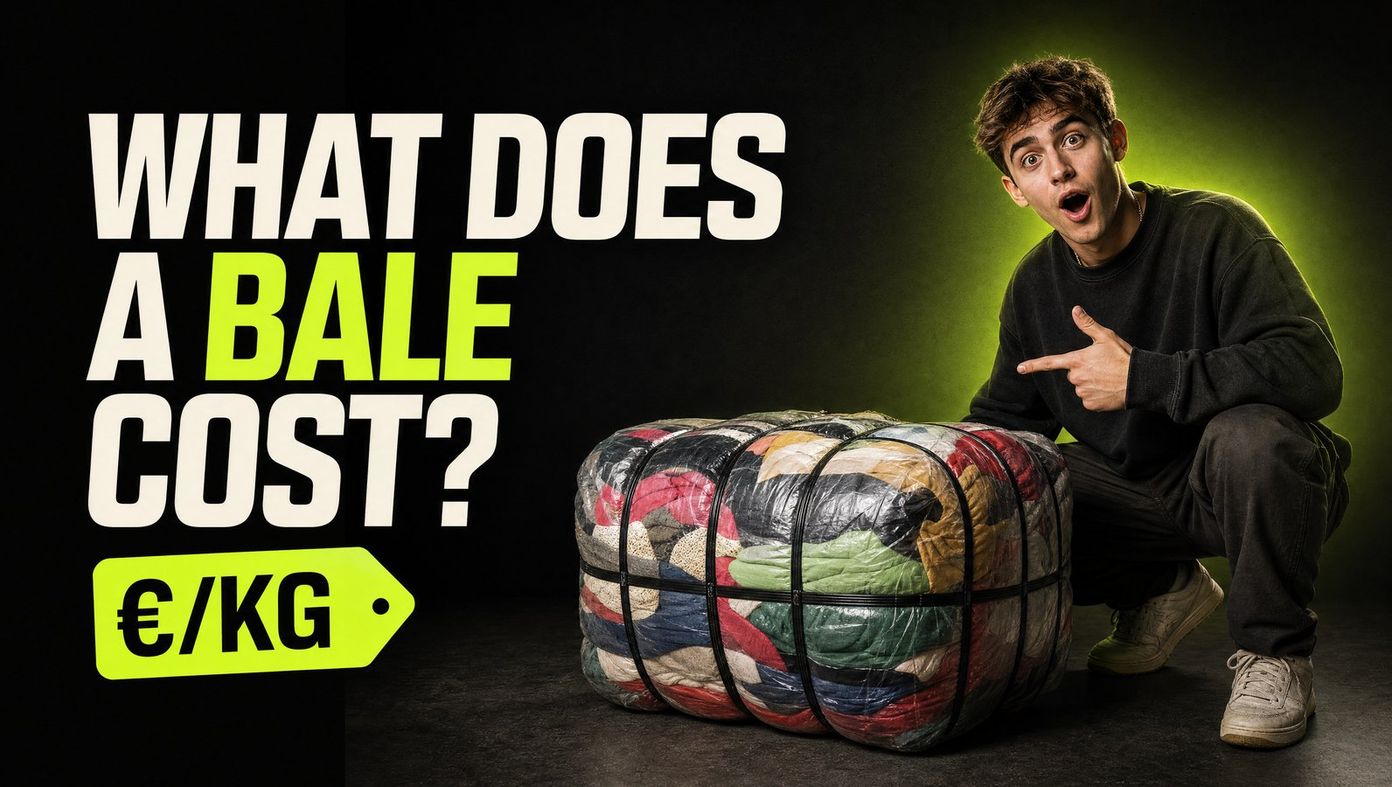
Vintage clothing bale prices in the Netherlands vary by format (12.5 kg to 50 kg), grade (A, B or C), brand category and season. There is no fixed price list — each bale is individually priced based on supply and demand. Always request a current quote via WhatsApp or a warehouse visit.
If you're a new reseller trying to work out your starting budget, that paragraph above might feel frustrating. You want a number. Every forum thread gives you a range — €200 to €500 per bale, sometimes higher — but nobody explains what makes the difference. This article does.
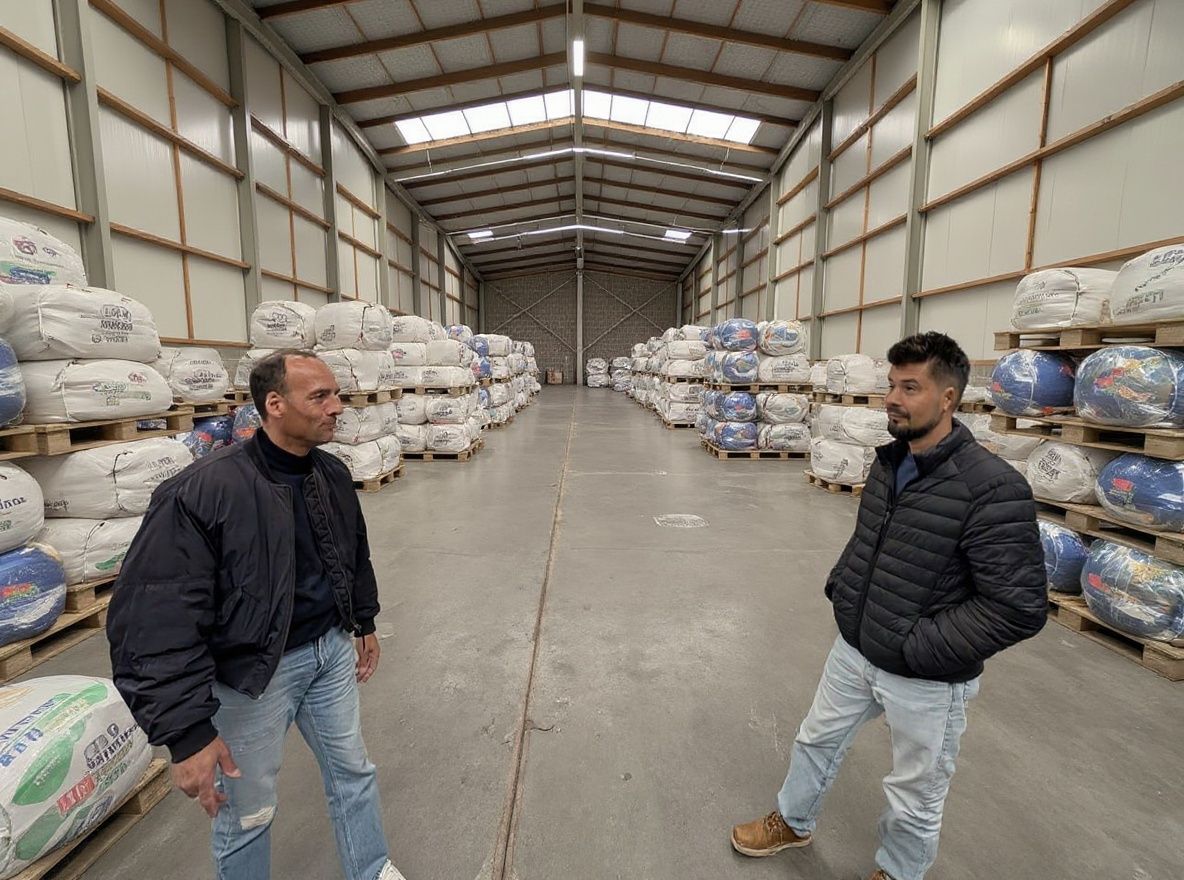
We'll walk through the four formats Excellent Vintage sells, why grade composition (not just grade) changes everything, how brand selection affects total cost, and what the BTW verlegd (VAT reverse charge) system actually means for your real outlay as an EU buyer. None of this is abstract: Patrick at Excellent Vintage has been sorting vintage bales since 2012 in a 2,500 m² warehouse in Bovenkarspel, North Holland. These are the real variables.
Why does no serious wholesale supplier publish a fixed price?
Search "vintage bale price Netherlands" and you'll find numbers scattered across €0.39/kg on Alibaba to €3+/kg for curated packs from specialist EU suppliers. That range isn't chaos — it reflects a functioning market with multiple product types.
Excellent Vintage brings in 14 containers per year through 3 US partners (East Coast, South, West) and 6 EU partners across the Netherlands, Germany, the UK, France, Italy and Spain. Monthly throughput: 15–20 tonnes. Over 400 categories move through the warehouse, each responding to its own seasonal demand curve.
The price of a Ralph Lauren polo bale this August isn't the same as in January. A container of denim from Ohio costs differently to source than a curated Italian selection of premium outerwear. A supplier that publishes a fixed price list is either not updating it or isn't offering the kind of quality that changes with real supply.
The four formats: what's actually available?
Not all "bales" are the same weight. Here's what Excellent Vintage actually sells:
Half-bag — 12.5 kg
Entry-level format. Useful for testing a new category before committing to larger volumes. Same grade and brand logic as bigger formats, half the weight.
Bag — 25 kg
The niche format. Typically sold as a curated category — Hawaiian shirts, polo shirts, hoodies in one brand. A "mix premium US" bag averages 90% Grade A / 10% Grade B. Higher quality, more focused on one type of garment.
Bale — 45 kg
The volume format. Sold either by weight (per kilo, ~45 kg) or by piece (à la pièce, a fixed item count regardless of exact weight). A Ralph Lauren shirts bale sold by piece contains 200 shirts. Don't apply kg-to-pieces maths to a per-piece bale — the count is the honest figure. By-weight bales average 70% Grade A / 30% Grade B. This is the format for volume resellers on Vinted, Depop and Whatnot.
Curon — 50 kg
The largest format. Suited for higher-volume buyers: brick-and-mortar stores, friperies, re-wholesalers.
Grade A, B and C: the biggest pricing driver
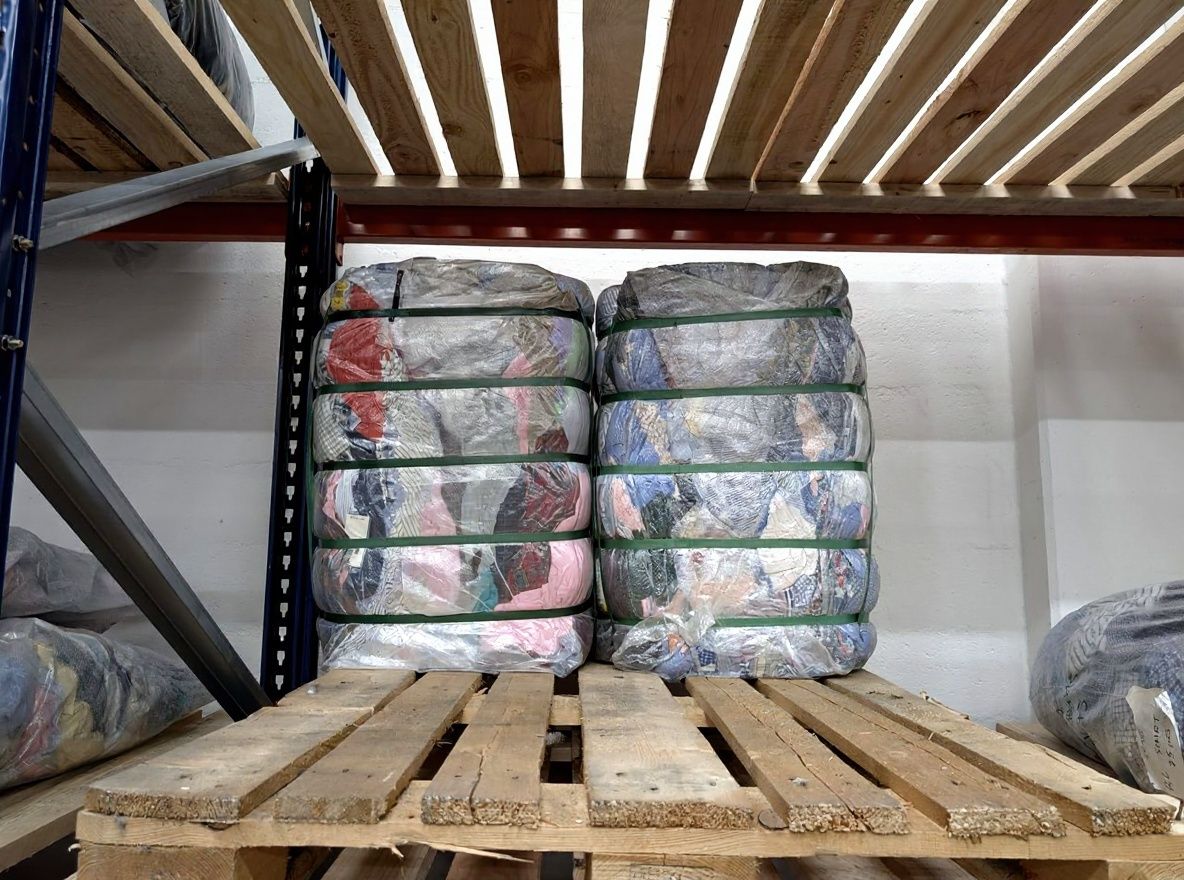
The grade composition of a bale — not just the grade label — determines more of its real value than almost anything else.
Grade A
No visible defect. Ready to photograph and sell immediately.
Grade B
Minor defect, such as a light discolouration, a small repairable tear or a missing button. Experienced resellers who photograph every item individually often absorb B-grade at lower volumes. At scale, B-grade adds considerably to your sorting and listing time.
Grade C
Serious defect, such as holes, bleach damage or heavy staining. Not included in standard mixed bale compositions.
The difference between 90% A-grade (bag format) and 70% A-grade (bale format) is not just about quality. It's about how much sorting time you spend after delivery, and what percentage of your stock actually converts at the price point you want.
At Excellent Vintage, these ratios are transparent: 90/10 for the 25 kg bags, 70/30 for the 45 kg bales. Patrick presents bales on the floor as they are — no hidden Grade C mixed into a "premium" lot.
Brand bales vs raw mix: the price difference nobody explains
When resellers ask "how much does a vintage bale cost?", they often imagine a single product. In reality, a "bale" can be anything from a carefully sorted mono-brand Ralph Lauren lot to a raw mixed container lot of unknown origin. The price difference between those two things can be substantial.
Excellent Vintage keeps 10 brands permanently in stock across four clusters:
- Heritage (Ralph Lauren, Tommy Hilfiger, Burberry, Barbour): broad Vinted/Depop audience, stable demand year-round.
- Workwear & outdoor (Carhartt, Levi's, Patagonia): fastest turnover, weekly on Whatnot live streams.
- Sport & techwear (Nike Tech/ACG/Jordan, Adidas Originals/Y2K, The North Face Nuptse): youngest buyer, TikTok Shop and Whatnot.
- Mixed pro stack (Burberry, Polo Sport, Barbour, The North Face): Depop boutique buyers, higher price-per-piece.
A mono-brand bale of Carhartt work jackets goes to a different buyer and follows a different price logic than a raw mixed bale of assorted garments. The sourcing, the sorting process and the expected resale margin per piece all differ. Pricing reflects that.
The right question isn't "what does a bale cost?" but "what brand, what format, what grade — and how does that match my reselling strategy?"
Seasonal supply: why prices aren't stable
The Atlantic crossing takes 18–22 days. Port to warehouse adds another 3–5 weeks. What Patrick orders today from a US partner won't arrive until six to eight weeks from now. What's on the floor today was selected months ago.
Resellers who understand this pattern buy smarter:
- Spring/summer arrivals (in the Netherlands: April–June): lighter garments, high Grade A demand for premium brands, stronger competition among buyers visiting warehouses.
- Autumn/winter arrivals (in the Netherlands: September–November): jackets, sweatshirts, workwear. Higher per-piece resale value on heavier garments, especially Carhartt and The North Face.
- Post-holiday January: lower foot traffic from starter buyers. Experienced resellers who know their category sometimes find it a useful window.
You can't read this from a website. That's why seasoned resellers schedule visits: to see what's actually in the warehouse that week, not a catalogue from three months ago.
VAT reverse charge: your real cost as an EU reseller
One aspect of buying wholesale in the Netherlands that surprises many first-time buyers from Belgium, Germany and Denmark: if you hold a valid EU VAT number, you buy VAT-free under the BTW verlegd (reverse charge) system.
This means you don't pay Dutch VAT at point of purchase. You handle VAT in your own declaration. All four of Excellent Vintage's primary markets — Netherlands, Belgium, Germany, Denmark — sit inside the EU, so intra-EU transport carries no customs duties.
In cash-flow terms: your real outlay for a warehouse visit is the net purchase price, not the gross price including VAT. For a buyer starting at the minimum order (€500 excl. VAT), this is a meaningful difference versus buying on a consumer marketplace.
Payment options: SEPA transfer, debit or credit card (no surcharge), or cash on-site. All prices excluding VAT.
What a first warehouse visit actually involves
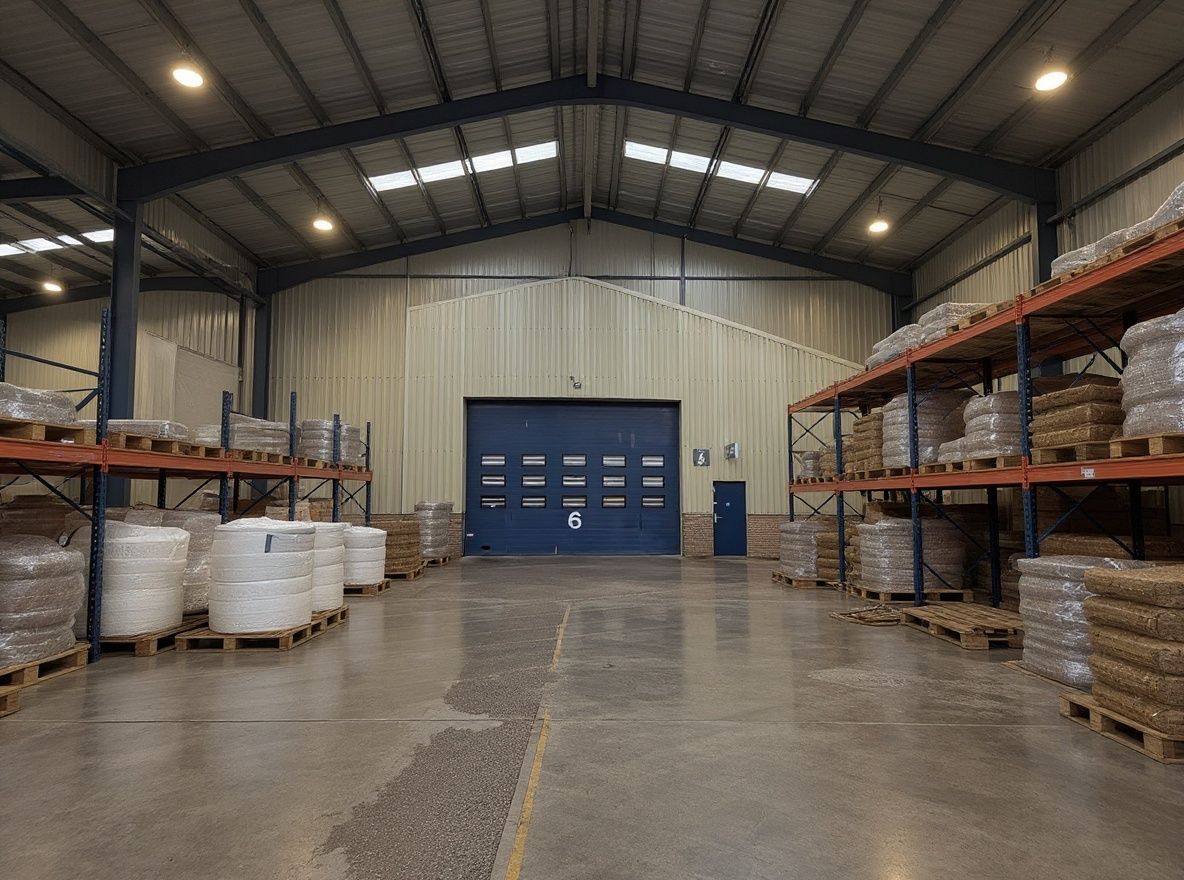
A visit at Excellent Vintage is a 2-hour exclusive slot (maximum 4 people, no other buyers on the floor). Free parking. 45 minutes by car from Amsterdam, 60 minutes by direct NS train to Bovenkarspel-Grootebroek.
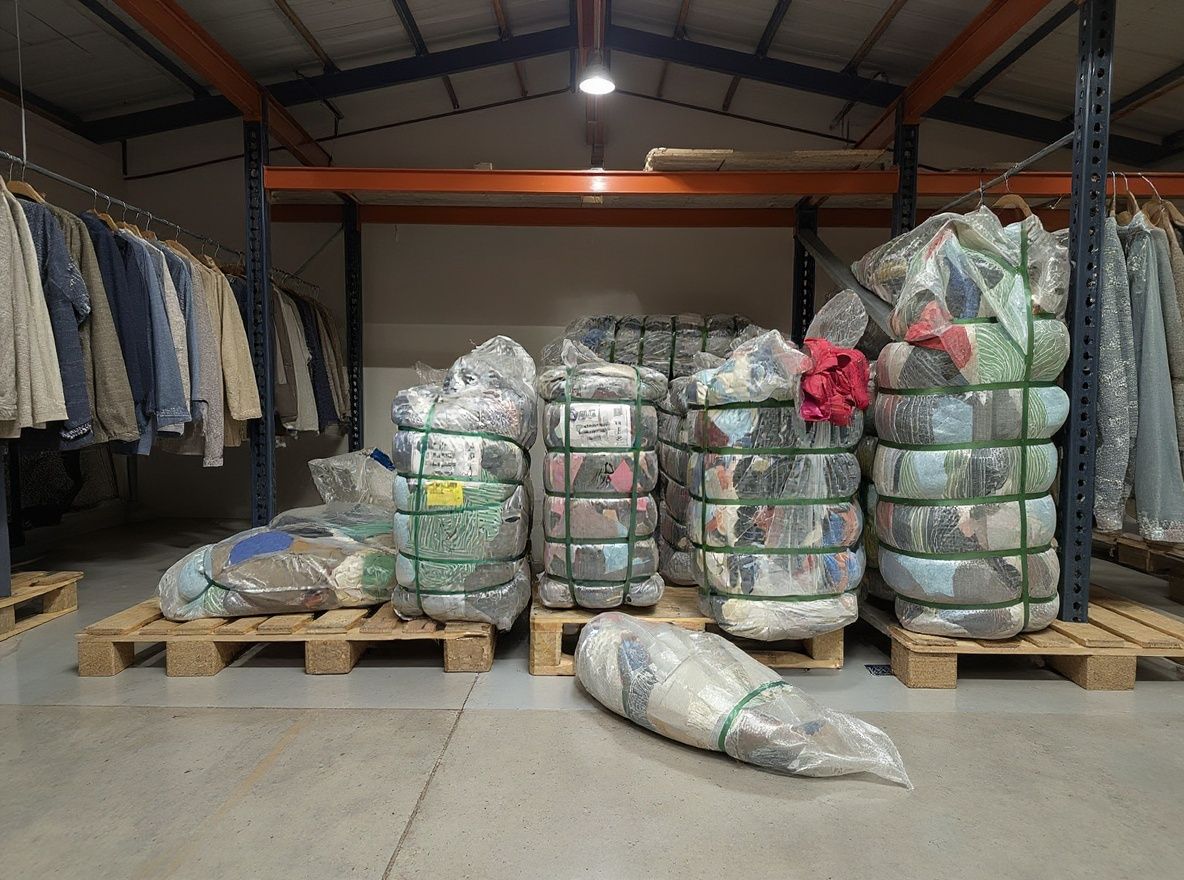
Patrick prepares the floor before you arrive: bales sorted by brand and grade, ready to inspect. You choose bales, not individual pieces — at 15–20 tonnes per month, piece-by-piece picking isn't possible. What you can do is select which bale fits your strategy: brand, weight format, grade ratio.
Questions to bring to a visit:
Which brands do you want to sell? Don't arrive with "anything popular." Know your platform (Vinted, Whatnot, Depop, brick-and-mortar) and the brand that fits it.
What's your format? Minimum order is €500 excl. VAT. A single well-chosen bale or two lighter bags can fill that threshold.
What grade composition fits your workflow? If you list items individually with photos, Grade B at 30% is manageable. If you're doing live streams on Whatnot, you want 90% A or better.
How many pieces do you need to launch? A 45 kg by-weight t-shirt bale contains roughly 225 pieces. A by-weight jeans bale of the same weight has around 31 pairs. Lighter garments give you more pieces for the same kilo price, which matters for listing velocity.
Patrick answers these questions with the actual stock from that week, not averages from a website.
Frequently asked questions about vintage bale prices in the Netherlands
How much does a vintage clothing bale cost on average in the Netherlands? There's no fixed average: it depends on brand, grade (A/B/C), format (12.5–50 kg) and seasonal supply. A raw mixed bale and a sorted mono-brand bale of a heritage label cannot be compared by a single price. Always request a current quote via WhatsApp or a warehouse visit.
What is the minimum investment to buy from a vintage wholesaler in the Netherlands? At Excellent Vintage, the minimum order is €500 excl. VAT — roughly one mid-range bale or two lighter bags. The model is B2B, not consumer.
Why don't wholesale vintage suppliers publish prices online? Secondhand clothing bale prices change with season, category and available supply. With 400+ categories moving through a 2,500 m² warehouse, no fixed price can be both current and honest. Suppliers who post fixed prices are either offering lower quality or outdated information.
How do I know if a bale is worth the price? Check the grade composition (90/10 A/B is stronger than 70/30), the brand or category, and your resale strategy. A Ralph Lauren bale of 200 pieces has a different ROI profile than a raw mixed lot. Use a profit calculator to model your expected margin before you buy.
Can I get vintage clothing bales shipped from the Netherlands? Yes. Excellent Vintage ships with fast delivery across the Netherlands and beyond. You can also collect in Bovenkarspel by appointment.
How many items are in a vintage clothing bale? It depends on the format and the garment type. A 45 kg by-weight t-shirt bale contains roughly 225 pieces. The same bale filled with jeans contains around 31 pairs. Heavier garments mean fewer pieces per kilo. A per-piece Ralph Lauren shirts bale contains 200 pieces regardless of exact weight.
Conclusion: price is a conversation, not a catalogue rule
If you want to understand what a vintage clothing bale costs in the Netherlands, don't start with a comparison site. Start with: which brand, which format, which grade, and what's your reselling strategy?
At Excellent Vintage's warehouse in Bovenkarspel, you work that out on the floor — you see the bales, feel the quality, and Patrick walks you through the grade compositions for what's in stock that week. This isn't a sales pitch. It's how a wholesale business built on transparency has worked since 2012.
Further reading on buying vintage bales
- How to buy your first vintage clothing bale — the step-by-step guide for beginners
- Vintage clothing grading: Grade A, B and C explained — so you know what you're buying
- How to start vintage reselling with €1,000 — the complete guide — from first bale to profitable brand
- Our wholesale offer — see which brands and formats are available
Ready to buy?
Visit our warehouse · no deposit required · free cancellation.