Ralph Lauren Vintage Wholesale in the Netherlands: How to Actually Buy It by the Bale
Most brands that blow up on a livestream go quiet again six months later. Ralph Lauren doesn't. An oxford shirt, a mesh polo, a chunky knit with a Polo Bear on the front — that's stock that sells…
By Patrick Libanon — founder, Excellent Vintage · Bovenkarspel, since 2012
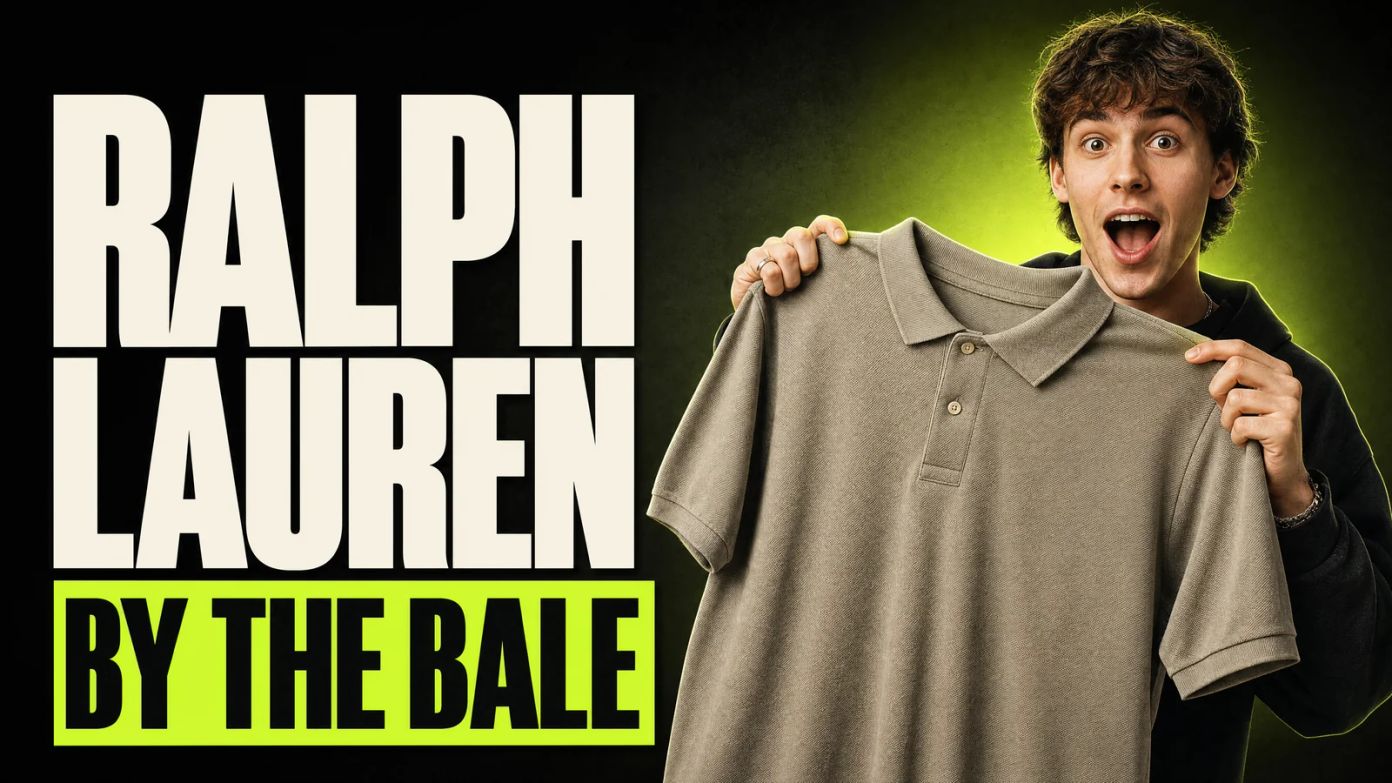
Most brands that blow up on a livestream go quiet again six months later. Ralph Lauren doesn't. An oxford shirt, a mesh polo, a chunky knit with a Polo Bear on the front — that's stock that sells today, sells next season, and still sells two years from now. For a reseller that matters, because a shelf full of Ralph Lauren isn't a ticking clock. Which is exactly why I hear the question so often: can't I just buy vintage Ralph Lauren by the bale instead of hunting it down piece by piece on marketplaces?
You can, and it's one of the smarter brands to buy into. But there's one thing you genuinely need to understand about Ralph Lauren before you order: a Ralph Lauren bale is often sold by the piece, not by weight. Get that conversion wrong and your whole margin calculation is off before the bale even arrives. That detail — plus how a bale gets built, which pieces carry your channels, and why you choose bales rather than individual garments — is what I'll walk through here, from the floor in Bovenkarspel rather than from a sales page.
Excellent Vintage has run since 2012 out of a 2,500 m² warehouse. Patrick, who runs the operation and greets every visitor himself, has been in this trade for 32 years. Ralph Lauren is locked into our ten permanent brands, and within that line-up it sits firmly in the heritage corner: the brand that lands with almost every audience on Vinted and Depop, from the sneakerhead to the forty-something after a clean polo.
Why Ralph Lauren resells so reliably
To see why a Ralph Lauren bale is a safe buy, look at where the demand comes from. Ralph Lauren started in 1967 and built a look that never really dates: classic American, clean, instantly readable from the pony logo. That "timeless" quality isn't marketing fluff for a reseller — it's the difference between stock you clear in a week and stock that sits for months. A Ralph Lauren polo or oxford doesn't visibly date; it fits a listing today just as it did one from three years ago.
Then there's the brand's breadth. Under a single name sits a spread of lines, each serving its own buyer. The classic Polo Ralph Lauren pieces — the mesh polos, the oxford shirts, the cable knits — form the backbone of almost any inventory. Polo Sport and the sportier nineties pieces pull a streetwear and Y2K crowd that actively hunts for them. And then there's the collector corner: the Polo Bear knits and sweatshirts, colour-block jackets and rare prints that light up the chat on a livestream. The same brand feeds the tidy Vinted boutique and the hype-driven Whatnot live at the same time.
That combination — evergreen plus breadth — is why Ralph Lauren rarely dies in your racks. You're not betting on a short trend; you're buying into a brand with constant, repeating demand across platforms and age groups.
Want to buy vintage Ralph Lauren by the bale? Tell Patrick which platform you sell on and which audience you serve, and he'll look at which bales fit you — polo-heavy for broad selling or knit-rich for the live. No deposit, free cancellation up to 24h. Book a visit
By the piece or by the kilo: why a Ralph Lauren bale counts differently
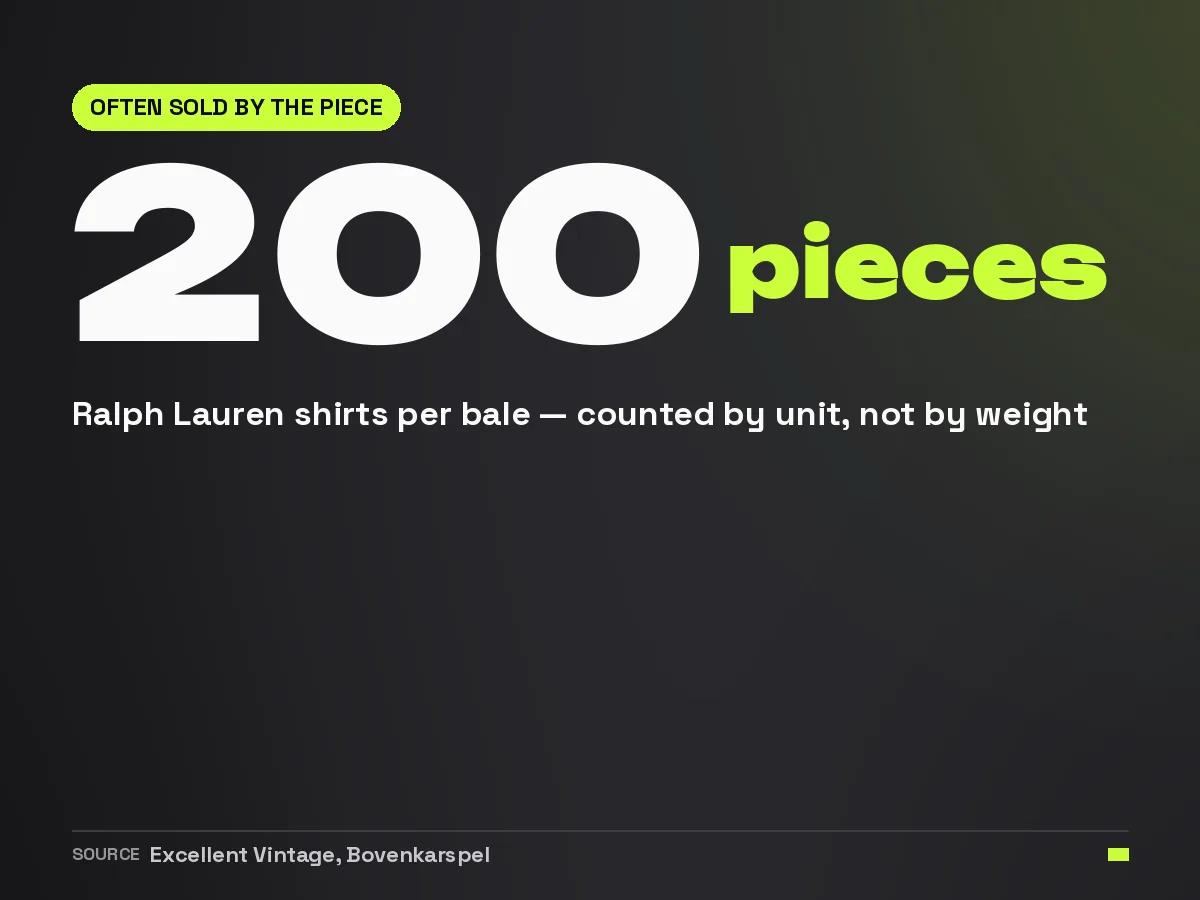
This is where most beginners slip up, so read it carefully. Some of our bales sell by weight — around 45 kg, per kilo — and there you can get a feel for volume with a simple sum. Others sell by the piece, at a fixed count, and then the number of pieces, not the weight, is the reference. With Ralph Lauren the latter is common: a bale of Ralph Lauren shirts might go at two hundred pieces, a bale of shorts at one hundred.
Why does that matter? Because the kilo-to-pieces sum simply doesn't hold for a per-piece bale. If you estimate a shirt at roughly four pieces per kilo, 45 kg would land you around a hundred and eighty shirts — but the bale is honestly sold as two hundred, because the stated count is the real figure. Anyone who blindly converts weight into pieces sets their per-item margin wrong before the bale is even in the door. Which model applies to a specific Ralph Lauren bale is something Patrick should tell you when you enquire — exactly the kind of thing you phone about rather than guess.
How a wholesaler builds a Ralph Lauren bale
This is the part sales pages would rather talk around. A bale doesn't fall out of the sky. Our supply runs through fourteen containers a year — eight to fourteen tonnes apiece — arriving monthly, some from three US partners (East, South, West) and some from six European ones. Because Ralph Lauren is an American brand through and through, with a vast home market, a big share of the polos, shirts and knits travels in on those US containers. From that raw intake, 15 to 20 tonnes pass through our hands every month.
Then comes the sorting, and that's where a wholesaler actually earns its keep. Buy raw and unsorted and you're buying a surprise: you only find out at home. With us it's already been separated by brand and by grade before you set a foot on the floor. That's what makes a Ralph Lauren bale a defined unit of a single brand with a quality you know in advance, rather than a grab from a heap.
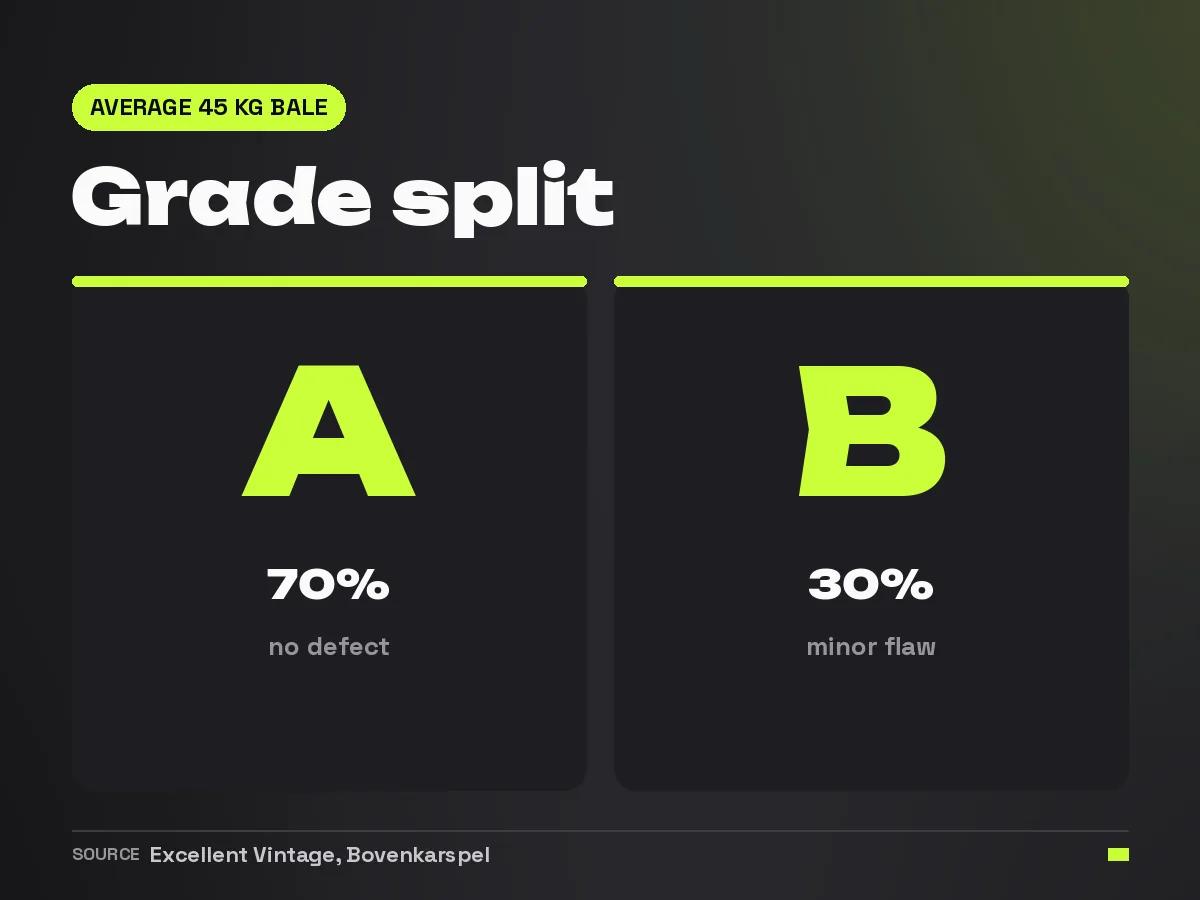
We keep that split transparent. A 45 kg bale averages 70% grade A and 30% grade B. Grade A is a piece with no defect; grade B has a minor flaw; and the serious damage — a hole, a bleach mark, a torn seam — falls under grade C and is kept separate, not quietly folded in with your A stock. If you want to run purely on the cleaner pieces for a specific niche, there's also a 25 kg "mix premium US" bag that sits around 90% grade A. For a reseller building a tight boutique on Vinted, that's often the more logical pick than a full bale.
Which Ralph Lauren pieces sell best?
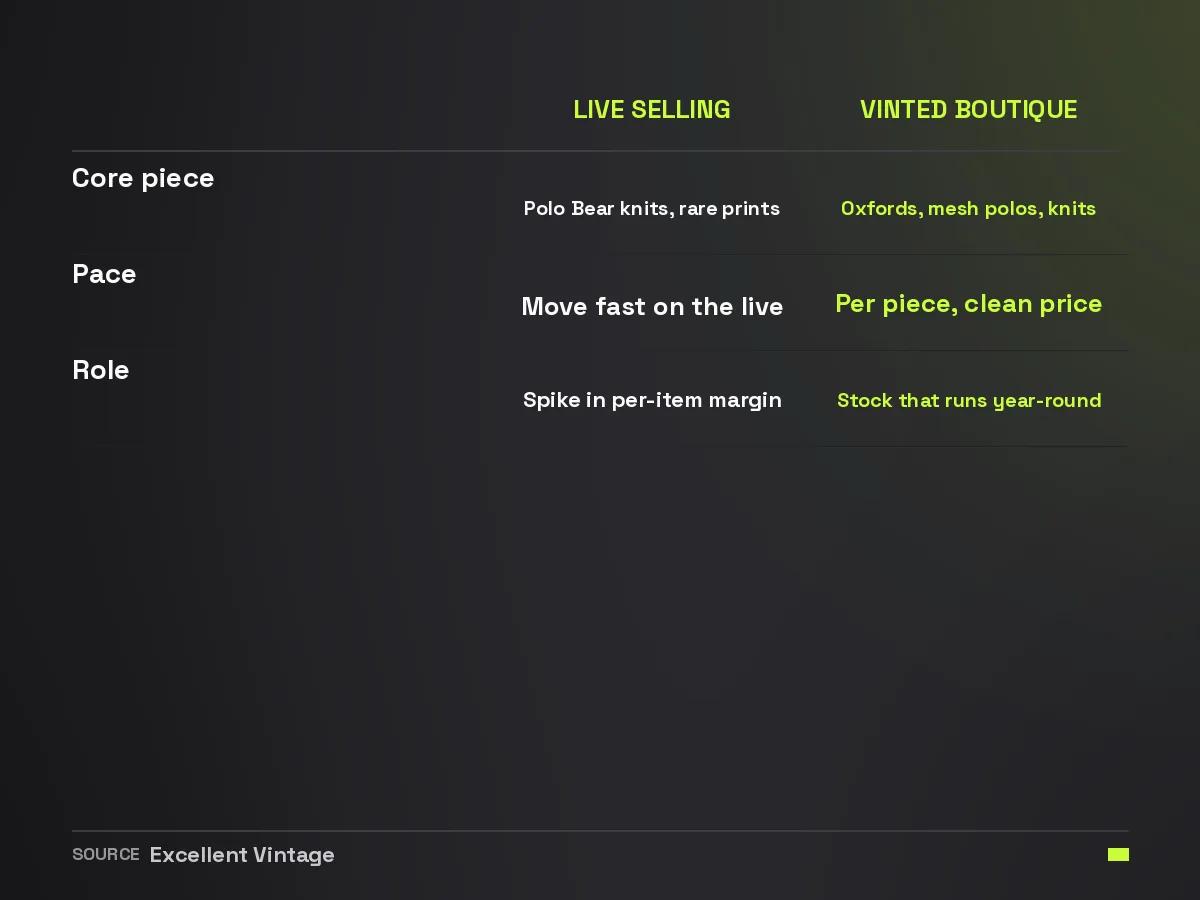
Not every Ralph Lauren piece plays the same role in your inventory, and that's where the insider edge is. The classic oxford shirts and mesh polos are your workhorses: broadly wanted, easy to price per piece, and sellable year-round on Vinted and Depop. That's the stock that keeps things moving without waiting on a trend. Alongside them sit the cable knits and sweatshirts — the autumn and winter work that peaks in the colder months.
Then there's the hype corner. The Polo Bear pieces are the show-stoppers: a single Polo Bear sweater can stop a Whatnot live in its tracks. Nineties colour-block jackets, rare prints and the sportier Polo Sport pieces pull that same young, ready-to-buy crowd. You don't buy those for volume — you buy them for the one spike in per-item margin.
The practical lesson: match your buying to where you sell and to whom. Building a tidy Vinted or Depop boutique? You want a selection heavy on oxfords, polos and knits. Running mostly live on Whatnot or TikTok? Then you want a bale dense with recognisable, eye-catching pieces and as much Polo Bear chance as possible. Buy Ralph Lauren well and you don't think in terms of "a bale of Ralph Lauren" but "which Ralph Lauren for which channel".
What do the Ralph Lauren labels tell you?
When you buy vintage Ralph Lauren, you eventually want to place a piece in time — it feeds into how you price and present it. Ralph Lauren has used shifting brand labels over the years, different versions of the pony logo, and inner tags carrying an RN number and country-of-origin markers. Experts use those cues to estimate the era a polo or shirt comes from. For seasoned resellers that's one of the more enjoyable sides of the brand: you learn to read the generations off the collar and the care label.
We're deliberately not spelling it out in detail here, because a half-remembered dating rule is more dangerous than none — you misprice a piece or claim an era that doesn't hold. We're working on a separate, thorough guide to dating Ralph Lauren, and it deserves to be done in full rather than as a footnote. What counts here: the labels are visible on the bale, they tell a story, and reading them is a skill you build. Come by and Patrick will simply point them out on the collar.
Rather talk it through on WhatsApp first? Not sure whether to buy boutique-rich or hype-heavy for your audience? Send Patrick a message. He answers himself, usually within an hour on weekdays. Message Patrick
Why do you choose bales, not individual pieces?
On a visit you choose at bale level, not by the hanger. It sounds restrictive, but there's a reason for it. With 15 to 20 tonnes moving through the warehouse every month, letting each visitor hand-pick would simply clog everything up — one person rummaging while the rest wait. And it isn't even necessary: the sifting is already done. Because Patrick has separated by brand and grade in advance, you pick up a ready, predictable unit of Ralph Lauren rather than loose pot luck.
What does that look like in practice? You come by appointment, you have the floor to yourself for two hours, and you pick bale by bale. You see what's there, feel the quality, check the density of polos versus shirts versus knits, and decide which bales fit your audience and platform. For a Whatnot streamer running on pace, that's a different call than for someone building a curated boutique on Vinted. The floor is the same; your strategy decides which bales go home with you.
And it doesn't have to be in person. If you can't get to Bovenkarspel, it works over a WhatsApp video call too: Patrick walks the bales with you, puts together a quote and ships. Heavy bales, fast shipping — that's the promise, without us pinning an exact number of hours to it here.
Where does Ralph Lauren fit in your buying strategy?
Don't see a Ralph Lauren bale as a one-off purchase but as a building block. For a lot of beginners a single Ralph Lauren bale is even a logical starting point: the brand is broadly wanted, doesn't sit around, and forgives a beginner's mistake because demand is so steady. Running volume? A per-piece bale of shirts or polos is your friend — a predictable count, one brand to photograph and list. Serving a niche after Polo Bear or specific retro pieces? Then a higher-graded bag or a targeted selection makes more sense.
The nice thing about Ralph Lauren is that the breadth keeps you flexible. The oxfords and polos keep your stock moving all year, the knits give you the autumn peak, and the Polo Bear and Polo Sport pieces deliver the occasional standout. For a reseller who doesn't want to be stuck with dead stock and wants to ride what's moving now, that's a rarely versatile brand.
Want to read the full mechanics behind formats, grades and the sorting process at your own pace? We've laid it all out in our complete guide to vintage wholesale clothing in the Netherlands. To dig into quality specifically, the piece on what grade A, B and C actually mean explains why a 70/30 bale is an honest bale. And if you're still weighing raw versus pre-sorted bales, the difference between heavy bales and sorted clothing sets them side by side.
Frequently asked questions about buying vintage Ralph Lauren
Is vintage Ralph Lauren worth reselling?
Yes, and it's one of the safer brands to buy into. Ralph Lauren doesn't visibly date, so it keeps selling year-round on Vinted, Depop and Whatnot. The classic polos and oxfords serve a broad boutique market, while the Polo Bear and Polo Sport pieces pull a young, hype-driven crowd. You're buying into constant demand, not a short trend.
Do you buy Ralph Lauren by the kilo or by the piece?
It varies by bale, and with Ralph Lauren it's often by the piece. A bale of shirts might go at two hundred pieces, shorts at one hundred — in which case the stated count is the real figure and the kilo-to-pieces sum doesn't apply. Other bales sell by weight (around 45 kg, per kilo). Ask which model applies when you enquire, so you know exactly what you're getting.
What is the Polo Bear and why is it so wanted?
The Polo Bear is the teddy-bear motif Ralph Lauren introduced on sweaters and knits in the early nineties. Among collectors and on livestreams it's one of the most sought-after Ralph Lauren items: a single Polo Bear piece can hold attention on a Whatnot live on its own. For a reseller it's a margin spike, not a volume piece.
What is VAT reverse charge and does it apply to me?
VAT reverse charge (btw verlegd) means that on a B2B sale within the EU the VAT shifts to the buyer, provided you have a valid company registration and EU VAT number. All our markets are inside the EU, so there are no customs duties intra-EU. For your specific situation, check with your accountant or ask us — we don't invent tax rules.
Ready to buy Ralph Lauren?
Ralph Lauren is one of those brands that can carry your whole inventory at once: the oxfords and polos run year-round, the knits give you the winter peak, and the Polo Bear pieces bring that extra margin per item. What a wholesaler adds is the sorting work up front — the separation by brand and grade that lets you buy a predictable bale instead of a gamble, with the piece count stated honestly.
Want to see which Ralph Lauren bales are on the floor now and which fit your platform? Book a visit to Bovenkarspel or message Patrick. He welcomes you personally, the floor is yours for two hours, and you choose the bales that fit your plan. Read more about what we offer on our page about our wholesale range, and who we are over at about Excellent Vintage.
See the Ralph Lauren bales in Bovenkarspel Book two hours on the bale floor, exclusively yours. No deposit, free cancellation up to 24h, and Patrick calls you the day before to prepare your visit. Visit our warehouse
Ready to buy?
Visit our warehouse · no deposit required · free cancellation.