Tommy Hilfiger Vintage Wholesale in the Netherlands: How to Actually Source It
List a crest polo with that red-white-and-blue flag on Vinted, Depop, or a physical rail, and it rarely sits for long. Tommy Hilfiger is one of those brands that never really left: the logo reads…
By Patrick Libanon — founder, Excellent Vintage · Bovenkarspel, since 2012

List a crest polo with that red-white-and-blue flag on Vinted, Depop, or a physical rail, and it rarely sits for long. Tommy Hilfiger is one of those brands that never really left: the logo reads instantly to buyers in their thirties and forties, and just as fast to twenty-somethings who found it through a Y2K revival. That double audience is exactly why the brand is unusually stable to buy into. Still, resellers ask me the same question every week: can I source it by the bale instead of hunting piece by piece on Vinted?
You can, and Tommy Hilfiger is one of the brands we see come up most in requests. What you need to understand first is how a bale is actually put together, which Tommy pieces really move, and why you pick bales rather than individual hangers on a visit. Here's the breakdown, straight from the floor in Bovenkarspel.
Excellent Vintage has been running since 2012 out of a 2,500 m² warehouse. Patrick, who runs the trade and personally welcomes every visitor, has 32 years in the industry. Tommy Hilfiger is one of our ten standing brands and sits in our heritage cluster — the group with the broadest, most consistent demand on Vinted and Depop.
Why Tommy Hilfiger resells so reliably
A Tommy bale is low-risk for a specific reason: the demand behind it runs wider than most brands we carry. Tommy Hilfiger launched his namesake line in 1985 and built the brand around an American preppy look: red, white and blue, the flag, the crest on the chest. In the early nineties that got a second life when the brand was widely picked up by the hip-hop and streetwear scene, and that crossover between preppy and street is exactly why the brand now speaks to two generations at once. For you as a reseller, that means stock that isn't locked to one narrow audience.
Under that one name sits a wide range of pieces, each serving a different buyer. The crest polos — solid colours with the embroidered crest on the chest — are the workhorse: broadly worn, instantly recognisable, and sellable year-round. The colorblock rugby shirts and sweaters, with the striped red-white-and-blue panels, pull in the retro and Y2K crowd specifically. And then there's the winter side: varsity jackets and windbreakers carrying the big flag or crest logo, which move harder in autumn and winter than in summer. That same brand feeds both the broad Vinted seller and the curated Depop boutique hunting for a specific look.
That combination — broadly recognisable plus a strong visual identity — is why Tommy Hilfiger rarely sits on the rack for long. You're buying into a brand with a steady baseline demand, not a hype that will have moved on by next month.
Sourcing vintage Tommy Hilfiger by the bale? Tell Patrick which platform you sell on and whether you're running volume or a curated selection, and he'll point you to the bales that fit. No deposit, free cancellation up to 24h. Book a visit
By weight or by piece: what applies to Tommy Hilfiger?
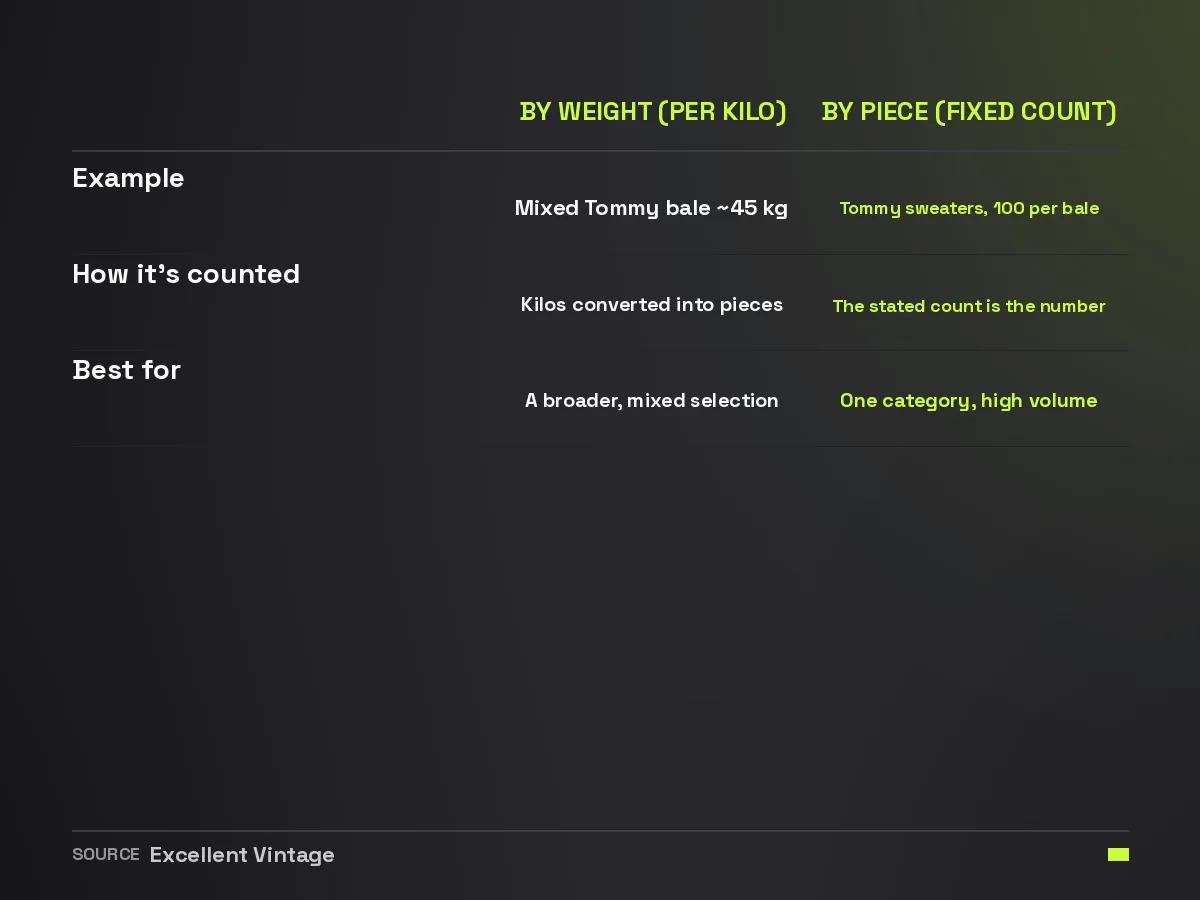
Like our other brands, some Tommy bales sell by weight — around 45 kg, priced per kilo — and some sell by piece, with a fixed, stated count. Lighter garments like Tommy sweaters often come as a piece-based bale: a bundle of 100 sweaters, for example, where the weight isn't exactly 45 kg but the count is the real, fixed number. With a weight bale, you convert kilos into pieces; with a piece bale, there's nothing to convert — the count is already set.
That distinction matters because resellers mix it up more often than you'd think. Treat a piece-based bale as if it were a weight bale, and you'll expect a different count than what's actually inside — which throws off your per-piece margin math before you've even opened the bale. Which model applies to a given Tommy bale is exactly the kind of thing to confirm with Patrick when you enquire, so there's no ambiguity.
How a wholesaler puts together a Tommy Hilfiger bale
Nobody pulls a ready-made Tommy bale off a shelf. Our supply runs through fourteen containers a year, each between 8 and 14 tonnes, sourced partly through three US partners and partly through six European ones. Tommy Hilfiger is worn widely on both sides of the Atlantic, so stock flows in through both the American and European supply lines. Out of that raw intake, we process 15 to 20 tonnes a month.
What follows is the actual value a wholesaler adds: sorting. Buy raw, unsorted stock and you're buying a surprise — you only find out what you actually got once you're home. With us, everything is already sorted by brand and grade before you set foot on the floor. A Tommy bale isn't a gamble pulled from a giant mixed pile; it's a defined unit of that one brand, at a quality you already know going in.
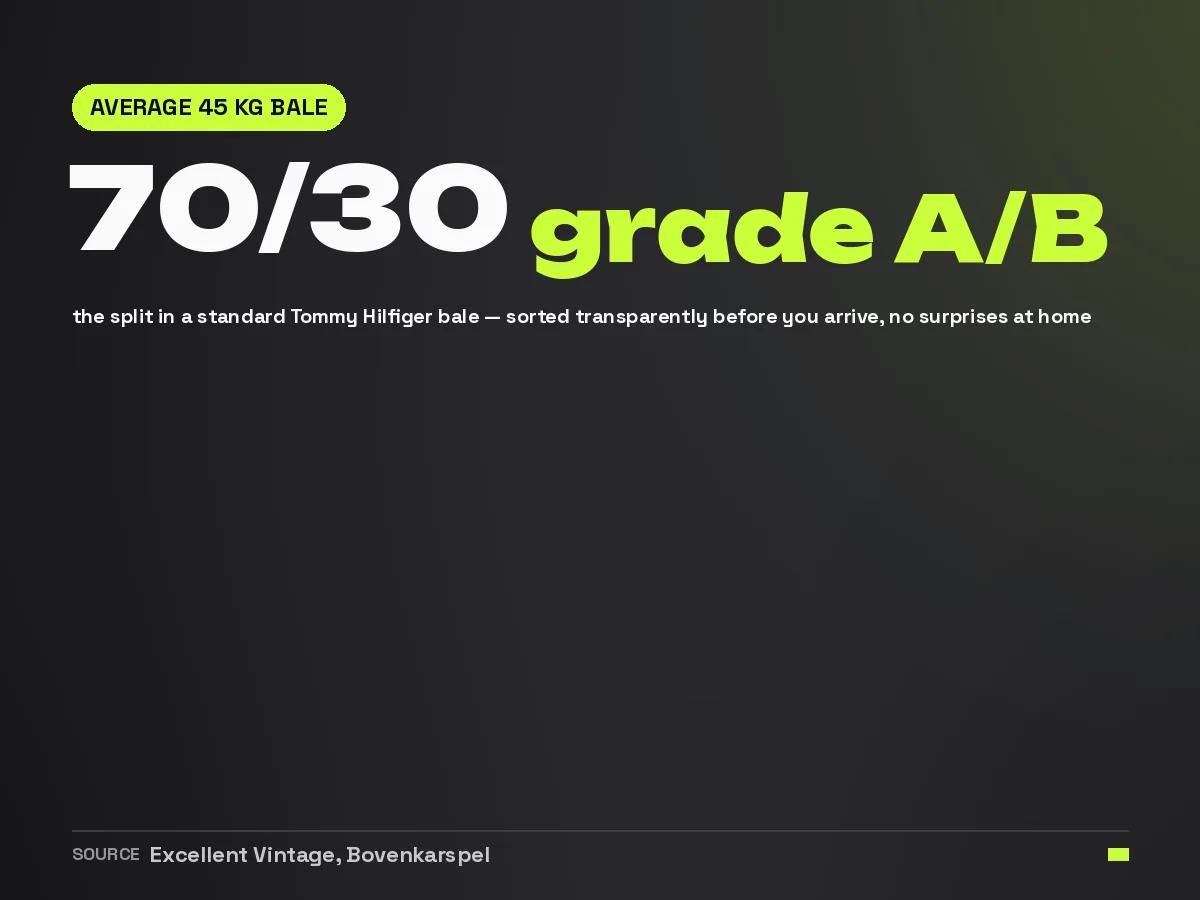
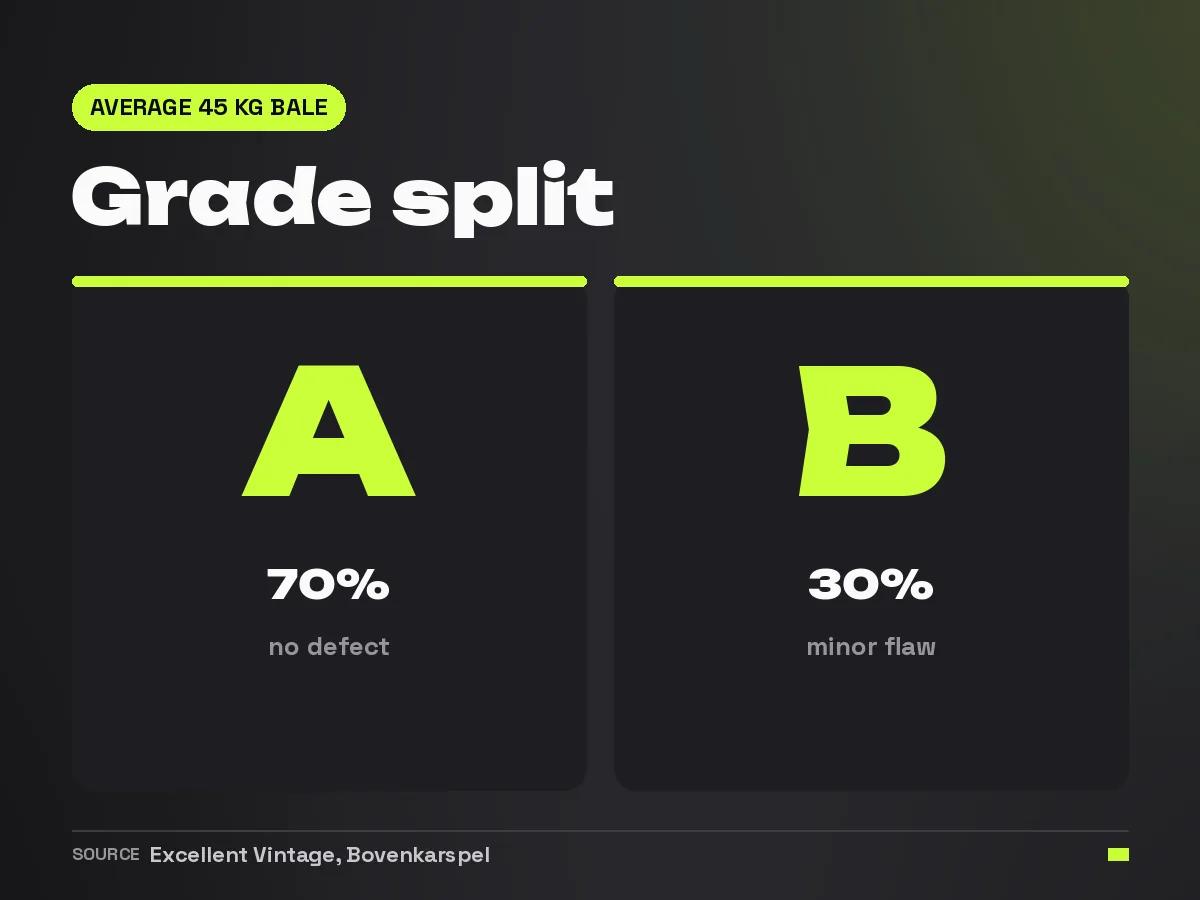
We keep that split transparent. A 45 kg bale averages 70% grade A and 30% grade B. Grade A means no defect; grade B means a minor flaw; and anything more serious — a hole, bleach discolouration, a torn seam — falls under grade C and is kept separate, never quietly mixed into your A stock. If you want to lean specifically into the cleaner pieces, there's also a 25 kg bag of "mix premium US" that runs closer to 90% grade A — a fit if you're building a targeted, higher-grade Tommy selection rather than going broad.
Which Tommy Hilfiger pieces move best?
Not every piece plays the same role in your stock. The crest polos in solid colours are your workhorse: broadly wanted, easy to photograph, and sellable year-round, from Vinted to a physical rail. That's the stock that keeps moving without you waiting on a trend.
Then there are the colorblock rugby shirts and striped sweaters — the pieces with the recognisable red-white-and-blue panels that pull in the Y2K and retro crowd specifically. Those can move a touch slower than a plain polo, but they often fetch more per piece because they stand out visually in a listing or on a live.
And then there's the winter side: varsity jackets and windbreakers with a large flag or crest logo on the back or chest. Those move seasonally harder in autumn and winter, and for a Depop boutique they're often the piece that anchors an entire photo set.
The practical takeaway: match your buying to your platform and the season. Building a broad, fast-moving stock on Vinted means leaning into crest polos in common sizes. Running a curated Depop boutique or a winter-focused selection means hunting more specifically for colorblock pieces and jackets.
Want to talk it through on WhatsApp first? Not sure whether to buy a broad Tommy selection or lean into colorblock pieces for your audience? Message Patrick directly. He replies himself, usually within an hour on weekdays. Message Patrick
Why bales, not individual pieces?
On a visit, you choose at the bale level, not hanger by hanger. With 15 to 20 tonnes moving through the warehouse every month, individual handpicking would simply grind the floor to a halt. And it isn't necessary anyway: the sorting work is already done. Because Patrick has pre-separated stock by brand and grade, you're picking up a ready-made, predictable unit of Tommy Hilfiger instead of a loose gamble among hundreds of other brands.
What that looks like in practice: you come by appointment, get the floor exclusively for two hours, and choose bale by bale. You see what's there, feel the quality of the fabric, check the density of polos versus rugby shirts versus jackets, and decide which bales fit your audience. Can't make it to Bovenkarspel? It also works over a WhatsApp video call: Patrick walks you through the bales, puts together a quote, and ships. Heavy bales, fast shipping — that's the promise, without pinning it to an exact number of hours here.
Where does Tommy Hilfiger fit in your buying strategy?
Think of a Tommy bale as a building block, not a standalone purchase. For many beginners, one Tommy bale is actually a sensible starting point: the brand is broadly recognisable, doesn't sit long, and forgives a beginner's mistake because baseline demand is so steady. Running volume? A mixed Tommy bale is your friend. Serving a niche audience specifically hunting colorblock pieces or jackets? A higher-graded bag or a more targeted selection makes more sense.
Want the full mechanics behind formats, grades, and the sorting process? We've laid it all out in our complete guide to vintage wholesale clothing in the Netherlands. Going deeper on quality specifically, our piece on what grade A, B, and C actually mean explains why a 70/30 bale is an honest bale. And if you're still weighing raw versus pre-sorted bales, the real difference between heavy bales and sorted clothing lays it out clearly.
Frequently asked questions about sourcing vintage Tommy Hilfiger
Is vintage Tommy Hilfiger worth reselling?
Yes. The brand speaks to two generations at once: buyers who've known it for decades, and younger buyers who discovered the colorblock look through a Y2K revival. The crest polos are broadly wanted and sell year-round, while the colorblock rugby shirts and varsity jackets pull a more targeted audience that's often willing to pay more per piece.
Do you buy Tommy Hilfiger by weight or by piece?
It depends on the bale. A mixed Tommy bale often sells by weight (around 45 kg, per kilo), while lighter pieces like sweaters are also offered by piece — for example, a hundred pieces in one bale. On a piece bale, the stated count is the real number; on a weight bale, you convert kilos into pieces. Ask when you enquire which model applies to your bale.
What's the difference between a mixed bale and the "mix premium US" bag?
A mixed 45 kg bale averages 70% grade A and 30% grade B — a broad, honest selection for volume. The 25 kg "mix premium US" bag runs closer to 90% grade A and is built for buyers who want to source more selectively on the cleaner pieces, for example for a curated boutique.
What's reverse-charge VAT and does it apply to me?
Reverse-charge VAT means that in a B2B sale within the EU, VAT liability shifts to the buyer, provided you hold a valid Chamber of Commerce (KvK) registration and an EU VAT number. All our markets sit within the EU, so there are no customs duties intra-EU. For your specific situation, check with your accountant or ask us directly — we don't guess at tax rules.
Ready to source Tommy Hilfiger?
Tommy Hilfiger is one of those brands that serves two audiences at once: steady, broad demand for crest polos, and a more targeted, often higher-bidding audience for colorblock pieces and jackets. What a wholesaler adds is the sorting work done up front, so you buy a predictable bale instead of a mixed gamble — with the model, by weight or by piece, stated honestly.
Want to see which Tommy Hilfiger bales are on the floor right now and which fit your platform? Book a visit to Bovenkarspel or message Patrick directly. He'll welcome you personally, the floor is yours exclusively for two hours, and you pick the bales that fit your plan. Read more about what we offer on our wholesale page, and who we are on about Excellent Vintage.
See the Tommy Hilfiger bales in Bovenkarspel Book two hours on the bale floor, exclusive to you. No deposit, free cancellation up to 24h, and Patrick calls you the day before to prepare your visit. Visit our warehouse
Ready to buy?
Visit our warehouse · no deposit required · free cancellation.