Levi's Vintage Wholesale in the Netherlands: How to Actually Buy It by the Bale
There's one brand that stays wanted on almost every marketplace, every live and every physical shop, and that's Levi's. A 501, a trucker jacket, a pair of denim shorts — that's stock that doesn't…
By Patrick Libanon — founder, Excellent Vintage · Bovenkarspel, since 2012
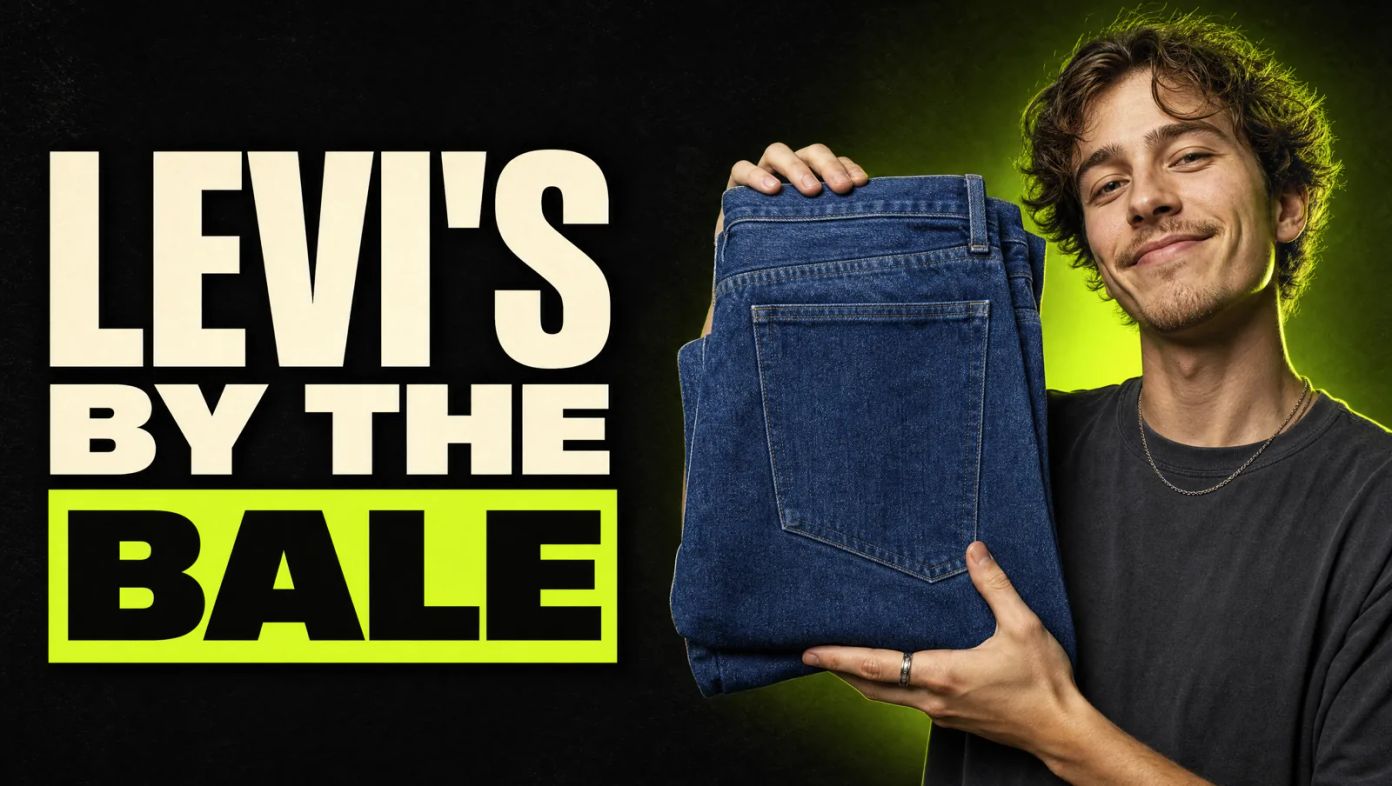
There's one brand that stays wanted on almost every marketplace, every live and every physical shop, and that's Levi's. A 501, a trucker jacket, a pair of denim shorts — that's stock that doesn't fall out of fashion, because a good pair of jeans is still a good pair of jeans five years from now. For a reseller that means calm: a shelf of Levi's isn't a bet on a hype that's over next month. Which is exactly why I hear the question more and more: can't I just buy vintage Levi's by the bale instead of hunting it down piece by piece on Vinted?
You can, and Levi's is one of the smarter brands to buy into. But there's one thing you genuinely need to understand about denim before you order: a pair of jeans is heavy. Denim is by far the heaviest category we sell, and that changes everything about how you count a Levi's bale. Treat a denim bale like a bale of t-shirts and your numbers will be miles off. That detail — plus how a bale gets built, which Levi's pieces carry your channels, and why you choose bales rather than individual garments — is what I'll walk through here, from the floor in Bovenkarspel rather than from a sales page.
Excellent Vintage has run since 2012 out of a 2,500 m² warehouse. Patrick, who runs the operation and greets every visitor himself, has been in this trade for 32 years. Levi's is locked into our ten permanent brands, and within that line-up it sits firmly in the workwear and outdoor corner: the category that turns over fastest, moves weekly through Whatnot lives and physical shops, and where demand never sits still for long.
Why Levi's resells so reliably
To see why a Levi's bale is a safe buy, look at where the demand comes from. Levi's has made denim since the nineteenth century and is the brand that more or less invented the modern pair of jeans. That 501 with its straight leg was never a trend that came and went — it's the standard. The same goes for the trucker jacket, the Type III shape that gets worn again generation after generation. For a reseller that "timeless" quality isn't marketing fluff: it's the difference between stock you clear in a week and stock that sits for months. A vintage 501 doesn't visibly date; it fits a listing today just as it did one from three years ago.
Then there's the brand's breadth. Under a single name sits a spread of pieces, each serving its own buyer. The classic 501 and 505 jeans form the backbone of almost any denim inventory — broadly wanted, sellable year-round. The trucker jackets and denim overshirts pull a streetwear and workwear crowd that actively hunts for them. And then there's the collector corner: the older pieces with a Big E red tab, a leather patch or hidden rivets, that enthusiasts and specialists go after on purpose. The same brand feeds the broad Vinted seller and the denim head who knows exactly what he's looking for at the same time.
That combination — evergreen plus breadth — is why Levi's rarely dies in your racks. You're not betting on a short trend; you're buying into the brand that defines the denim market, with constant, repeating demand across platforms and age groups.
Want to buy vintage Levi's by the bale? Tell Patrick which platform you sell on and whether you run on volume or on cleaner pieces, and he'll look at which bales fit you — a broad denim bale or a more targeted selection. No deposit, free cancellation up to 24h. Book a visit
By the kilo or by the piece: why denim counts differently
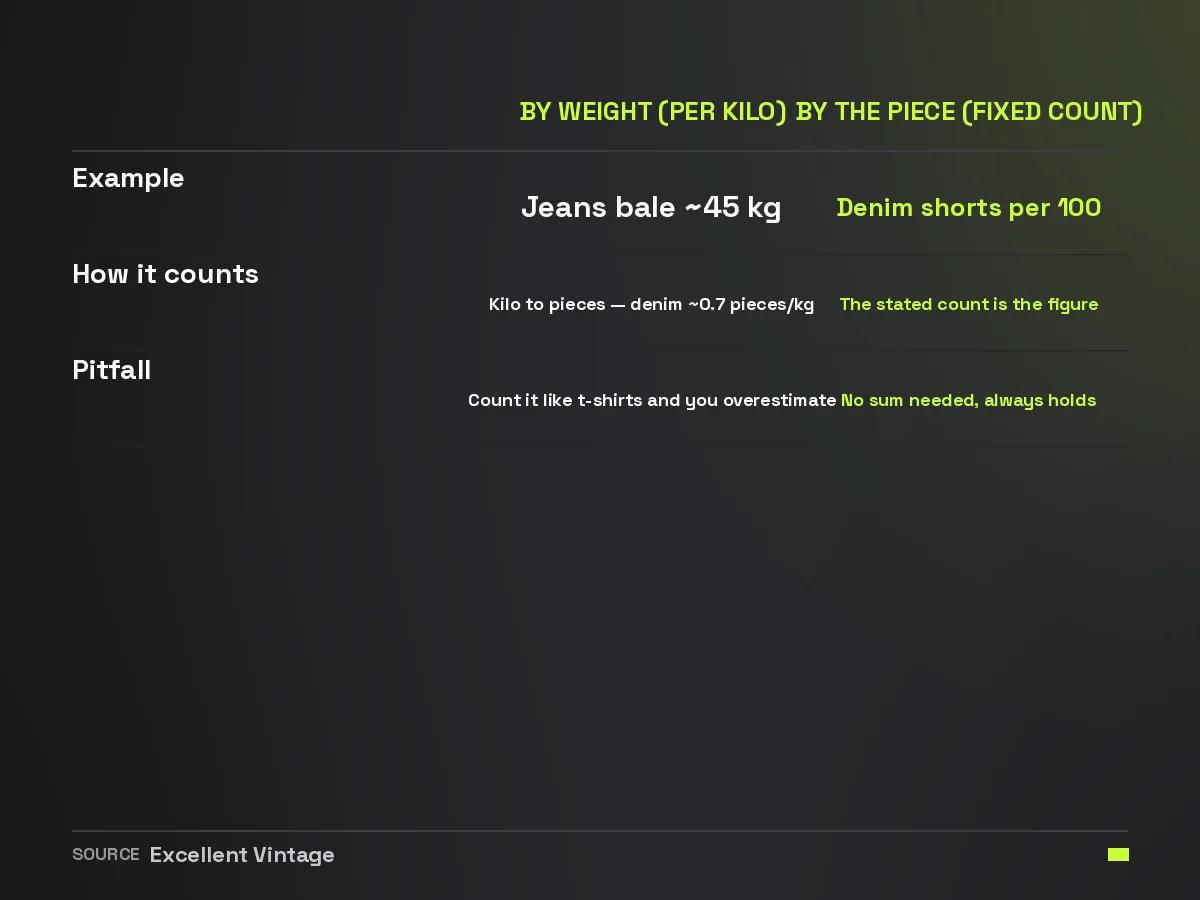
This is where most beginners slip up, so read it carefully. Some of our bales sell by weight — around 45 kg, per kilo — and there you can get a feel for volume with a simple sum. Others sell by the piece, at a fixed count, and then the number of pieces, not the weight, is the reference. With denim both happen: a jeans bale often goes by weight, while denim shorts, for instance, are sold at a hundred pieces.
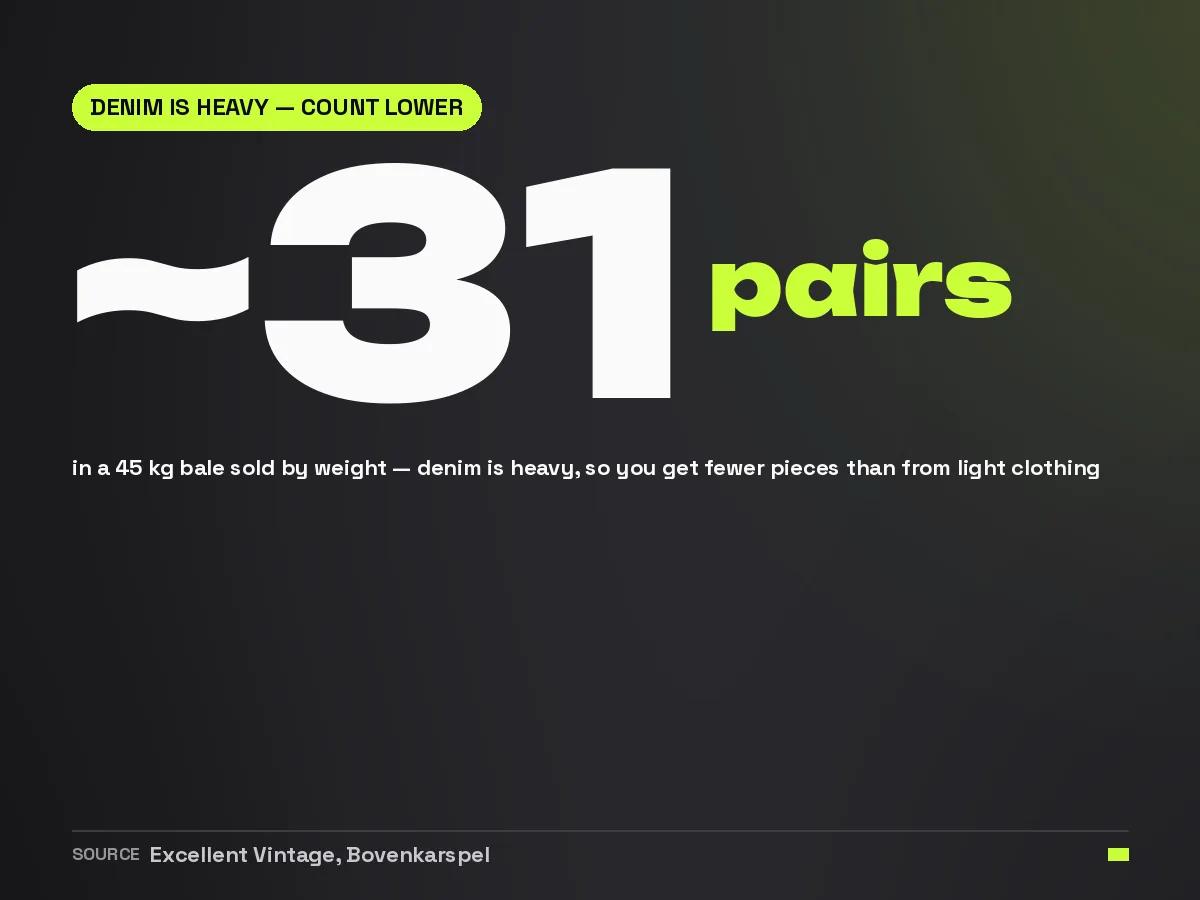
Why does that matter so much with Levi's? Because denim is heavy. A pair of jeans weighs considerably more than a t-shirt, and that pushes the piece count per kilo right down. Where a bale of light shirts gives you a couple of hundred pieces, a 45 kg bale of jeans lands you at roughly thirty — denim fills the weight, not the count. Anyone who mentally converts a denim bale as if it were t-shirts overestimates the piece count and sets their per-item margin wrong before the bale is even in the door. And with a per-piece bale the stated count is the real figure — there's nothing to convert. Which model applies to a specific Levi's bale is something Patrick should tell you when you enquire — exactly the kind of thing you phone about rather than guess.
How a wholesaler builds a Levi's bale
This is the part sales pages would rather talk around. A bale doesn't fall out of the sky. Our supply runs through fourteen containers a year — eight to fourteen tonnes apiece — arriving monthly, some from three US partners (East, South, West) and some from six European ones. Because denim and Levi's are American through and through, with a vast home market, a big share of the jeans and jackets travels in on those US containers. From that raw intake, 15 to 20 tonnes pass through our hands every month.
Then comes the sorting, and that's where a wholesaler actually earns its keep. Buy raw and unsorted and you're buying a surprise: you only find out at home. With us it's already been separated by brand and by grade before you set a foot on the floor. That's what makes a Levi's bale a defined unit of a single brand with a quality you know in advance, rather than a grab from a heap. Denim often arrives mixed in with the other big denim names — Lee and Wrangler sit in the same corner — so that up-front sorting by brand is exactly what turns it into a real Levi's bale instead of a mixed denim heap.
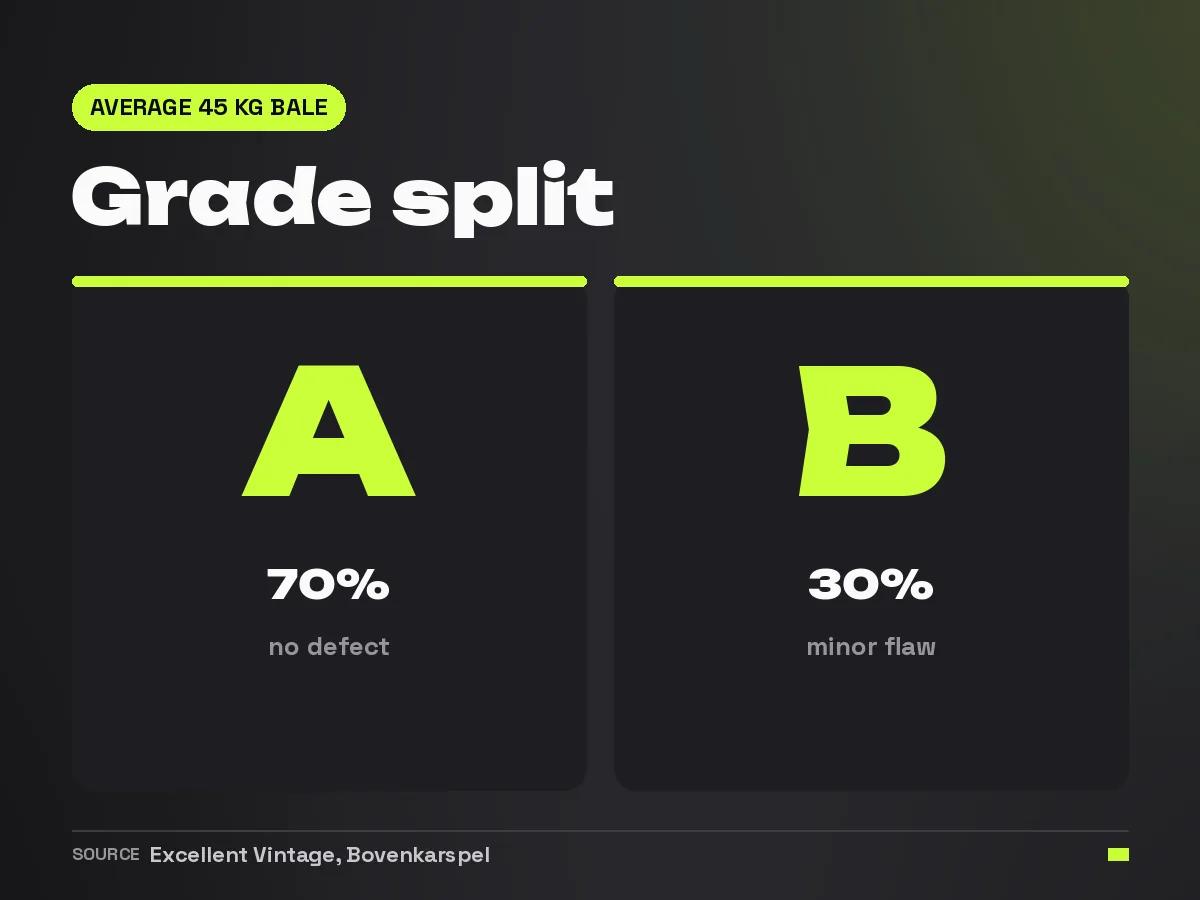
We keep that split transparent. A 45 kg bale averages 70% grade A and 30% grade B. Grade A is a piece with no defect; grade B has a minor flaw; and the serious damage — a hole, a bleach mark, a torn seam — falls under grade C and is kept separate, not quietly folded in with your A stock. With denim that grade distinction matters even more: a pair with a real tear or a discoloured patch is a different story from a pair with honest wear, and you want to know that in advance. If you want to run purely on the cleaner pieces for a specific niche, there's also a 25 kg "mix premium US" bag that sits around 90% grade A.
Which Levi's pieces sell best?
Not every Levi's piece plays the same role in your inventory, and that's where the insider edge is. The classic 501 and 505 jeans are your workhorses: broadly wanted, easy to price per piece, and sellable year-round on Vinted, Depop and in physical shops. That's the stock that keeps things moving without waiting on a trend. Alongside them sit the trucker jackets and denim overshirts — pieces that fetch a little more per item and run especially well in the shoulder seasons.
Then there's the hype corner. The older Levi's with a Big E red tab, a leather patch instead of a fabric one, or a production detail that points to a certain era, are the show-stoppers for the enthusiast. You don't buy those for volume — you buy them for the one spike in per-item margin — and on a Whatnot live a rare early 501 can hold attention on its own.
The practical lesson: match your buying to where you sell and to whom. Building a tidy denim boutique on Vinted or Depop? You want a selection heavy on clean 501s and 505s in common sizes. Running mostly live on Whatnot or TikTok? Then you want a bale dense with recognisable pieces and as much chance of a special early tab as possible. Buy Levi's well and you don't think in terms of "a bale of Levi's" but "which Levi's for which channel".
What do the Levi's labels tell you?
When you buy vintage Levi's, you eventually want to place a piece in time — it feeds into how you price and present it. Levi's has used shifting details across the decades: the red tab that once read "LEVI'S" with a capital E and later with a lowercase e, the leather versus fabric patch, the hidden rivets, and the care and size labels inside. Experts use those cues to estimate the era a pair or jacket comes from. For seasoned resellers that's one of the more enjoyable sides of the brand: you learn to read the generations off the tab and the inside.
We're deliberately not spelling it out in detail here, because a half-remembered dating rule is more dangerous than none — you misprice a piece or claim an era that doesn't hold. If you want to learn it properly, we've written a separate, thorough guide on how to date a pair of Levi's jeans, which walks through the red tab, the patch and the rivets step by step. What counts here: the labels are visible on the bale, they tell a story, and reading them is a skill you build. Come by and Patrick will simply point them out on the tab and the inside seam.
Rather talk it through on WhatsApp first? Not sure whether to buy volume denim or clean individual 501s for your audience? Send Patrick a message. He answers himself, usually within an hour on weekdays. Message Patrick
Why do you choose bales, not individual pieces?
On a visit you choose at bale level, not by the hanger. It sounds restrictive, but there's a reason for it. With 15 to 20 tonnes moving through the warehouse every month, letting each visitor hand-pick would simply clog everything up — one person rummaging while the rest wait. And it isn't even necessary: the sifting is already done. Because Patrick has separated by brand and grade in advance, you pick up a ready, predictable unit of Levi's rather than loose pot luck.
What does that look like in practice? You come by appointment, you have the floor to yourself for two hours, and you pick bale by bale. You see what's there, feel the quality of the denim, check the density of jeans versus jackets versus shorts and the size spread, and decide which bales fit your audience and platform. For a Whatnot streamer running on pace, that's a different call than for someone building a curated denim boutique on Vinted. The floor is the same; your strategy decides which bales go home with you.
And it doesn't have to be in person. If you can't get to Bovenkarspel, it works over a WhatsApp video call too: Patrick walks the bales with you, puts together a quote and ships. Heavy bales, fast shipping — that's the promise, without us pinning an exact number of hours to it here.
Where does Levi's fit in your buying strategy?
Don't see a Levi's bale as a one-off purchase but as a building block. For a lot of beginners a single denim bale is even a logical starting point: the brand is broadly wanted, doesn't sit around, and forgives a beginner's mistake because demand is so steady. Running volume? A jeans bale is your friend — one common category to photograph and list, with a predictable turnover. Serving a niche after early tabs or specific models? Then a higher-graded bag or a targeted selection makes more sense.
The nice thing about Levi's is that the turnover speed keeps your risk low. Denim is among the fastest-selling stock in the whole secondhand market, the 501 and the trucker jacket stay wanted all year, and the rare early pieces deliver the occasional standout. For a reseller who doesn't want to be stuck with dead stock and wants to ride what's moving now, that's an unusually safe brand to buy into.
Want to read the full mechanics behind formats, grades and the sorting process at your own pace? We've laid it all out in our complete guide to vintage wholesale clothing in the Netherlands. To dig into quality specifically, the piece on what grade A, B and C actually mean explains why a 70/30 bale is an honest bale. And if you're still weighing raw versus pre-sorted bales, the difference between heavy bales and sorted clothing sets them side by side.
Frequently asked questions about buying vintage Levi's
Is vintage Levi's worth reselling?
Yes, and it's one of the safer brands to buy into. Denim doesn't visibly date and is among the fastest-selling stock on Vinted, Depop, Whatnot and in physical shops. The classic 501s and trucker jackets serve a broad market, while the older pieces with a Big E tab or leather patch pull a young, targeted enthusiast crowd. You're buying into constant demand, not a short trend.
Do you buy Levi's by the kilo or by the piece?
It varies by bale. Jeans often go by weight (around 45 kg, per kilo), while denim shorts, for example, are sold at a hundred pieces. Key with denim: it's heavy, so a bale sold by weight gives you fewer pieces than you'd think — roughly thirty pairs of jeans from 45 kg. With a per-piece bale the stated count is the real figure. Ask which model applies when you enquire, so you know exactly what you're getting.
What's the difference between a Big E and a small e on the red tab?
The red tab on the back pocket read "LEVI'S" with a capital E (the "Big E") until the early seventies; after that it became a lowercase e. For resellers that's one of the quickest ways to see whether a piece comes from the older, more sought-after era. The full explanation, with all the other cues, is in our separate guide to dating a pair of Levi's.
What is VAT reverse charge and does it apply to me?
VAT reverse charge (btw verlegd) means that on a B2B sale within the EU the VAT shifts to the buyer, provided you have a valid company registration and EU VAT number. All our markets are inside the EU, so there are no customs duties intra-EU. For your specific situation, check with your accountant or ask us — we don't invent tax rules.
Ready to buy Levi's?
Levi's is one of those brands that can carry your whole inventory at once: the 501s and 505s run year-round, the trucker jackets give you the shoulder seasons, and the rare early pieces bring that extra margin per item. What a wholesaler adds is the sorting work up front — the separation by brand and grade that lets you buy a predictable denim bale instead of a mixed gamble, with the model (by weight or by the piece) stated honestly.
Want to see which Levi's bales are on the floor now and which fit your platform? Book a visit to Bovenkarspel or message Patrick. He welcomes you personally, the floor is yours for two hours, and you choose the bales that fit your plan. Read more about what we offer on our page about our wholesale range, and who we are over at about Excellent Vintage.
See the Levi's bales in Bovenkarspel Book two hours on the bale floor, exclusively yours. No deposit, free cancellation up to 24h, and Patrick calls you the day before to prepare your visit. Visit our warehouse
Ready to buy?
Visit our warehouse · no deposit required · free cancellation.