Vinted vs Depop vs Whatnot: The Best Platform for Vintage in 2026
There is no single best platform. Vinted gives sellers the biggest European audience and charges no selling fees; Depop pulls a fashion-led Gen-Z crowd that pays more per item; Whatnot moves stock…
By Patrick Libanon — founder, Excellent Vintage · Bovenkarspel, since 2012
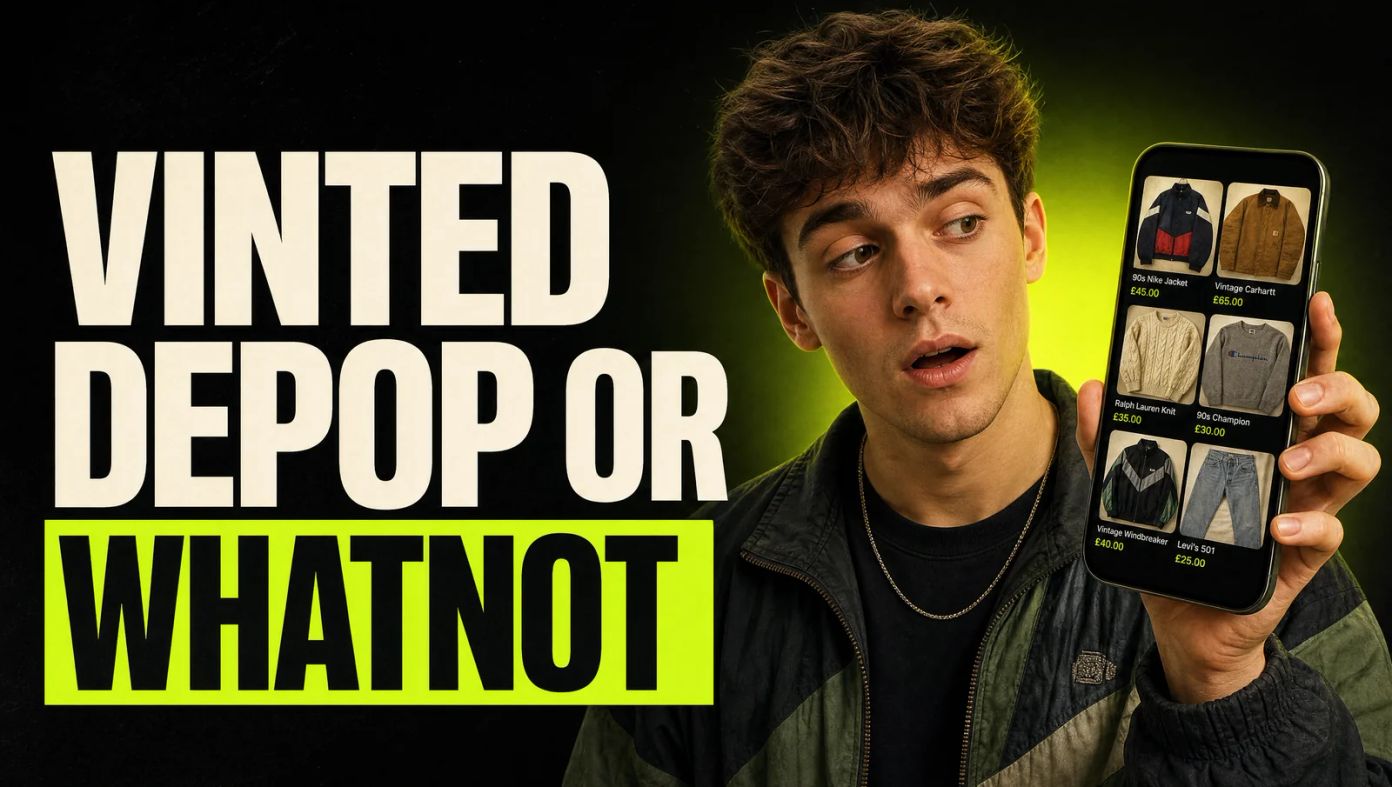
There is no single best platform. Vinted gives sellers the biggest European audience and charges no selling fees; Depop pulls a fashion-led Gen-Z crowd that pays more per item; Whatnot moves stock fastest through live auctions. The platform you pick should decide what you source.
So the real question is not which app wins, but which one fits how you want to sell. Most comparisons of these three marketplaces line up the fees, point at the audience, and stop there. That is useful if you are clearing out your own wardrobe, and close to useless if you are a reseller who has to move stock and refill it month after month. The view that actually matters is the one a wholesaler has: which platform eats which kind of stock, how fast, and what that means for the bale you buy. At Excellent Vintage we have sorted 15 to 20 tonnes of second-hand clothing a month from Bovenkarspel since 2012, and we watch the same sellers come back for different platforms with very different bales. That pattern is the spine of this guide.
Why a wholesaler compares these marketplaces differently
A casual seller picks an app on convenience and fees. A reseller who wants to scale picks one on turnover speed, on the audience it brings, and on the price that audience pays per item. Those three together set your cash flow, and cash flow is what separates a hobby from a business. The platform is therefore not a detail you settle afterwards; it is the first decision, because it steers everything that follows: which brands you buy, in which grade, and in which format.
That is the flaw in the standard checklist. It treats the platform as the finish line ("sell here") when it is really the starting point ("buy for this"). A bale that empties out in two Whatnot streams can sit in your Depop shop for three months, and the other way around. Same items, completely different outcome, purely because the audience and the selling mechanism are different. Reverse that order, buy a bale first and look for a platform afterwards, and you get stuck with stock that does not fit the channel. How to make that match the right way round is the whole point of our complete guide to buying vintage wholesale for Vinted.
How selling actually works on each app
A quick word on the mechanics, because they shape everything downstream. On Vinted and Depop you sell through listings: you photograph an item, write a title, set a price, and wait for buyers to browse or send offers. Vinted is the utilitarian one of the marketplaces, a vast pool of everyday second-hand clothes with integrated shipping labels and tens of millions of users across Europe. Shipping runs on prepaid labels the platform generates, so a first-time seller can post an item and drop it at a parcel point without ever arranging a courier. Depop feels more like a social feed, an Instagram-style shop where presentation, hashtags and a consistent fashion aesthetic pull buyers in, and where a lot of selling happens through social media as much as search.
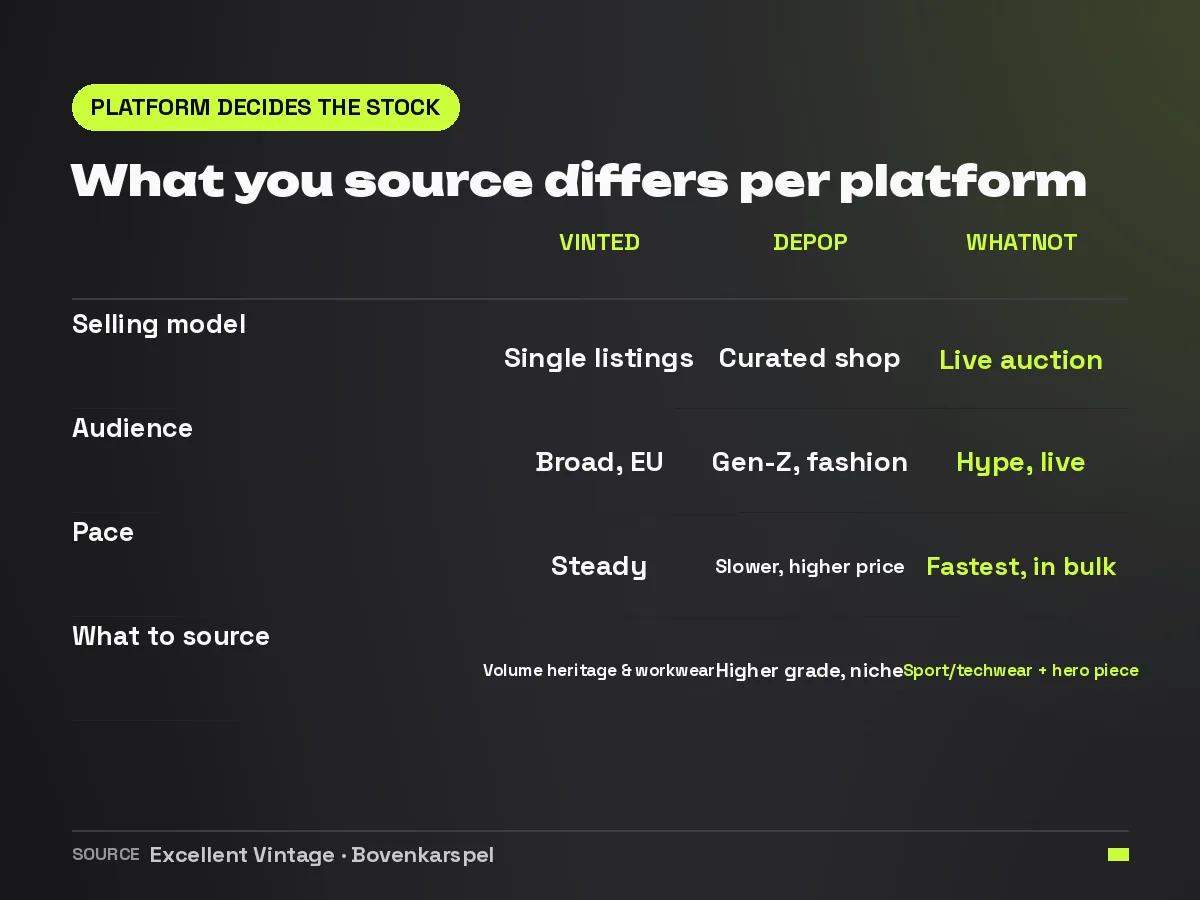
Whatnot throws out the static listing entirely. You sell live, on camera, and buyers bid in real time during a stream. Three different selling experiences, then, and three different kinds of stock that thrive on them: Vinted rewards a deep, steady supply of listings; Depop rewards a curated handful of standout items; Whatnot rewards enough volume to keep a live show moving. Keep that in mind as we go platform by platform, because the right bale for one is the wrong bale for another.
Vinted: the widest audience, zero selling fees
Across the Netherlands, Belgium and Germany, Vinted is the default starting point, and for good reason. There are no selling fees for the seller on Vinted: you keep the full sale price, and the buyer separately pays a Buyer Protection fee. That lowers the barrier enormously, because you do not hand a cut of every sale to the platform. The audience is the broadest of the three apps and not especially niche, ordinary buyers looking for affordable, wearable second-hand clothes rather than collectors hunting one rare grail, and there are tens of millions of those users on the app.
That broad, price-conscious audience decides what sells well. On Vinted you move volume in recognisable, wearable brands, not the priciest rarities. Heritage like Ralph Lauren and Tommy Hilfiger always turns over, because everyone recognises and trusts it; workwear like Carhartt and Levi's moves fast because people actually wear it. This is the channel you source volume for: a bale of one strong brand, averaging around 70% Grade A and 30% Grade B, gives you dozens of immediately listable items. A good share of that heritage, incidentally, resellers buy from us by the piece rather than by weight, a bale of Ralph Lauren shirts arrives as a fixed count of 200, for example, so there is no kilo-to-pieces maths there, only the stated number.
Vinted's drawback is the flip side of its strength: because selling is free and the audience is price-conscious, the average price per item is lower than on Depop. You earn on pace and on a high volume of listings, not on a fat margin per piece. For a beginning seller that is actually ideal, you learn to photograph, price, handle offers and ship without a platform taking a bite out of every sale. Which brands genuinely keep selling on Vinted and which are one-week flashes, we worked out separately in the best-selling vintage brands on Vinted.

Which platform turns over for you? Source to match Tell Patrick whether you sell on Vinted, Depop or Whatnot and what moves fastest, and he sets aside the sorted stock that fits it. Reply within 1 hour, Mon–Fri. WhatsApp Patrick →
Depop: a smaller, fashion-led audience that pays more per item
Depop, owned by Etsy since 2021, plays a different game. Its audience is younger and more fashion-aware, with a strong Gen-Z core and a centre of gravity in the United Kingdom and the United States. Depop buyers do not come for the cheapest basics but for curated pieces: streetwear, '90s and Y2K, archive fashion, recognisable statements. The selling experience leans social, closer to running a small fashion shop than posting a plain listing, and that shifts your whole sourcing strategy. On Depop you do not sell the mass but the special item, and you ask a price for it that would not fit on Vinted.
Depop's cost side has changed a lot in recent years, and it is worth knowing. In 2024 Depop scrapped its old 10% selling fee entirely for sellers based in the UK and the US and moved to a model where the buyer carries the platform fee; a payment processing fee still applies. That has made the app friendlier to sellers than its reputation sometimes still suggests. The exact fees vary by region, so always check Depop's own current fee page for your market before you do your margin maths.
For sourcing, the Depop audience means grade and presentation weigh more heavily than raw volume. Higher quality pays off here: a 25 kg bag of "mix premium US" at roughly 90% Grade A and 10% Grade B suits Depop better than a raw, unsorted bale. You list fewer items, but at a better price, for buyers who reward a well-photographed, clean, recognisable piece. The pro stack of brands, think Burberry, Polo Sport, Barbour and The North Face, carries a boutique edge on Depop that lifts the price per item. That the difference between a raw mix and a sorted bale is everything here, we explain in heavy bales vs sorted clothing.
Whatnot: the fastest channel, but you sell live
Whatnot is the odd one out, because you do not sell through quiet listings but through live auctions and streams. You go on camera, show item after item, and buyers bid in real time. That makes it the fastest channel of the three: a good stream can clear dozens of items in an hour, something that takes days or weeks on Vinted or Depop. The app comes out of the United States and is growing fast in Europe, with an audience built around hype, energy and the moment, and a community of sellers who treat streaming as a show.
Whatnot's fees are transparent and higher than Vinted's, simply because the platform does more: it brings both the audience and the selling machine. Whatnot charges a commission per sale plus payment processing; in the US that is about 8% of the sale price, in the UK and the EU around 6.67% plus VAT, each with a payment processing fee on top. Rates change, so check Whatnot's official page for your region. You earn those fees back in speed, because your money is tied up for a shorter time and you can reinvest in the next bale sooner.
For sourcing, Whatnot is the channel where volume and a hero piece come together. The youngest buyers want sport and techwear: Nike Tech, ACG and Jordan, Adidas Originals and Y2K, the The North Face Nuptse that comes back every winter. This is bulk work, you need enough stock to fill a stream, so you buy in volume. At the same time, one standout item works as a magnet: a Ralph Lauren Polo Bear sweater is enough to stop a whole stream and pull viewers to your shop. Whatnot rewards a combination, then, a deep stack of wearable brands plus a few stream-stoppers, and that is a very different bale from the curated one you would pick for Depop.
The choice that actually matters: your strategy, not the app
Once you lay the three platforms side by side, the real decision turns out not to be "which app" but "which strategy". Want to move volume at a low barrier? Then Vinted is your base and you buy broad heritage and workwear bales. Want to specialise in one niche at a higher price per item? Then Depop makes more sense and you buy higher grade, more targeted. Want speed, and dare to go on camera? Then Whatnot is unmatched and you buy in bulk with a few hero pieces alongside. The platform follows from the strategy, not the other way around. It is also why eBay, with its auction-house roots, still suits sellers chasing one-off collectors more than the steady turnover these three apps are built for.
In practice, most serious sellers do not pick one platform but run two or three at once. They list their broad stock on Vinted, put their best curated items on Depop for a higher price, and move bulk and hype through Whatnot streams. That sounds complex, but it is a way to spread risk: what sits still on one marketplace moves on another. The condition is that your stock is set up for it, and that starts with how you buy. An unsorted mix forces you to improvise; a bale sorted by brand and grade lets you decide in advance which item goes to which app.
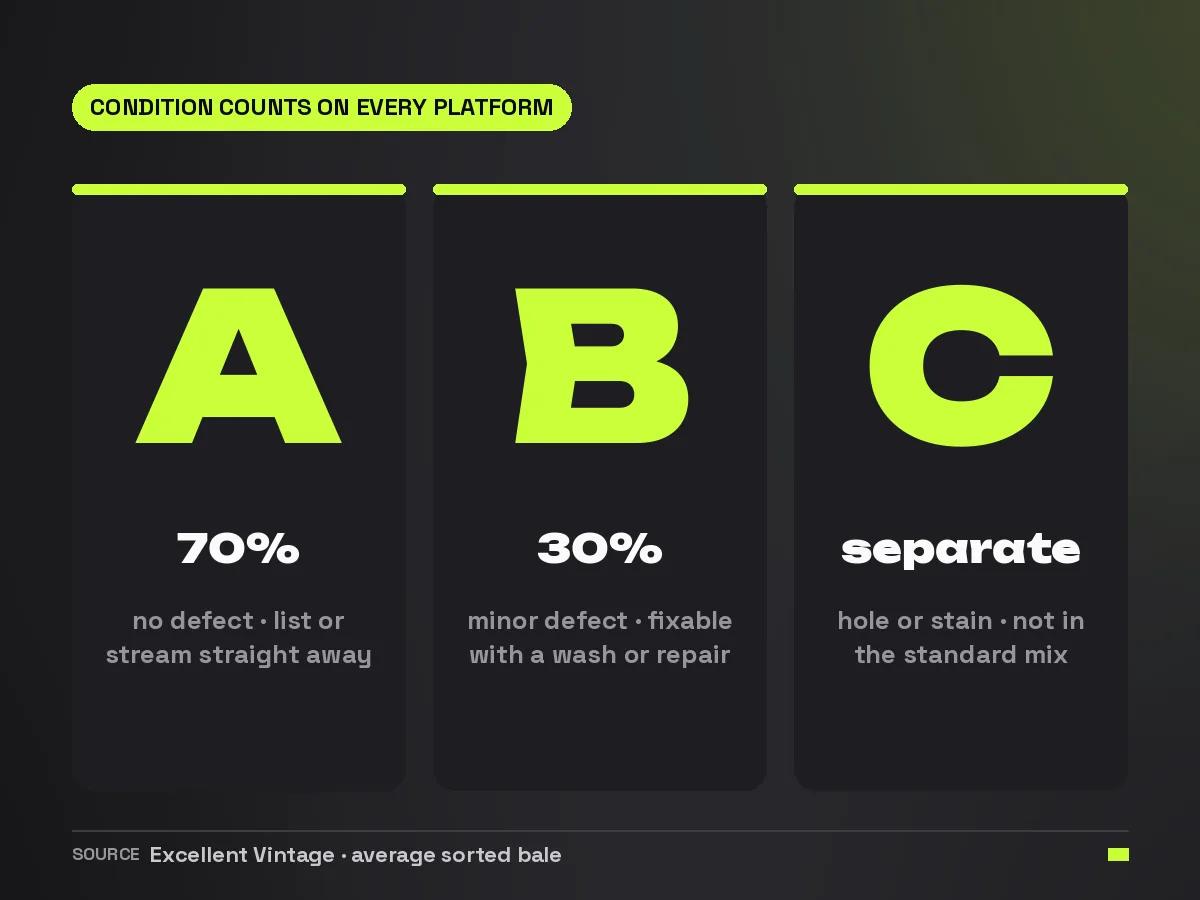
Finally, do not underestimate condition, whatever the platform. A brand only keeps selling if it also looks clean, which is why the grade you buy in matters more than which logo is on the label. With us, an average sorted bale sits around 70% Grade A and 30% Grade B, and that ratio shapes your working day more than your platform choice does: how many items you can list straight away, and how many need a wash or a small repair first. How Grade A, B and C work exactly, you can read in our guide to vintage grading. What all those choices actually earn, we work out honestly in how much you can earn reselling vintage clothing.
See which bale fits your platform, by brand and grade Book two hours on the bale floor in Bovenkarspel and compare for yourself which sorted bales suit Vinted, Depop or Whatnot. No deposit, free cancellation up to 24 hours ahead, Patrick calls you the day before. Buyers from Germany and Denmark welcome. Book a warehouse visit →
Where the wholesaler fits in this story
What all three apps have in common is that they only make money once your stock is right: the right brand, in the right grade, in a format that matches your pace. That is exactly the part a platform does not give you. Excellent Vintage sits on that side of the chain: 14 containers a year through three partners in the US and six in Europe, sorted monthly in Bovenkarspel, so you choose by brand and grade instead of buying a raw gamble. You pick bales, not single pieces, because at 15 to 20 tonnes a month handpicking is simply impossible, but you know in advance what is inside.
The concrete advice Patrick gives sellers is therefore always the same: decide your platform and strategy first, and let the sourcing follow. A Vinted volume seller, a Depop niche specialist and a Whatnot streamer all buy something different, even though they walk through the same warehouse door. Anyone who has that clear buys more precisely, sells faster, and is left with less dead stock. And that, regardless of which app from Vinted, Depop or Whatnot is on your phone, is the real win.
Frequently asked questions
What is the best platform to resell vintage in 2026? There is no universal best platform. Vinted gives sellers the biggest European audience with no selling fees and is ideal for volume; Depop pulls a fashion-led Gen-Z audience that pays higher prices per item; Whatnot sells fastest through live auctions. Choose based on your strategy, and source your stock to match it.
Does Vinted charge the seller any fees? No. On Vinted the seller keeps the full sale price; the buyer separately pays a Buyer Protection fee. That makes Vinted the cheapest starting point for moving volume, with the trade-off that the average price per item is lower than on Depop.
Does Depop still charge a 10% selling fee? For sellers based in the UK and the US, Depop scrapped that 10% fee in 2024 and moved to a model where the buyer carries the platform fee; a payment processing fee still applies. Fees vary by region, so always check Depop's current fee page for your market.
How much does it cost to sell on Whatnot? Whatnot charges a commission per sale plus payment processing. In the US that is about 8% of the sale price, in the UK and the EU around 6.67% plus VAT, with a payment processing fee on top. Rates change, so check Whatnot's official page for your region before you calculate your margin.
Which stock do I source for which platform? For Vinted you buy broad volume in recognisable heritage and workwear brands; for Depop higher grade and niche items, because the audience pays more for curated pieces; for Whatnot bulk in sport and techwear plus a few standout hero pieces to carry your streams. A bale sorted by brand and grade makes that match possible in advance.
Start with your platform, then choose your bale Want to source deliberately for Vinted, Depop or Whatnot instead of a blind mix? See our heavy bales offer or plan a visit to the warehouse in Bovenkarspel. Fast shipping across NL, BE, DE and DK. See the wholesale offer →
Ready to buy?
Visit our warehouse · no deposit required · free cancellation.