How to photograph vintage clothing for Vinted: the photo is your last sorting step
Vinted asks for the whole item in the first photo, taken in daylight without flash or filters, on a neutral background, with any defects shown, and close-ups of labels, logo and stitching for…
By Patrick Libanon — founder, Excellent Vintage · Bovenkarspel, since 2012
Vinted asks for the whole item in the first photo, taken in daylight without flash or filters, on a neutral background, with any defects shown, and close-ups of labels, logo and stitching for branded items; for certain categories, such as designer goods, Vinted requires at least three. Up to twenty photos per listing. The rest is routine: per batch, per grade, the day the bale opens.
I have sold second-hand clothing bales from Bovenkarspel since 2012, and I do not photograph anything for Vinted myself. The resellers who buy from me do that, at home, with a phone, next to a window. Yet a good share of the conversations on my bale floor are about photos. Rarely about cameras or lighting kits. Almost always about the question that comes up once you move from single items to a bale: how do I get two hundred pieces through the camera without losing a weekend, and without a buyer sending something back because I did not show a small mark on a cuff.
My answer is always the same: the photo is the last sorting step. What we decide here on the floor about a bale, the brand, the category, the split between grade A and grade B, decides at home which shots each garment needs and in which order you take them. Resellers who understand that photograph faster and sell with less friction. The others turn every item into a separate project.
What does Vinted actually require in your photos?
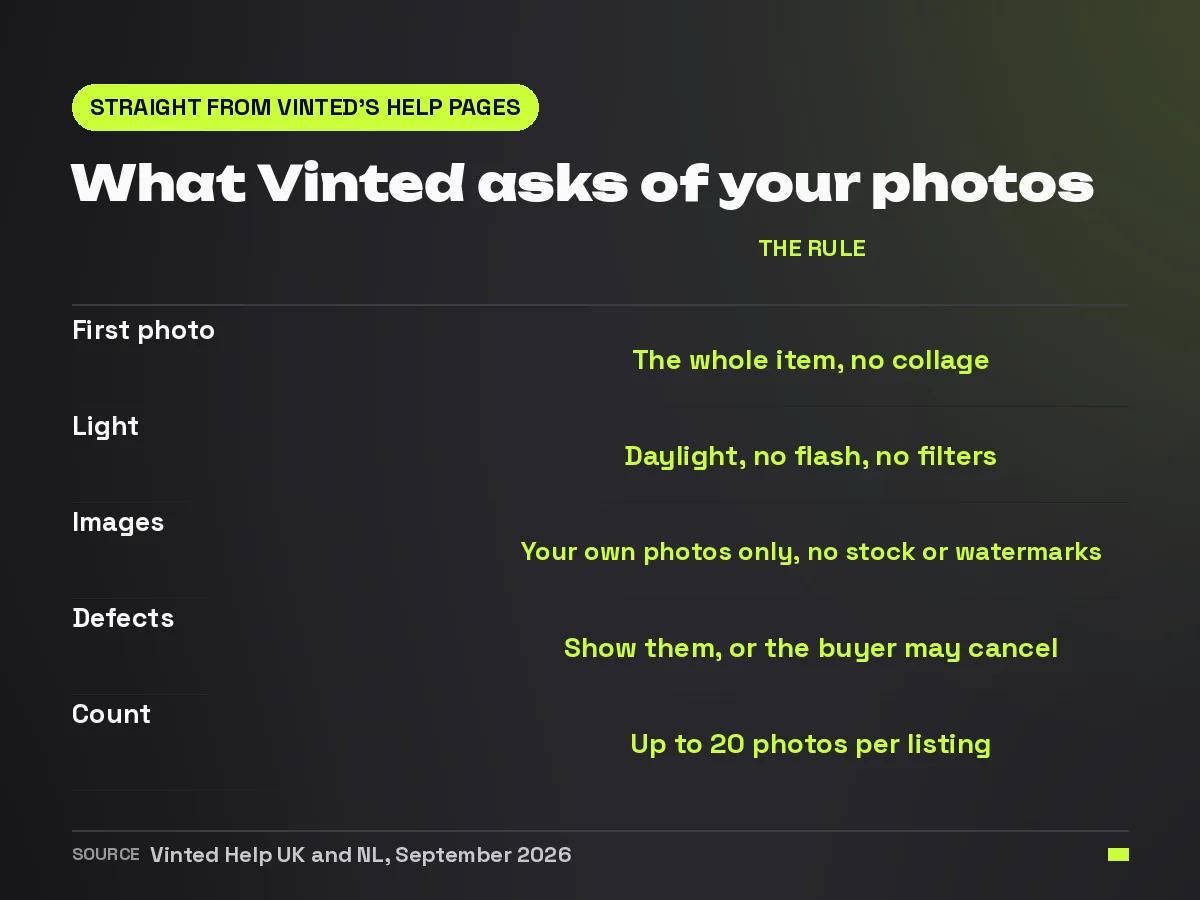
I start at the source, because that is where most arguments end. Vinted publishes its photo rules on its own help pages, in English and in Dutch, and they are shorter than most of the blog posts written about them. The first photo shows the entire item, no collage. You shoot in daylight, without flash and without filters, so the colours are true. The background is clear and neutral, nothing to distract from the garment. You upload your own pictures only: no stock images, no photos found online, no watermarks, and Vinted gives two reasons for that, copyright and the fact that such an image does not show the current condition of your item.
Then comes the part resellers skip most often. Vinted asks you to show the item's defects if there are any, and spells out what happens if you do not: the buyer may want to cancel the order and return the item. For items from a well-known brand, the platform also asks for close-up shots of details that show authenticity, and for certain categories, such as designer goods, that becomes a requirement: at least three close-ups, or the listing may be hidden or removed.
Per listing you can upload up to twenty photos. That number sits on the help page about photos and again in the catalogue rules. You do not have to use all of them, but the ceiling is high enough to showcase a garment completely without choosing between the front and the care label.
What strikes me about those rules is that they ask the same questions a sorter on my floor asks. What is it? What does it really look like? Where is the flaw? Is it genuine? Vinted asks the seller to do what a good wholesaler already did before the bale was closed. That is why I call the photo the last sorting step: you repeat with a phone what was done here by hand, and you record it for the buyer.
Why grade A and grade B get a different shot list
Anyone who buys a bale from us knows roughly what is inside before it opens. Across our intake, a bale of around forty-five kilos averages seventy percent grade A against thirty percent grade B. A twenty-five kilo bag of mix premium US sits around ninety percent grade A. Those are averages over everything that comes through the warehouse, never a guarantee per lot, and I say so every time. What they do is fix your shot list in advance.
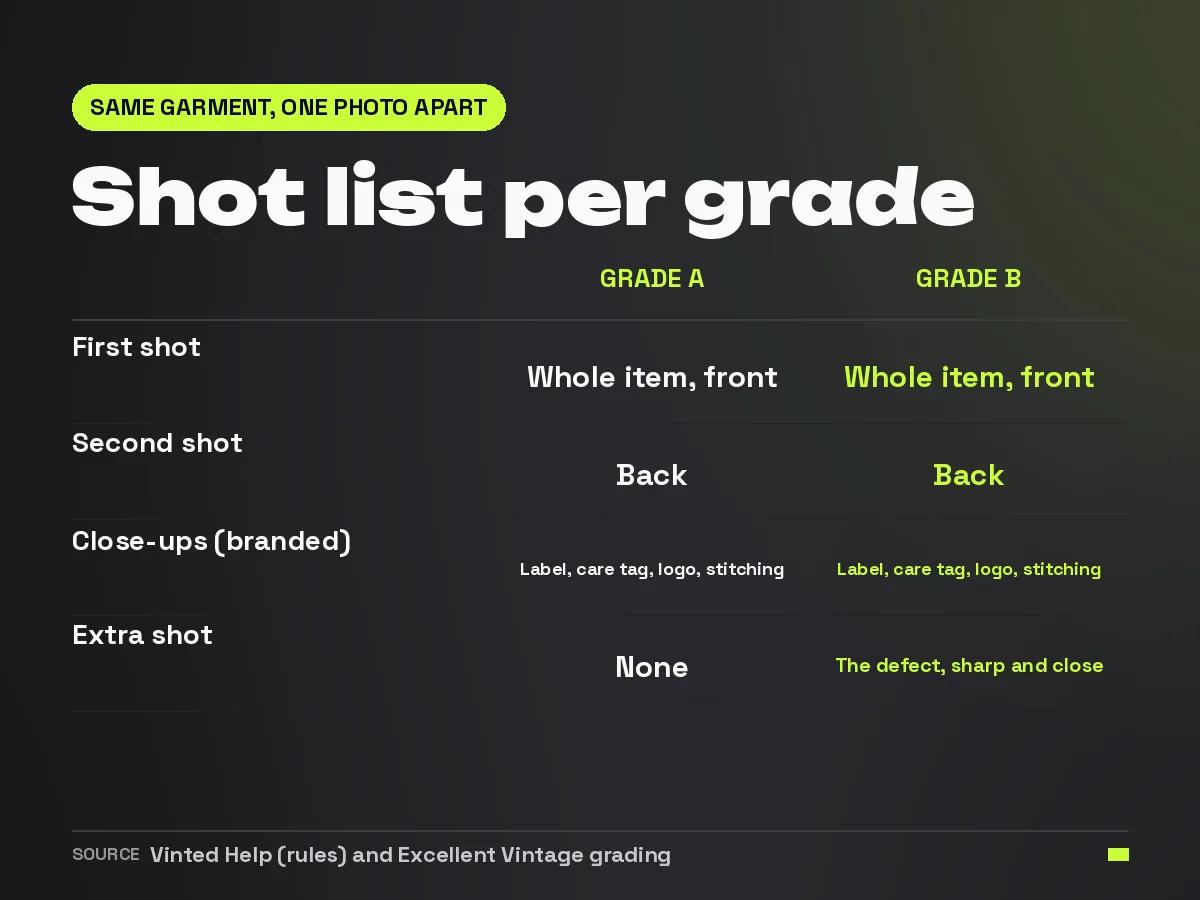
A grade A garment has no defect. The series is short: the whole item from the front, the back, the label at the neck or waistband, the care label, and for a branded piece the close-ups of logo and stitching that Vinted names. Done. A grade B garment has a minor defect, and it gets the same series plus one more shot: the defect itself, close, sharp, in the same daylight as the rest. Not hidden in the last position, not blurry, just an honest picture of a loose button or a faint mark on a cuff.
That single extra image is the difference between a B piece that sells and a B piece that comes back. Vinted puts it bluntly: if you do not show the flaw, you give the buyer a reason to cancel. If you do show it, you sell to a buyer who has already seen it and does not mind. On a platform where everyone is buying second-hand, a visible flaw is rarely the problem. A hidden one is. If the grades are not yet clear in your head, read what grade A, B and C actually mean first; the rest of this piece assumes you know.
Grade C you do not photograph from our bales, for the simple reason that grade C is not in our standard bales. A hole or a bleach mark is handled separately here, and what you find at home in a grade B piece is usually a light stain that belongs in the wash before the phone comes out. I have written about that separately, in how to remove stains from vintage clothing without damage. The order is: treat first, then photograph, and whatever is still visible after treatment, you show. For the grade B pieces that stay grade B, Vinted also allows a set listing of up to five items, with the first photo showing all of them together; that is a clean way to move a few honest B pieces of one brand in one go instead of five separate listings.
See the grade before you photograph it Two hours on the bale floor in Bovenkarspel, four people at most, and you see per bale what is grade A and what is grade B before you take a single photo at home. No deposit, free cancellation up to a day before, and I call you the day before your visit. Book a warehouse visit
How many pieces does a bale send through the camera?
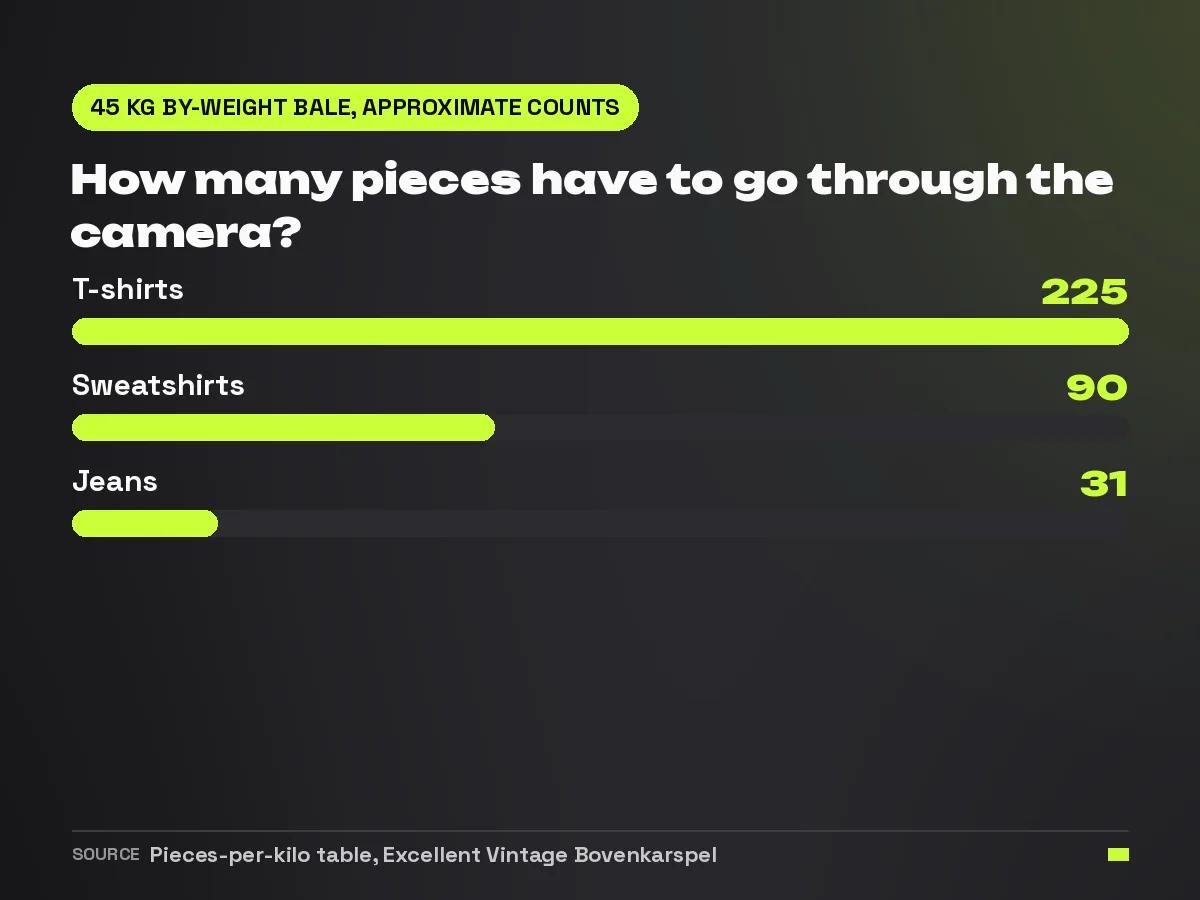
This is the sum I always do out loud on the floor, because at home it decides the photo week. A forty-five kilo bale sold by weight is a quantity of photo work that depends entirely on the category: in t-shirts it holds roughly two hundred and twenty-five pieces, in sweatshirts around ninety, in jeans about thirty-one. Same weight, same bale, and a completely different photo week.
Those numbers come from our own pieces-per-kilo table and apply to bales sold by weight. A bale sold by the piece, say a lot of two hundred Ralph Lauren shirts or a hundred Tommy sweaters, carries a fixed count, and that count is the honest figure. Either way you know before the bale opens how many garments have to go through the camera, and that is the only planning that counts.
For your photos that means: choosing a category is choosing a photo rhythm. A t-shirt lies flat and is done in four shots, but the counter runs to two hundred and twenty-five. A pair of jeans asks for more shots per item, from the buttons to the label on the back, but after thirty-one you are done. I would rather someone works out that calendar on the floor in Bovenkarspel than at home, with an open bale in the hallway.
A batch routine: how to get two hundred items through the camera
Everything sorted here arrives pre-sorted: by brand, by category, and graded. That is not a detail for your photos. It is most of the method. A batch of one brand and one category you photograph as one lot. Same background, same distance, same angle, same spot by the window, and you change nothing until the batch is done. Every photo looks like the previous one, and that is the point: a buyer scrolling through your listings sees a seller with a system rather than a collection of random pictures.
The order per item is Vinted's order, and you keep it for every garment without exception. The whole item from the front, on a hanger or as a flat lay, because Vinted names both and advises against showing your face. Then the back. Then the close-ups: the label at the neck or waistband, the care label, the logo or embroidery, a piece of stitching, and for a grade B item the defect. Fix that series on the first garment and stop thinking about it, and by item eighty you have won back the time you invested on item one.
Light decides your working hours. Vinted wants daylight and no flash, so your photo block sits in the daytime, by a window, not in the evening under a lamp with a filter on top. Many resellers I talk to therefore photograph in blocks of a few hours and do descriptions, sizes and listing prices in the evening, when the light is gone anyway. It is the simplest way to work a bale through in a week without it feeling like a second job.
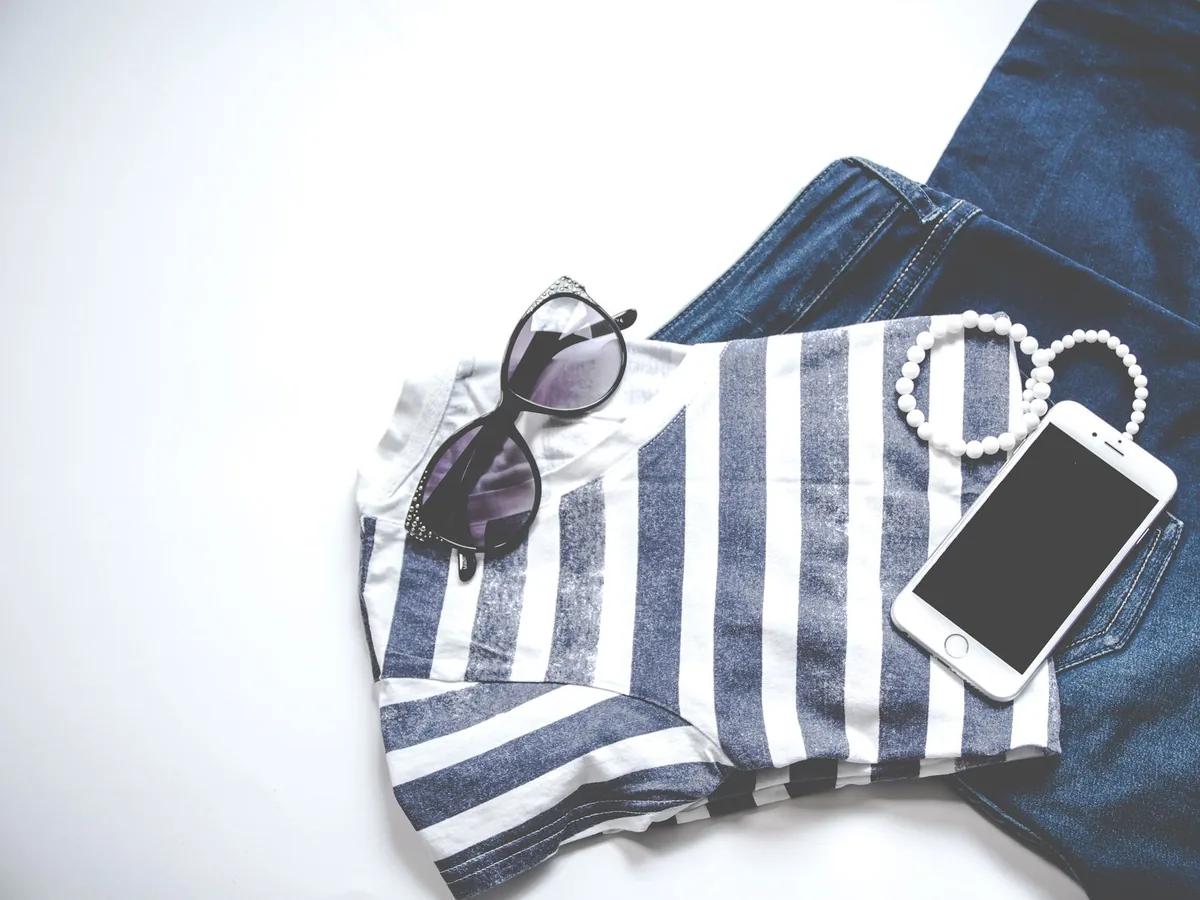
And then the moment I see go wrong most often: the bale opens, everything is on the floor of the room, and the reseller starts with the nicest piece. Two days later the rest is still lying there. Whoever does the opposite, splits the lot into grade A and grade B on the day it opens, photographs the grade A in blocks the same day and sets the grade B aside for treatment, has already won the week. That is a sorting step, which is why it belongs in this article. How you organise those first days after a bale at all, from choosing a brand to a selling rhythm, is in start Vinted reselling with vintage bales, step by step.
Light, background and the shadow problem
Daylight is the only lighting Vinted asks for, and it is also the cheapest, so the question is not which lamp to buy but which window to use. The resellers I talk to who get consistent colours photograph next to a window with indirect light, away from direct sun. Direct sun at midday gives hard shadows across the fabric and blows out the white of a t-shirt, and a filter to fix that afterwards is exactly what the platform tells you not to do. Cloudy days are better days for photos, and a bright room with the item a metre from the window is enough for a phone camera.
The background does the rest of the work. A white or plain light wall, a clean sheet on the floor for a flat lay, or a plain door with a hook: anything that stays the same for the whole batch and shows the true colour of the clothes. A lint roller before the first shot, a quick steam to remove the deepest fold marks, and the garment looks like what it is, a clean second-hand piece, without pretending to be new. Size and fit you show with the label and, if the buyer needs it, a measurement in the description; the photo only has to make the label readable.
Just ask Patrick Not sure which category fits your photo rhythm, with two evenings a week or a full day? Message me with your platform and the time you have, and you will hear what came in those weeks and what that means in work. You speak to me directly, in English, Dutch or French. Message Patrick on WhatsApp
Which details have to be in the photos for branded clothes?
For a well-known brand, Vinted's general photo page advises close-ups of labels and logos to show authenticity. For certain categories, such as designer goods, a separate help page on branded items goes a step further and makes it a requirement: a photo of the whole item from the front, then the back, and then at least three close-up shots of details. For clothing, Vinted names those details: the logo patch or embroidery, the label at the neckline or waistline, the stitching lines, the care tag, zippers and buttons, and where possible a proof of purchase or price tag. In those categories, a listing without that proof can be hidden or removed. A Ralph Lauren shirt or a Tommy sweater from a bale usually does not fall under that rule, but I advise resellers to take the same three close-ups as standard anyway: it costs a minute and it prevents every discussion.
For a reseller selling out of a bale, the proof of purchase is a wholesaler's invoice, and it says nothing about one specific shirt. Vinted knows that too. What remains are the details on the garment itself, and those are the places our sorters look at before a piece goes into a branded bale. The label at the neck, the quality of the embroidery, the finish of the stitching. A reseller who takes those three shots as standard for every branded item has a listing that shows what the sorter here saw too.
Two practical things I pass on. Make sure the text on the label is readable, because Vinted literally asks for that and a blurry close-up does not count. And always photograph the care tag, even when nobody asks: it is the fastest way to show fabric composition and country of manufacture without typing it out.
What you do not photograph
There are also things that do not belong in the photos, and Vinted is just as clear about those. No stock images and no pictures from the internet, not even as a last photo to show how the piece is meant to be worn. It is not allowed and it does not show the condition of your copy. No watermark. No filter over a faded garment to make it look fresher, because then the buyer receives a different colour from the one in the listing, and that is the complaint Vinted wants to avoid with the daylight rule.
Your face does not need to be in it either. Vinted advises blurring or cropping identifiable features and names the alternatives itself: a hanger, a mannequin or a flat lay. For a reseller with two hundred pieces to do, that is also simply more practical. A mannequin or a hook on a white wall stands there all day, you do not.
And you do not photograph a garment you still have to treat. A light stain that comes out in the wash does not belong in a listing as a defect, it belongs in the laundry basket. Photograph what you sell in the condition you ship it. That sounds obvious, but it is the reason I advise resellers to photograph the grade B only after they have treated the batch, and not in the first excitement of an open bale.
What I see on the floor
My name is Patrick, I am not a photographer, and what I do have is more than thirty years in second-hand clothing and a floor of 2,500 square metres in Bovenkarspel that handles fifteen to twenty tonnes a month, with resellers who come back and tell me what happened at home with the bale they bought here. From those conversations I draw one pattern, and I give it as an observation, not a statistic.
The resellers who come to us for the third or fourth time are rarely the ones with the best camera. They are the ones who treat their bale as one lot. They know before opening how many pieces are inside, they split by grade on the first day, they photograph per brand in one setup, and they keep Vinted's order without thinking about it. Their photos are rarely prettier than anyone else's. They are consistent and honest about the defects, and that is what I hear back from them: fewer returns, fewer discussions in the chat.
What I also see is that the choice of bale already decides most of the work. A pre-sorted bale instead of a raw mix saves not only sorting at home but photo work, because your setup per batch stays the same. Anyone still at the very beginning who wants to understand the whole chain, from box to bale, is better off reading the complete guide to buying vintage wholesale for Vinted first. The photo follows on its own, as the last step of a sort that has already been done.
Frequently asked questions
How many photos can you add to one Vinted listing?
Up to twenty per listing, according to Vinted's help page on photos and its catalogue rules. You do not have to use them all. For a grade A garment without defects, a photo of the whole item, the back and a few close-ups of the label, care tag and logo are usually enough. For certain categories, such as designer goods, Vinted requires at least three of those close-ups.
Can you use stock photos or pictures from the internet on Vinted?
No. Vinted explicitly asks for your own photos and prohibits stock images, pictures from the internet and images with a watermark. The reason the platform gives is twofold: such images are copyrighted, and they do not show the current condition of your copy. For a reseller it is also the weakest selling argument there is, because the buyer wants to see this exact piece.
Do you have to show defects in the photos?
Yes. Vinted writes that you must show an item's defects if there are any, and warns that otherwise the buyer may cancel the order and return the item. For a grade B garment that means one extra photo of the defect, sharp and close, in the same daylight as the rest. An honestly shown flaw sells fine on a second-hand platform; a hidden one comes back.
Which photos does Vinted require for branded clothing?
For a well-known brand Vinted advises close-ups of labels and logos. For certain categories, such as designer goods, it is a requirement: the whole item from the front, the back and at least three close-ups of details. For clothing Vinted names the logo patch or embroidery, the label at the neckline or waistline, the stitching lines, the care tag, zippers and buttons, and where possible a proof of purchase. Make sure text on labels is readable; in those categories a listing without enough proof can be hidden or removed.
Do I need a mannequin or a ring light to photograph for Vinted?
Vinted does not ask for either. The platform names a hanger, a mannequin or a flat lay as alternatives to wearing the piece yourself, and it asks for daylight rather than artificial light, flash or filters. What you do need is a fixed spot by a window and a fixed order per item, so that a batch of one brand looks like one whole in your listings.
Anyone who would rather see the bale before setting up a photo corner is welcome in Bovenkarspel, or on a video call if the drive is too far.
Choose your category on the floor, not in the hallway Book two hours on the bale floor in Bovenkarspel and see per bale which brand, which category and which split of grade A and grade B you take home. Then you know before opening how many pieces have to go through the camera. No deposit, free cancellation up to a day before. Monday to Friday, nine to five, or by video call if you cannot travel. Book your visit
Ready to buy?
Visit our warehouse · no deposit required · free cancellation.