Patagonia Vintage Wholesale in the Netherlands: What Is Really in a Fleece Bale
Patagonia has spent years pushing customers to repair what they own instead of replacing it, and since 2013 it has run its own repair-and-resale programme to make that easy. For a bulk buyer the…
By Patrick Libanon — founder, Excellent Vintage · Bovenkarspel, since 2012
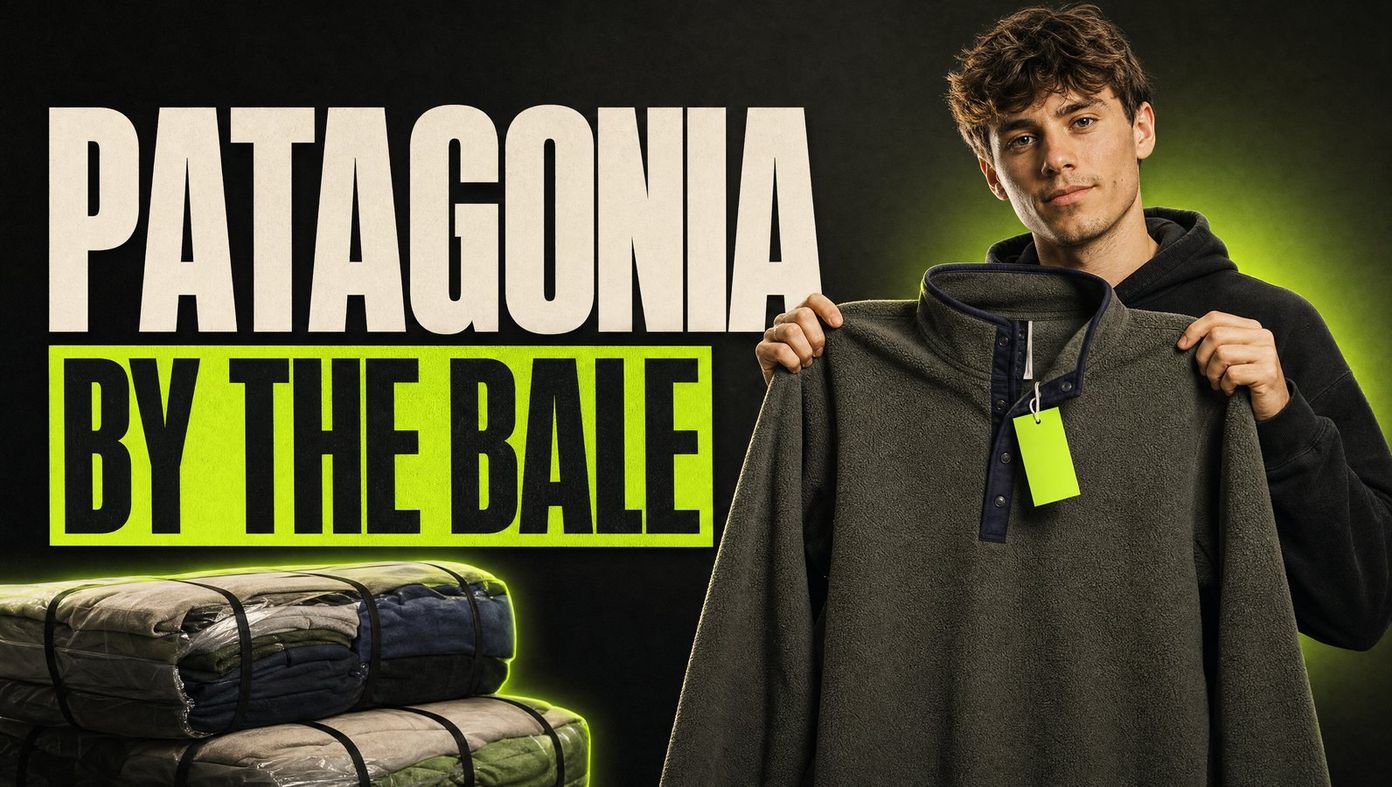
Patagonia has spent years pushing customers to repair what they own instead of replacing it, and since 2013 it has run its own repair-and-resale programme to make that easy. For a bulk buyer the consequence is commercial: as resellers keep telling us, it shapes how the person you eventually sell to reacts to a garment that has obviously been worn.
Sourcing vintage Patagonia wholesale means buying by the bale from a supplier that pre-sorts by brand and category. You select bales, not individual garments. Before committing, you want three answers: the category inside, whether the bale is priced by weight or by piece, and the grade split. The rest follows from those three.
We have operated from Bovenkarspel since 2012, forty-five minutes from Amsterdam by car, in a 2,500 m² hall that takes fifteen to twenty tonnes of clothing a month. Patrick runs the trading floor, greets every buyer himself and has thirty-two years in this trade behind him. Patagonia sits on our list of ten permanent brands, and by far the largest share of the work goes into the sorting that happens before anything is sold.
Patagonia does not sit next to The North Face here
Buyers assume it does. Two American outdoor brands, both mountain-coded, both familiar from the same shelves — they belong together. On our sorting tables they sit in two different clusters, and the distinction is operational rather than cosmetic.
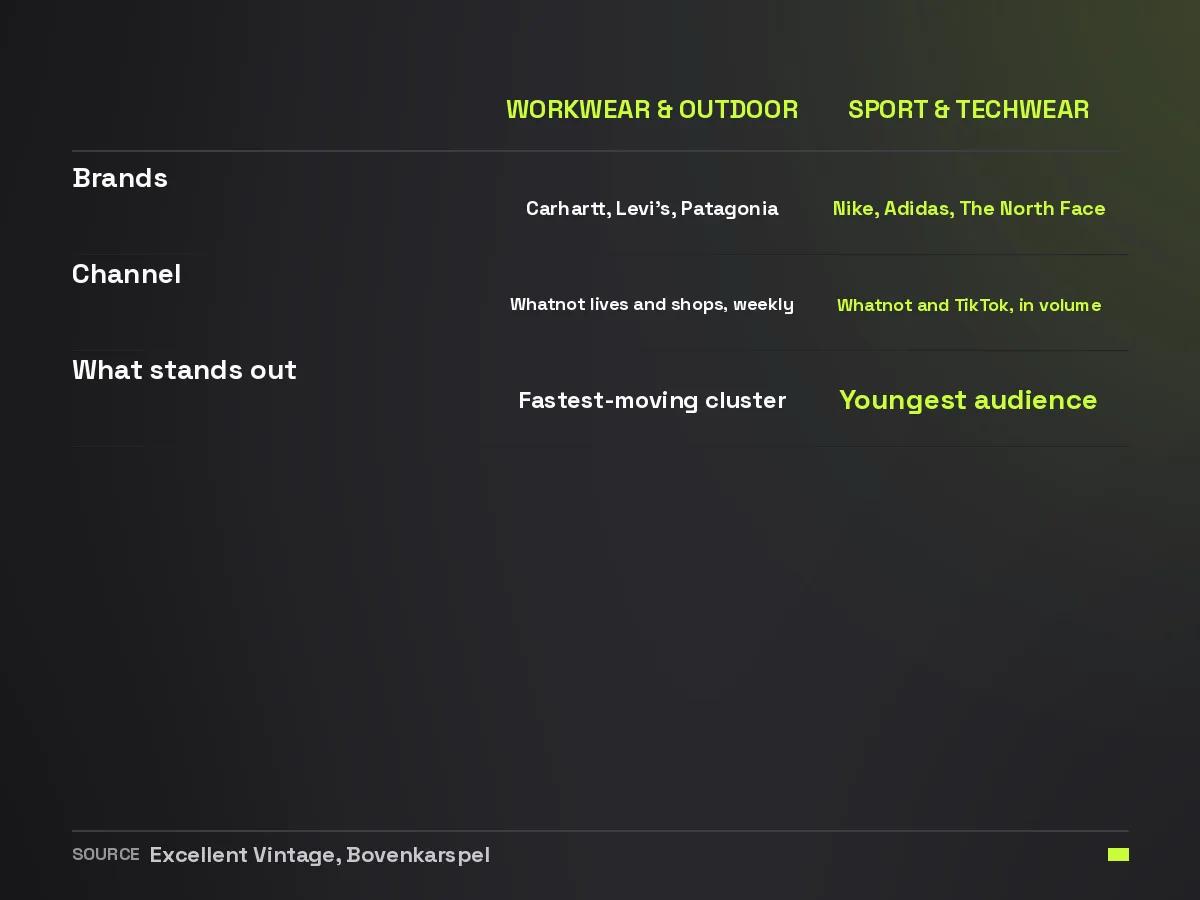
Patagonia belongs to the workwear and outdoor cluster, alongside Carhartt and Levi's. The North Face sits in the sport and techwear cluster with Nike and Adidas, and turns up again in our heavier pro stack. The cluster a brand falls into predicts who ends up buying it and how quickly it moves — and the workwear and outdoor cluster is the fastest-moving of all ten, going out weekly to live sellers and physical shops.
In practice: if you buy Patagonia expecting it to behave like North Face, you are aiming at the wrong audience. It behaves far more like Carhartt — a utility brand with a loyal, informed buyer base that moves fast without needing a hype cycle to carry it.
The fleece is the brand
Patagonia was founded in 1973 in Ventura, California. Its founder, Yvon Chouinard, had been forging hardened steel pitons for Yosemite climbers since 1957 and selling them out of the back of his car — which tells you something about how the company approaches construction. But for the resale market, one launch matters more than the founding: autumn 1985, when Synchilla fleece and the Snap-T arrived together. The double-faced fleece fabric was developed with Malden Mills, the mill that later became Polartec.
What followed explains why this brand turns up in almost every second-hand supply chain in Europe. In 1993 Patagonia became the first outdoor clothing maker to produce a polyester fleece from recycled soda bottles; that first run carried a green cast, simply because the bottles were green. A company that went big early on one garment leaves a deep layer of that same garment in the used stream three decades later.
For a buyer that is good news with a trap attached. Good news, because the category exists and keeps arriving. The trap is that "a Patagonia bale" tells you nothing on its own. The same brand name covers fleece pullovers, technical outer layers, shorts and plain tees, and those four do not sell at the same pace, to the same buyer, or at the same margin. Ask about the category, not just the brand. Why pre-sorting changes so much compared with a raw lot is something we unpacked separately under heavy bales versus sorted clothing.
Why a worn Patagonia reads differently from a worn polo
This is the argument buyers most often miss, and it lands directly on margin.
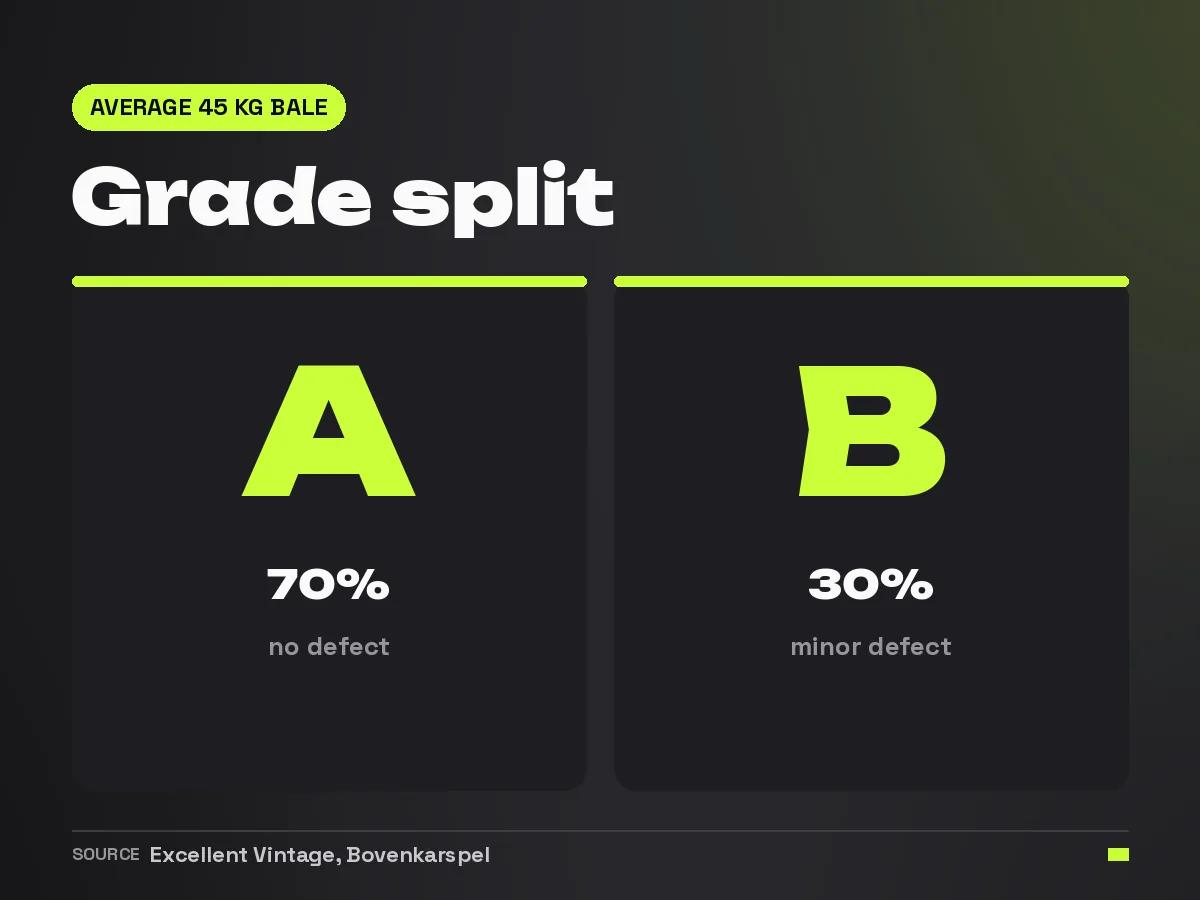
Our grades are defect-driven and brand-independent. Grade A means no defect, grade B a minor one, and anything with real damage — a hole, bleach discolouration — goes out as grade C through a separate channel and is not part of these mixes. A 45 kg bale averages seventy percent A against thirty percent B. Exactly what each letter covers is written out in our guide to grade A, B and C.
What does change by brand is how the end buyer reads that B. Patagonia has run its own repair and resale programme, Worn Wear, since 2013 — the brand itself made repaired, visibly used clothing normal rather than embarrassing. That shifts expectations. A fleece that plainly looks used sits closer to what buyers already expect from this label than a heritage polo with the same wear does. That is not a promise or a statistic; it is what resellers report back to us and what you can read in asking prices on the marketplaces yourself.
Be honest about where fleece actually fails, though. Pilling and zips are the two points where this garment shows its age, and neither survives a close-up photograph. How pilling was assessed in a particular batch is a question to put at the enquiry — that is a property of the lot in front of you rather than a standing rule. What you do control is the finish: de-pill a fleece before you photograph it and the same garment sells as clean stock.
Want to know which category is in the Patagonia bales right now? Fleece, outer layers or mixed — it shifts with each intake. Book a visit and see what is on the floor before you choose. Book a warehouse visit
The container clock: why you cannot order fleece for next week
This is the side of wholesale that rarely gets explained, and with a strongly seasonal brand it separates buying well from buying late.
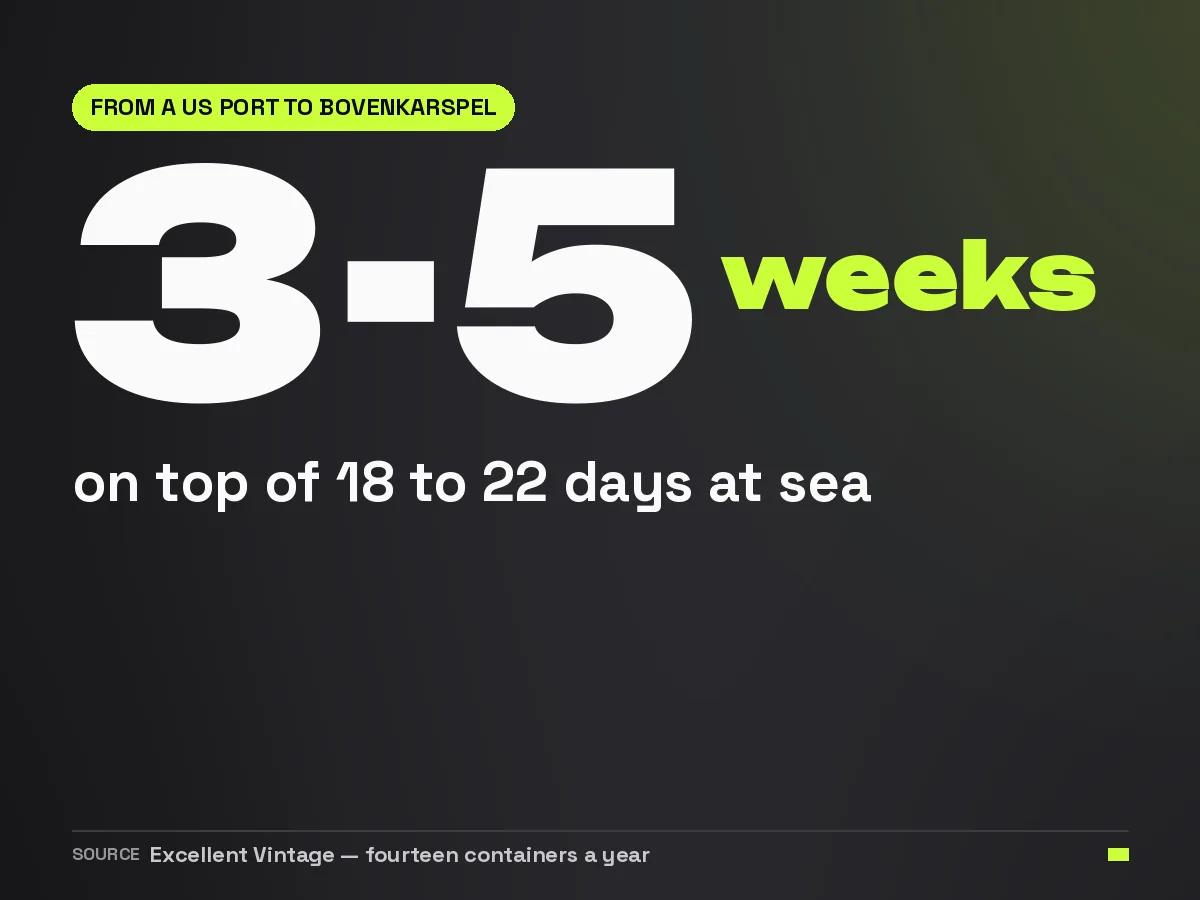
Fourteen containers arrive here each year, between eight and fourteen tonnes apiece, roughly one a month. Three American partners feed them — East, South and West — plus six European ones in the Netherlands, Germany, the United Kingdom, France, Italy and Spain. Patagonia is thoroughly American, so this brand comes in almost entirely over the Atlantic line: eighteen to twenty-two days at sea first, then another three to five weeks between the port and the hall.
Add that up and you can see why fleece works differently from a t-shirt brand. The pullover you want to sell in October travelled in a container loaded on the other side of the ocean months earlier. No wholesaler can speed that clock up. What a wholesaler can do is tell you where it currently stands. So ask not only what is on the floor, but what is on the water — that question is how experienced buyers plan their autumn while it is still summer.
Why a fleece bale looks bigger than it counts
Stand a bale of fleece next to a bale of denim and the difference is immediate. Fleece is bulky without being proportionally heavy: it presses against the wrapping, springs back when you push it, and fills a van far faster than its weight suggests. That single property costs inexperienced buyers money twice over, in two unrelated ways.
The first cost is logistical and it lands on the day. A stack that looks impressive does not automatically fit the car you arrived in, and at home it demands more shelf than you cleared for it. Buyers taking fleece for the first time plan their trip and their storage around weight, then get caught out by volume.
The second cost is commercial and it only lands at unpacking. We run two sale models side by side: a weight bale of around 45 kg priced per kilo, or a by-piece bale where the count is fixed in advance. In the second case there is nothing to calculate, because you are told that figure up front. In the first, the garment itself is the unit, and across our full range that scale varies enormously — a t-shirt comes out at roughly five pieces per kilo, a sweatshirt at about two, and denim, the heaviest category we carry, manages no more than seven pieces per ten kilos. A lined fleece sits closer to the sweatshirt than to the shirt. We do not publish a fixed number alongside that, because it varies too much by style for the figure to be honest; you hear it at the enquiry.
The real point lies in the gap between those two measures. Volume and count tell two different stories with this brand, and your margin hangs entirely on the count. Budget on pieces, and let the size of the stack stay out of the calculation.
How many pieces are actually in there? With fleece, the size of the bale says very little about the count. Ask Patrick for the sale model and the category before you run your margin. Message Patrick
Who does this brand actually work for?
The workwear and outdoor cluster sells to buyers who know what they are looking at. That sounds obvious, but it has practical consequences: your customer searches by style and by size, not by a silhouette in a photo. They know the difference between a heavy and a light fleece, and they will ask about fit before they buy.
That makes the brand less exposed to whatever is trending this week than the sport cluster, where a garment has to land visually in a live stream to sell at all. It also makes your listings more work: you will have to state more — style, size, condition, colour — because that is what your buyer filters on. In exchange you get stock that holds demand across the year instead of selling in a single spike.
For buyers in Germany and Denmark, that steadiness matters more than it does domestically. A brand that only sells in a narrow window is a poor fit for a sourcing trip you have to plan weeks ahead — and the practicalities of planning one are covered in our guide for foreign buyers visiting the warehouse.
How buying actually works here
We sell by appointment, deliberately. You get two hours on the bale floor, up to four people, exclusive to you — not a shared floor with three other buyers eyeing the same stack. Patrick prepares the bales in advance, sorted by brand and grade, and calls you the day before to align on what you are after. Booking requires no deposit, and you can cancel free of charge up to twenty-four hours ahead. He works in English, Dutch and French, with no interpreter and no support ticket in between.
What you do on that visit is choose bales — not individual pieces. At fifteen to twenty tonnes a month, picking garment by garment is simply not workable, and any wholesaler promising otherwise is selling you something they cannot deliver. If you want to understand how a wholesaler works from the inside first, we wrote the whole thing out in our guide to Dutch vintage wholesale.
Cannot travel? We do it by video call instead: Patrick walks the bales with the camera and you decide remotely. Buying as a registered business inside the EU also means VAT is reverse-charged once you have a valid company and EU VAT number, and there are no intra-EU customs duties to plan around. Anything past that general principle — exactly which categories are on the floor, what a given bale costs — is a question to ask, because our range spans more than four hundred categories that shift with season and intake. More on how we work is on our about page, and the current offer sits on wholesale.
Frequently asked questions
Is Patagonia always available?
Patagonia is one of our ten permanent brands, so it is a continuous part of intake. What shifts is the category: one month brings more fleece, another more outer layers. Ask what is on the floor at the time of your enquiry.
What decides how many pieces are in a bale?
The sale model and the category. In a by-piece bale the count is fixed in advance. In a 45 kg weight bale the garment decides everything: around 225 t-shirts, roughly ninety sweatshirts, and for denim no more than seven pieces per ten kilos. For fleece we publish no fixed figure — you hear it at the enquiry.
Why is Patagonia so seasonal?
Because the brand's centre of gravity is the fleece, and fleece sells mainly in autumn and winter. The supply chain compounds it: eighteen to twenty-two days across the Atlantic, then three to five weeks from port to Bovenkarspel. If you plan to sell in October, you buy well before it.
Can I hand-pick individual Patagonia pieces?
No. You choose bales and bags, not individual garments. At fifteen to twenty tonnes a month, picking piece by piece is not workable. What you can do is find out the category and the grade split in a bale beforehand, so you know what you are buying.
What do I do about pilling on a fleece?
De-pill it before you photograph it, because a close-up shows every bobble. Our grades look at defects: grade A has none, grade B a minor one, and grade C — a hole or bleach mark — goes through a separate channel. How pilling was assessed in a specific batch is something you hear at the enquiry, so ask before you buy.
Before you book
With this brand everything hangs on two questions: which category is on the floor now, and when the next one lands. Buyers who secure both answers before the season have their fleece in stock while everyone else is still waiting on it.
See which fleece is on the floor Walk the bale floor while Patrick talks you through which category sits in which bale and what is still crossing the Atlantic. Booking takes no deposit. Book your visit
Ready to buy?
Visit our warehouse · no deposit required · free cancellation.