Vintage wholesale from Utrecht: why easy access should make your first order smaller
A direct train runs from Utrecht Centraal to Bovenkarspel-Grootebroek, no changes. That reads like a travel detail. In practice it shapes how a reseller based in Utrecht should buy stock.
By Patrick Libanon — founder, Excellent Vintage · Bovenkarspel, since 2012

A direct train runs from Utrecht Centraal to Bovenkarspel-Grootebroek, no changes. That reads like a travel detail. In practice it shapes how a reseller based in Utrecht should buy stock.
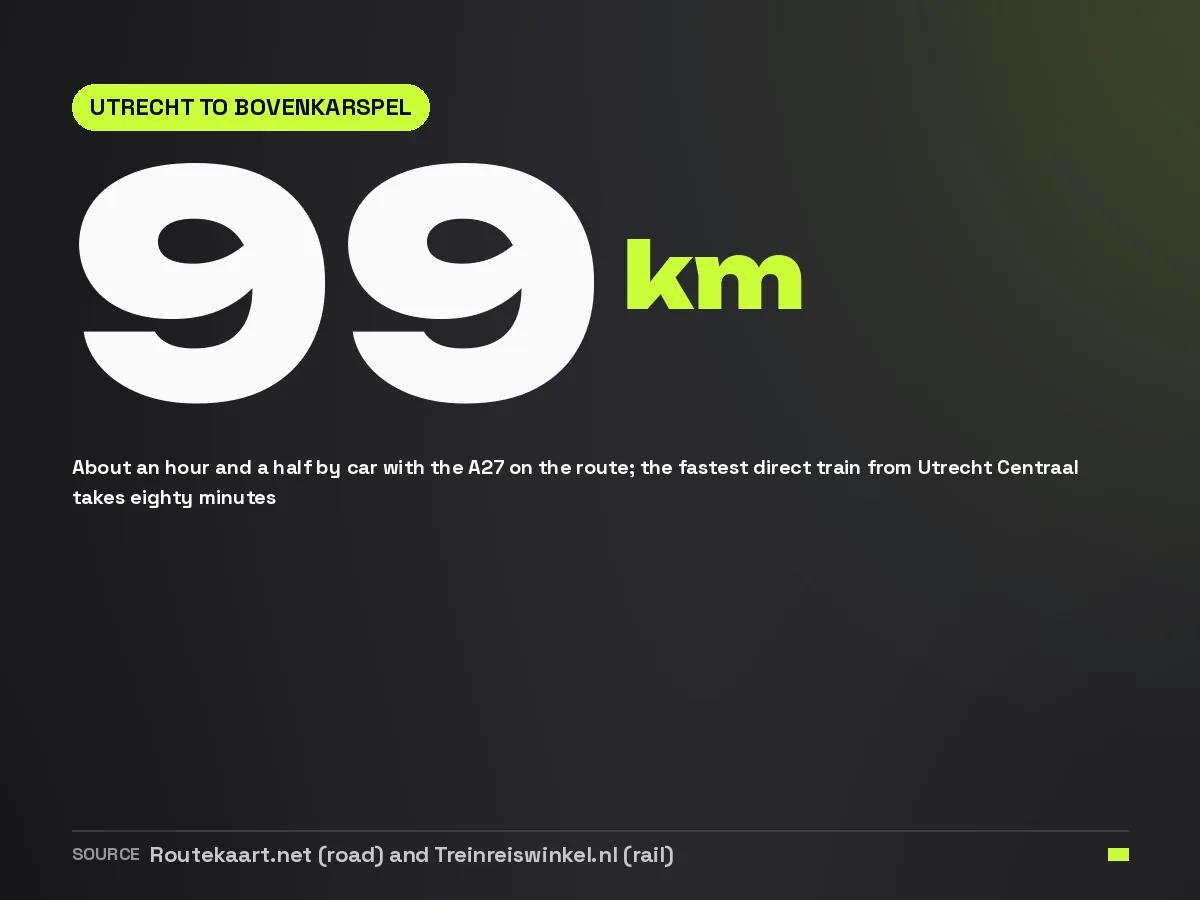
The bale floor sits on Stede Broecweg in Bovenkarspel, in West Friesland north-east of Amsterdam. From Utrecht that is roughly 99 kilometres by road, which Routekaart.net puts at about an hour and a half, or eighty minutes by rail on the fastest service. Buying happens by appointment, in two-hour slots.
Utrecht itself offers the consumer side of vintage: kilo sales, thrift stores, shops in the old centre. A floor where you buy by the bale is not among them.
We opened in 2012 and work from a warehouse of 2,500 square metres, through which fifteen to twenty tonnes of clothing pass every month. Patrick runs the operation, has 32 years in the trade behind him and greets every visitor personally. If you want the whole chain first, from container to sorted rack, start with the complete guide to vintage wholesale clothing in the Netherlands. What follows is narrower: what a short, reliable journey does to the size of your order.
In most cities the train is the compromise you accept when you have no car. From Utrecht it comes close enough to the car to be a real choice, and that reorders the decisions you make.
Ninety-nine kilometres by road, eighty minutes by rail
Route planners put the drive at around 99 kilometres and roughly an hour and a half, with the A27 on the route. For rail, Treinreiswinkel lists a fastest service of one hour twenty, with no change of train. Plan for a little more than those eighty minutes in practice: that number belongs to the quickest service, and the average sits higher.
What you get out of it is predictability, and here that is worth more than raw speed. A timetable tells you in the morning when you will walk in, and it tells you the same about getting home. We are open on weekdays from nine to five and parking is free, so neither end of the day needs to be a puzzle.
It also leaves the rest of your working day intact. Take an early slot and you are back in Utrecht around lunchtime, with the afternoon free to photograph and list what you bought. That difference decides whether your stock starts turning the same week or only after the weekend.
Why the first visit is better made without a car
The first time you stand on a bale floor, what you are really buying is judgement. You have held grade A and grade B side by side, you have felt how a heavy category differs from one that yields piece counts, and you have seen what a bale looks like while it is still closed. Photographs teach that badly.
None of it requires a car, and the absence of one helps more than it sounds. An empty van in the car park asks its own question: how does it get filled? That question can steer your choices before you have noticed. Arrive by rail and you look and decide with your load capacity parked outside the conversation. Whatever you buy travels to your address with the shipment; collecting it yourself later, by appointment, stays possible too.
A visit runs two hours and it is yours alone, up to four people. The appointment exists for a practical reason: Patrick sets out the bales that match what you sell, by brand and by grade, before you arrive, and calls the day before to hear what you are chasing. Booking costs nothing upfront and cancelling is free until the day before. How the two hours themselves unfold is described in what to expect from a warehouse visit.
Save the drive for the visit where you take volume home. It is a question of sequence.
Plan your first visit from Utrecht Take a morning slot and you are back in Utrecht by lunch, with the afternoon free for photographing and listing. Say when you book which platform you sell on and which category you run, and the right corner of the floor will be waiting when you walk in. No deposit, free cancellation until the day before. Book a warehouse visit
The Utrecht question is how much you commit to at once
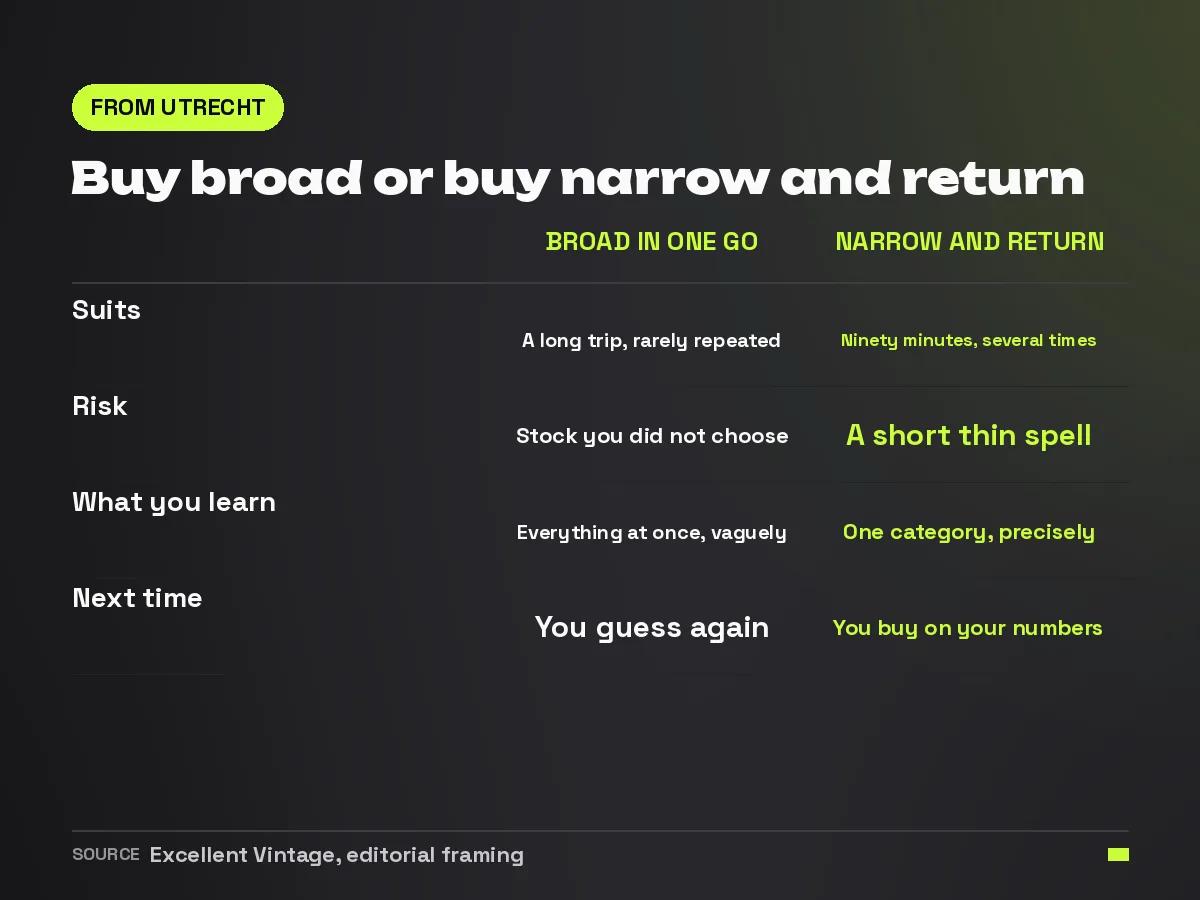
Resellers who live far from their supplier tend to buy broad, and there is sense in it: when the trip costs most of a working day, the risk of having to repeat it in three weeks outweighs the risk of taking something you were unsure about. So you go home with a spread, part of which you never really chose.
From Utrecht you do not have to buy that insurance. Which changes the format that makes sense to start with.
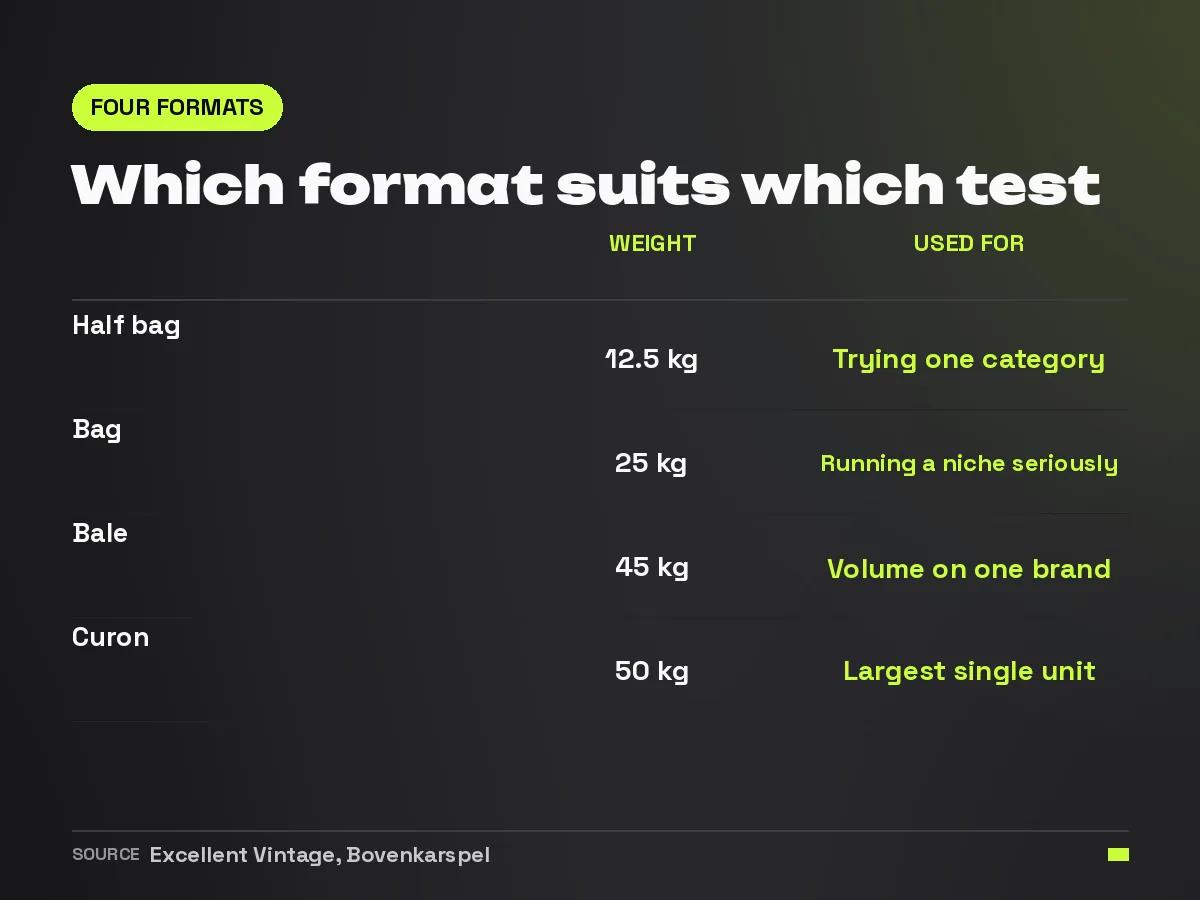
There are four. A half bag weighs 12.5 kilos, a bag 25, a bale 45 and a curon 50. Which brands we keep permanently in stock is set out on our wholesale page. Weight on its own says little about numbers, because the category decides. Twenty-five kilos of t-shirts is roughly 125 garments; twenty-five kilos of jeans is roughly seventeen. Identical weight, wildly different workloads: the shirts fill an afternoon of listing, the jeans are done before lunch, and they clear at different speeds.
Grade sits on top of that. A 45-kilo bale averages seventy per cent grade A and thirty per cent grade B. A 25-kilo bag of mix premium US runs ninety to ten: higher quality, narrower composition. What the letters mean, and why grade B often sells better than newcomers expect, is set out in our guide to grading and grades A, B and C. Part of the stock is not sold by weight at all but by the piece, such as two hundred Ralph Lauren shirts or a hundred Tommy sweaters. On those lots the count is what you are buying, so there is nothing to convert from kilos.
If you can be back on that floor inside a fortnight, the sensible first purchase is a narrow one. One category, one grade, a format you can genuinely clear in two weeks. You list it, you let your own sales data say something about that category, and you return with a question far more precise than "what have you got". Whether you test with raw or pre-sorted goods matters a great deal, which is the subject of heavy bales versus sorted clothing.
What you bring back to the second visit
A repeat visit is only worth the travel if you arrive with something new. After a narrow first purchase you will have exactly that, provided you tracked three things while selling it. They take fifteen minutes to write down and they change the conversation on the floor completely.
The first is how many days an item needed to sell, by category. Revenue and margin say nothing about that; time to sale does. It tells you whether you can absorb more of this category, which is the entire question a second purchase turns on. A sweatshirt gone in a week and a pair of jeans still hanging after six can produce identical margins and justify opposite buying decisions.
The second is what happened to your grade B. A 45-kilo bale averages thirty per cent B, and plenty of newcomers only discover after their first lot whether their buyers view a small flaw the way they do. If those pieces moved quickly with an honest description of the defect, a seventy-thirty bale is cheap inventory for you. If they sat there, a bag of mix premium US at ninety-ten is the better instrument, even though it gives you fewer pieces.
The third is which brand genuinely performed for your audience. That one is usable precisely because the floor is organised by brand and grade: ten brands sit permanently in stock, spread across heritage, workwear and outdoor, sport and techwear, and a mixed stack for sellers chasing a higher price per piece. "Tommy moved, Adidas sat" is a sentence someone can act on when preparing your next visit. "It went okay" gives nobody anything to work with.
With those three in hand, a second visit becomes a correction. That is what an hour and a half of travel buys you.
Being close only pays once the last lot has sold
Easy access has a trap in it. Being able to come often turns quietly into wanting to come often, and then you buy on the rhythm of your diary instead of the rhythm of your sales. Each trip costs three hours of travel plus two on the floor: half a working day, every time, not spent photographing, shipping and answering buyers.
The rule that holds up in practice is unglamorous. You come back when the previous purchase has largely sold. A couple of thin weeks are cheaper than a spare room full of stock that will not move.
What is worth timing is the supply side. Fourteen containers arrive each year, eight to fourteen tonnes apiece, on a roughly monthly cadence, alongside the flow through three American and six European partners. That stock is also months in transit before it reaches the floor: eighteen to twenty-two days across the Atlantic, then another three to five weeks from the port. Schedule your visit shortly after a fresh delivery in your category if you can; that is when the choice in front of you is widest.
Two more things before you pick a date. You choose bales and bags here rather than individual garments: at fifteen to twenty tonnes a month across more than four hundred categories, what we can offer instead is a floor staged by brand and grade before you arrive, and what you buy you buy as it lies. On the paperwork side, a buyer registered in another EU country with a valid VAT number is invoiced under the reverse charge, while a Dutch-registered buyer simply pays Dutch VAT.
Weighing up the train against the car? Whether the format you have in mind fits in your car, whether shipping is the better call, or what has been landing lately in the category you run: send Patrick a message on WhatsApp. You reach him directly, in English, Dutch or French. Message Patrick
Frequently asked questions
How far is the vintage wholesale warehouse from Utrecht?
Around 99 kilometres to Bovenkarspel in West Friesland, which Routekaart.net puts at about an hour and a half by car with the A27 on the route. By rail it is quicker than you would expect: the fastest direct service from Utrecht Centraal takes one hour twenty. Buying is by appointment, in a two-hour slot.
Is the train or the car smarter from Utrecht?
It depends what you are coming for. For a first visit, an introduction or collecting a single bag, the direct train is the calmer choice. For volume, take the car and reckon with the weight. Anyone can lift a half bag of 12.5 kilos, but stack two or three units of 25 to 50 kilos and the boot fills up long before the axle complains.
How narrow should a first purchase from Utrecht be?
Narrower than you would dare if the drive took five hours. One category, one grade, and a quantity you can have listed within a fortnight. The sales figures from those two weeks decide what you ask for on the second visit, and the direct train is what makes that second visit realistic.
How often can I come back to buy?
As often as your sell-through allows. There is no cap on visits and each one is a fresh two-hour appointment. The useful rule of thumb is to return once your previous purchase has largely sold, rather than on a fixed schedule.
Look first, then buy on numbers that are yours
A reseller coming from further south turns the visit into a carefully prepared half day. From Utrecht the journey is short enough to schedule more often than you probably do. You cash in that freedom by buying smaller and choosing more sharply.
Come the first time to learn to read what is in front of you. After that you buy on figures that belong to you. If you are travelling in from outside the country, our guide for visitors coming from abroad covers the practical side. There is more about the people behind the floor in the story of Excellent Vintage, and a date can be fixed on the booking page.
Fix your next buying day Reserve a two-hour block on the floor in Bovenkarspel. You decide whether that means the A27 or the direct train of just over eighty minutes. Fixing the date costs nothing upfront, and Patrick calls the day before to hear which category you run. Book a warehouse visit
Ready to buy?
Visit our warehouse · no deposit required · free cancellation.