Barbour Vintage Wholesale in the Netherlands: Reading a Waxed Jacket Before You Buy the Bale
Most brands in a wholesale hall behave predictably. You learn what a kilo of them looks like, you learn what a flaw costs you, and after a season or two you can guess how much wear the end buyer…
By Patrick Libanon — founder, Excellent Vintage · Bovenkarspel, since 2012
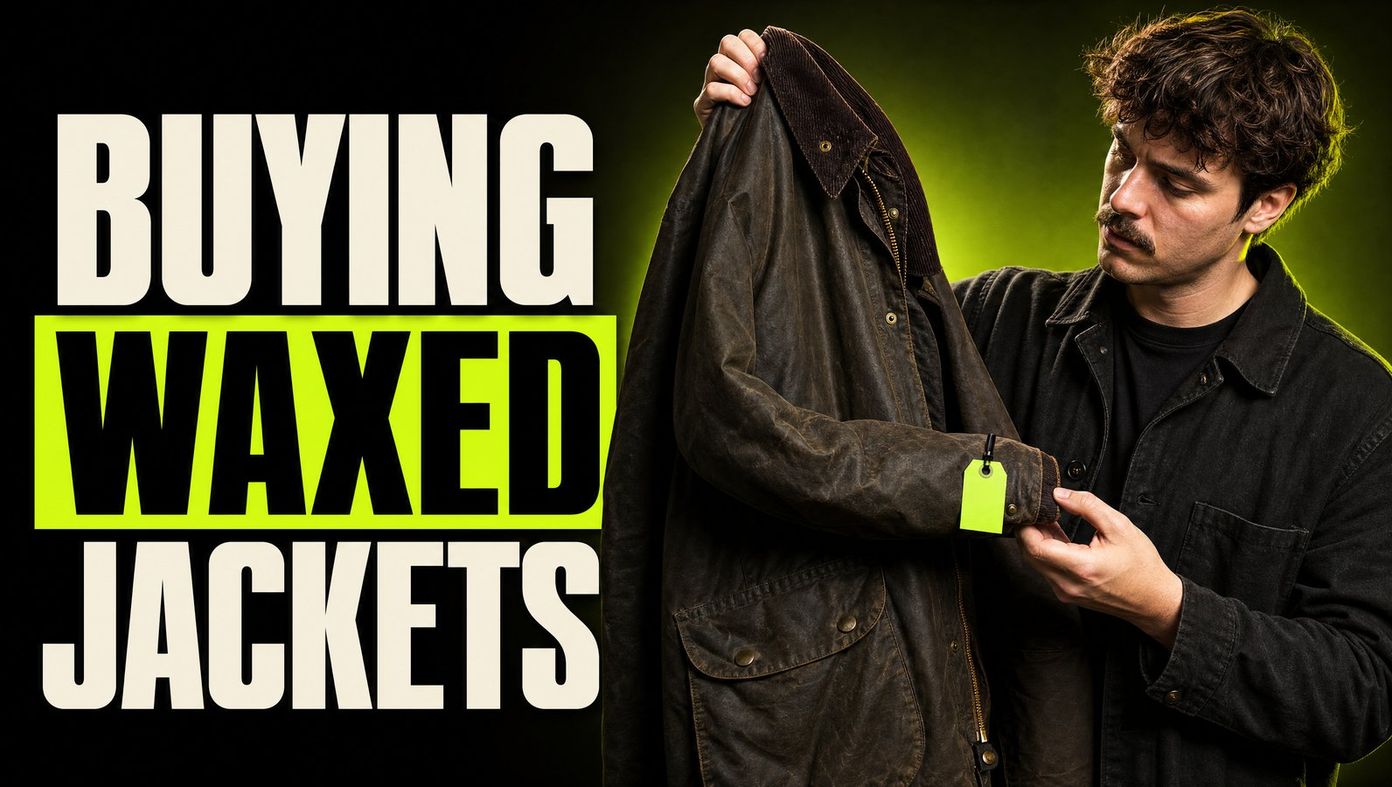
Most brands in a wholesale hall behave predictably. You learn what a kilo of them looks like, you learn what a flaw costs you, and after a season or two you can guess how much wear the end buyer will forgive. Barbour breaks that habit at the first jacket. A garment that looks tired can be worth more than a clean one, and the arithmetic everyone else runs on a bale stops working before it reaches the rail.
None of that is romance about British heritage. It follows from one physical fact about the cloth: it is impregnated with wax, and the wax is built to wear away.
Excellent Vintage has sorted in Bovenkarspel, north-east of Amsterdam, since 2012. Fifteen to twenty tonnes of clothing move through the 2,500 m² hall every month, and Barbour is one of ten brands we hold permanently. Patrick runs the floor with thirty-two years in the trade behind him, and he answers enquiries himself.
Buying Barbour vintage wholesale means getting the piece count from the supplier, not deriving it from a weight. Standard pieces-per-kilo tables stop at denim, and a waxed jacket carries a coating that adds weight without adding a garment. Dry, matte wax is a spent finish rather than a defect.
Where a waxed jacket lands on our grading scale
Our grading is deliberately blunt and brand-independent. A garment with no defect is an A. One minor flaw makes it a B. Anything carrying real damage, a hole or a bleach mark, is a C and never enters the standard mixes. Across a 45 kg bale the split works out around seventy percent A to thirty percent B; a 25 kg premium US bag sits closer to ninety against ten. The full grade definitions are written up separately.
Now hold a waxed jacket against that scale. Its coating is a consumable. Barbour tells owners to re-wax roughly once a year depending on use, which is the same as saying the finish is expected to disappear. A jacket gone dry and matte across the shoulders has spent a layer the manufacturer designed to be replaced. Nothing has broken.
The error runs in both directions and both directions cost you. Grade dry wax as a B and you have written down a garment an informed buyer would have paid full attention to. Wave a split seam or a dead two-way zip through as patina and you have overpaid for something that needs a workshop. Wax comes back. Construction does not, or not cheaply.
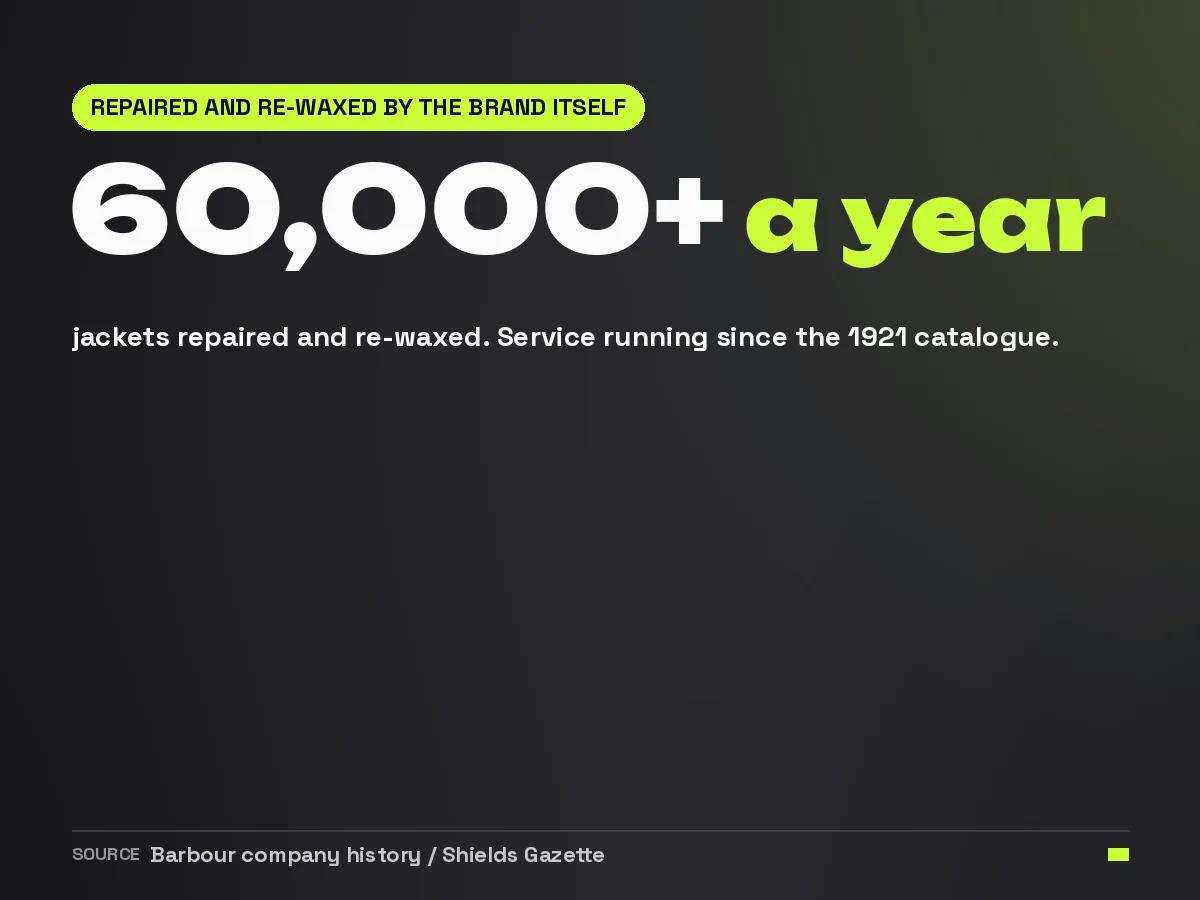
Barbour acts on the same logic itself, which takes this past personal opinion. The company's repair and re-wax service first appears in its 1921 catalogue, and marked a hundred years of that service in 2021. It runs at more than sixty thousand jackets a year, handled at the Simonside factory in South Shields and at other sites. In 2019 the company added Re-Loved: an owner hands an old jacket back in exchange for a voucher, and the brand cleans it, repairs it, re-waxes it and puts it back on sale under its own name.
That is a market fact before it is brand storytelling. A manufacturer that buys its own used product back, restores it and resells it has put a floor under the second-hand value of a repairable example. Almost nothing else in this hall has that behind it, and it explains why a worn Barbour reads differently from a worn cotton shirt carrying identical damage.
The same coating creates a second problem, and this one lands on the invoice. Wax is weight that is not a garment. A proofed jacket therefore breaks the conversion that every weight-priced wholesale lot quietly depends on, the arithmetic that turns a number of kilos into a number of listings. Our published conversions were built for jersey, shirting and denim, and denim is where they stop. Nothing heavier has an entry, and the gap between a short Bedale and a long Border is too wide to average honestly in any case.
So we publish no pieces-per-kilo figure for a waxed jacket, and a supplier who publishes one is handing you a false floor to build a spreadsheet on. Some products leave this hall priced by the kilo, in a lot of roughly 45 kg. Others leave as a stated number of pieces, agreed before anything goes on a scale. Which of the two applies is settled at product level, so for Barbour the usable answer is the one Patrick gives you about the lots actually on the floor that week. Ask for the count. The mechanics underneath all of this are unpacked in our piece on heavy bales versus sorted clothing.
There is a second reason this brand refuses to behave like volume stock. Our ten permanent brands sit in four clusters, and Barbour is one of only three that appear in two of them, alongside Burberry and The North Face. It is in the heritage group with Ralph Lauren, Tommy Hilfiger and Burberry, where demand is broad and steady, and in what we call the mixed pro stack, with Burberry, Polo Sport and The North Face, where price per piece is high and the buyer is curating a Depop shop instead of shifting cartons. A brand landing in both places is a brand you handle at the unit.
Weight lot or fixed count? For Barbour the answer is decided product by product, and guessing it wrecks your maths. Ask Patrick which model applies before you plan your listings. Message Patrick
Re-waxing decides which buyer you are selling to
Resellers who have read the care page still file re-waxing under chores to be finished before listing. It belongs earlier than that, in the decision about which of two buyers you are serving, and in one direction you cannot take it back.
Re-waxing restores water repellency. Be careful with the word: Barbour lists its waxed jackets and its waterproof jackets separately, so never sell a waxed Barbour as waterproof. It is treated cotton that sheds water and needs re-treating.
Fresh wax also darkens the garment, at least for a while. The brand says so itself about an olive Beadnell, while noting that on a navy Bedale the effect is negligible. And the darkening takes the patina down with it: the paler, dramatised wear at the elbows and cuffs is precisely what one type of buyer is paying for.
So the buyer who wants a working jacket for a wet Danish autumn wants it re-waxed and won't mind that the finish has evened out. The buyer scrolling Depop for something that looks like it has been somewhere wants it left exactly as it is. One garment cannot serve both, and you have to decide before you photograph it.
Then there is the time it eats. Barbour's own home method is to melt a tin of Thornproof Dressing in a bain-marie for around twenty minutes until it runs, work it in, then hang the jacket overnight, away from other clothes and away from leather and upholstery, while it sheds the excess. The waxing itself goes quickly enough, but the overnight hang is the part you cannot compress, so a batch ties up space and a day of your calendar rather than an hour before a drop. Sending pieces to the factory service instead takes them out of your stock while they are away. Either route belongs in the plan before the lot arrives.
A vocabulary trap sits here as well. Thornproof is both a Barbour cloth finish and the name of the brand's re-waxing tin, so a jacket in Sylkoil cotton treated with Thornproof Dressing is entirely consistent. Specialist retailers describe Sylkoil as the uncalendered cloth, drier and more matte in the hand, with the vintage look already built in, while Thornproof reads smoother and glossier. That distinction comes from the trade and not from an official Barbour publication, so pass it on with that label attached.
Whatever you do, don't treat the thing like ordinary cotton. Barbour states that a washing machine strips the coating permanently and that it cannot be reapplied afterwards; dry-cleaning solvents attack it the same way, and so do a tumble dryer, direct sun and any soap or detergent. The official routine is a soft dry brush, then cold water on a sponge or cloth, and a musty lining dabbed with white vinegar for no more than ten minutes before the jacket dries hanging somewhere cool and out of the sun. Passing that on to your buyer costs nothing and prevents the return that follows the first machine wash.
Re-wax it, or sell the patina? The answer depends on which jackets are actually in the lot and who you sell to. Book two hours on the floor and work it out with the stock in front of you. Book a warehouse visit
The four dates that do the sorting work
Barbour has been in this trade since 1894, when John Barbour set up at the Market Place in South Shields importing oilcloth for the seamen of the north-east coast. The company did not invent waxed cotton: the technique already existed, and what Barbour perfected was paraffin waxing, which replaced earlier linseed-oil treatments that cracked in the cold and breathed badly.
For sorting purposes you need far less history than that. Four dates carry almost the whole practical load.
The International arrived in 1936, created by Duncan Barbour for the International Six Day Trials, first as a one-piece suit and then as the jacket people recognise, with the belted waist and four chest pockets. The Bedale came in 1980 and the Beaufort in 1983, both designed by Margaret Barbour: the Bedale short and light, built for riding, the Beaufort cut for country work with a full-width game pocket across the back. Then 1998, when Margaret and Helen Barbour worked with the tartan specialists Kinloch Anderson to introduce the Classic Tartan, the brand's first exclusive tartan, based on the sett of the Ayrshire district tartan.
That last date earns its keep on a rail. A jacket lined in the Barbour Classic Tartan cannot pre-date 1998. The reverse collapses immediately: the traditional Dress Gordon lining used before it is still sold by the brand today, so finding it tells you nothing about age. One-way inferences only, always.
One more separation is worth carrying. Barbour and Barbour International have been distinct brands since 2013, with their own labelling and their own identity. Listing them interchangeably belongs in the same class of mistake as conflating Carhartt with Carhartt WIP, and the buyers who care will catch it.

Nobody has a Barbour date code, including the people selling you one
Search for a Barbour dating chart and you will find several. They will point you at digits on a barcode label, at seasonal codes, at the folio number on a paper swing ticket. We are not reproducing any of them, because none traces back to Barbour.
The reason is straightforward. Barbour has never published a dating grid, and its official counterfeit-education page turns out to be a tool for checking whether a retailer's web address is genuine. It contains no physical criteria at all: nothing on labels, nothing on buttons, nothing on stitching. Every chart in circulation therefore originates with resellers, forums and independent reproofers, never with the manufacturer. One independent reproofer admits in his own text that dating is partly a guessing game and recommends writing to Barbour directly, which is also what the brand tells owners who ask.
Little survives that scrutiny. The part that does is thin but real, and it only ever points one way. The royal warrants give you lower bounds: the first was granted in 1974, the second in 1982, the third in 1987, so a label carrying three crests cannot be older than 1987. That is an inference from known grant dates rather than a rule Barbour publishes, and it gives you an "after", never a year. Note too that all three of those are historical. The warrant Barbour holds now was granted in May 2024 by the King, so writing that the brand "holds three royal warrants" in the present tense is simply wrong.
Two more traps sit close by. "Made in England" tells you nothing about age, because waxed Bedales and Beauforts are still made by hand at Simonside, where the company has been based since 1981. And label design gives you a tendency at best. The specialist consensus is that seventies labels are plainer and lighter, eighties labels darker with gold lettering and a coat of arms, nineties labels black with the warrants pushed forward. That is enough for a rough sort and short of what a year in a listing would need.
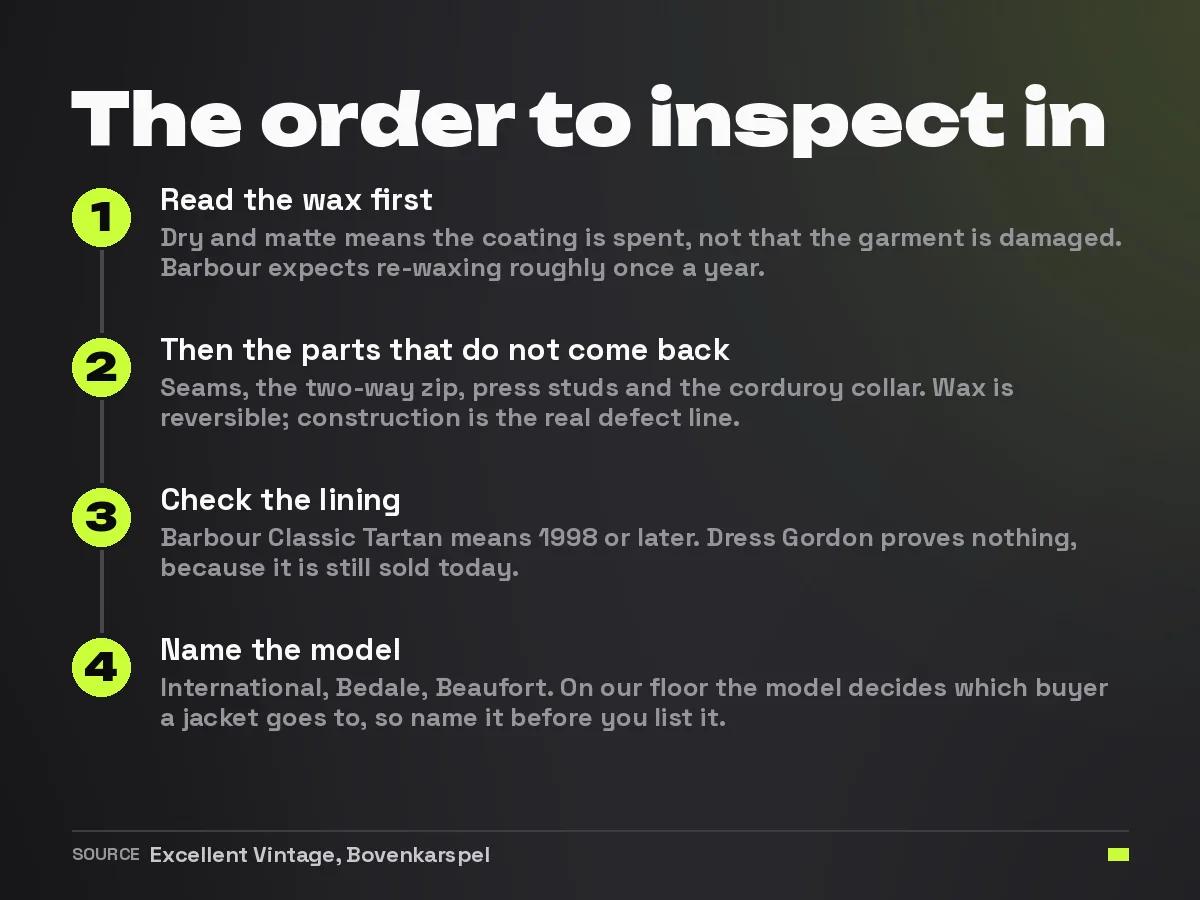
Writing "circa 1980s, and here is my reasoning" outsells a fabricated year, because the buyer who cares about the difference is the same buyer who can tell when you are bluffing. There is an order to inspecting one of these, and it starts where most people finish: with the wax, because until you have read the wax you cannot tell whether you are looking at damage or at maintenance.
What actually happens when you come and buy
Everything here runs by appointment, and we chose that constraint deliberately. A slot lasts two hours, takes up to four people and is yours alone, because the alternative is four buyers circling the same pallet and that serves nobody. Patrick pulls the relevant lots by brand and grade before you arrive and phones you the day before to check what you are really after. Reserving takes no deposit, cancelling costs nothing up to a day beforehand, and he works in Dutch, English and French himself.
On the floor you select lots, not garments. With fifteen to twenty tonnes moving through the hall monthly, picking piece by piece is arithmetic that does not close, and a supplier promising otherwise is describing something else. You can establish the category, the format and the grade split beforehand, which is most of the benefit anyway. The sequence is walked through in our guide to buying your first bale, and if you want the whole picture of how a wholesaler actually works, we wrote that out in full.
Excellent Vintage sells heavy bales in fixed formats: a 12.5 kg half-bag, a 25 kg bag, a 45 kg bale and a 50 kg curon, all sorted in Bovenkarspel and reserved without a deposit. Choosing between them is a question about strategy, and budget only decides how many of them you take. If travelling is the obstacle, we run the same visit over video, with Patrick walking the lots on camera while you decide from your desk. If you buy as an EU-registered business, VAT runs under reverse charge once your company and VAT number check out, and no intra-EU duties apply; anything more specific belongs on a call, since we hold over four hundred categories whose availability swings with the season. Current formats sit on wholesale, who runs this place and how it got here is on our about page, the practical side of a trip is covered in our notes for foreign buyers visiting the warehouse, and buyers who also take fleece will find the seasonal logic under Patagonia.
Frequently asked questions
How many pieces are in a Barbour bale?
It depends which sale model the lot runs on, and Patrick gives you that at the enquiry. Our published conversions stop at denim, and a waxed jacket is heavier than that with a coating adding weight on top, so extending the scale downwards would only produce a number we could not stand behind. Some products here are sold as a fixed piece count agreed in advance, others by weight, and which applies is decided product by product. Put the question to Patrick before you plan anything on it.
Can you machine wash a Barbour?
No, and it is the one mistake with no way back. The coating comes off for good, and Barbour is explicit that it cannot be put back on afterwards. Solvents, heat and detergent do the same damage. Cold water and a dry brush, nothing else. Write that line into your listing and you will not see the jacket again three weeks later.
How often should a waxed jacket be re-waxed?
Roughly once a year, which is what Barbour tells owners, adjusted for how hard the jacket is worn. That figure is the reason a dry, matte finish counts as a spent consumable on our grading scale: the manufacturer designed the layer to be replaced, and replacing it is documented work rather than a repair.
Is a waxed Barbour waterproof?
No, and don't describe it that way in a listing. Barbour lists its waxed jackets and its waterproof jackets separately. Waxed cotton is water-repellent and the treatment wears off, which is the entire point of the annual re-waxing the brand recommends. Write water-repellent, and say that the jacket will need re-waxing in time.
Is worn, dull wax a defect?
No. The wax coating is a consumable that the manufacturer expects to be renewed roughly once a year. Our grades measure defects: no defect is A, a minor one is B, and real damage such as a hole or a bleach mark leaves the standard mixes entirely as C. A dry finish belongs to none of those. A torn seam does.
Can you tell what year a Barbour is from?
Not reliably, and neither can the charts you will find online. Barbour publishes no dating grid and no physical authentication criteria, so every chart in circulation comes from resellers, forums and independent reproofers. Three royal crests on a label mean 1987 or later — an inference from the warrant grant dates, not a rule Barbour publishes. A Classic Tartan lining means 1998 or later. Both give you a floor, never a date, and for a real dating the brand points owners at its own customer service.
Should you re-wax before listing, or leave it?
It depends who you are selling to, and you cannot have it both ways. Re-waxing restores repellency but darkens the garment and flattens the patina that a vintage buyer is paying for. Leaving it keeps the look and hands the buyer a job. Decide before you shoot the photographs, and tell the buyer either way.
What is the difference between Barbour and Barbour International?
Barbour International started in 1936 as the motorcycle line and has been a standalone brand since 2013, with its own identity and its own labels. Treat them as two brands when you sort and when you list. The classic waxed country jackets belong to Barbour; the motorcycling heritage and the International codes belong to the other line.
The one question to settle first
With most brands you decide what to buy and then work out how to sell it. With Barbour it runs the other way. Settle which buyer you are serving, the one who wants a functioning jacket or the one who wants the years visible on it, and the wax, the grading and the listing copy all follow from that single answer. Get it the wrong way round and you will spend a day per jacket erasing exactly what you paid for.
Heavy bales. Fast shipping.
See what is actually on the rail Which models, which condition, which sale model applies. Patrick walks you through the lots in person or over video, and reserving costs nothing. Book your visit
Ready to buy?
Visit our warehouse · no deposit required · free cancellation.