Vintage clothing sizing guide: why old labels do not match modern sizes, and how to measure flat
A label reading "M" on a vintage sweatshirt tells you what the garment was called when it was made, by a brand with its own idea of medium, in a decade with its own idea of fit. It does not tell you…
By Patrick Libanon — founder, Excellent Vintage · Bovenkarspel, since 2012
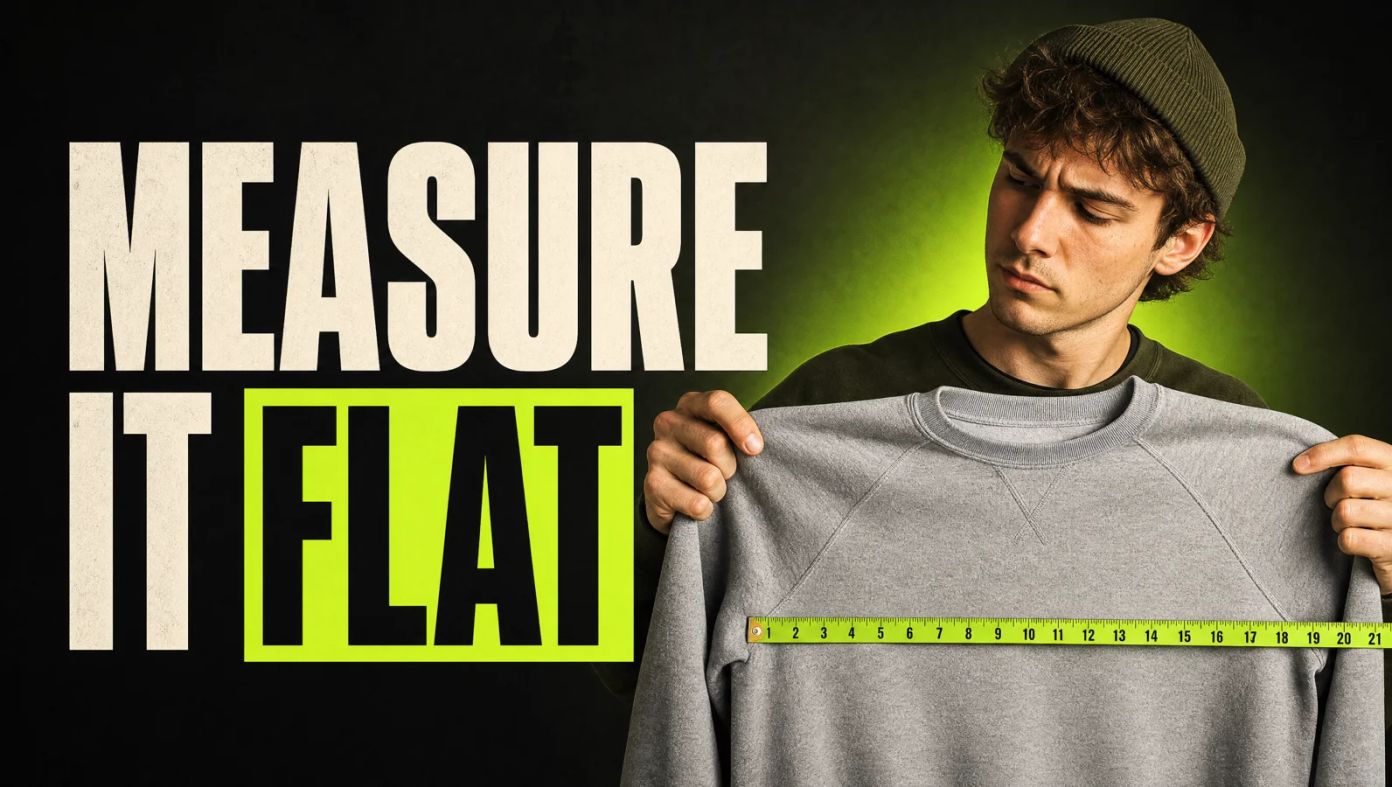
Vintage sizes do not match modern sizes because a size label was never a fixed measurement: sizing standards and brand cuts changed over the decades, so the printed size says little. Lay the garment flat, measure width, length and shoulder with a tape, and give buyers those measurements in inches and centimetres.
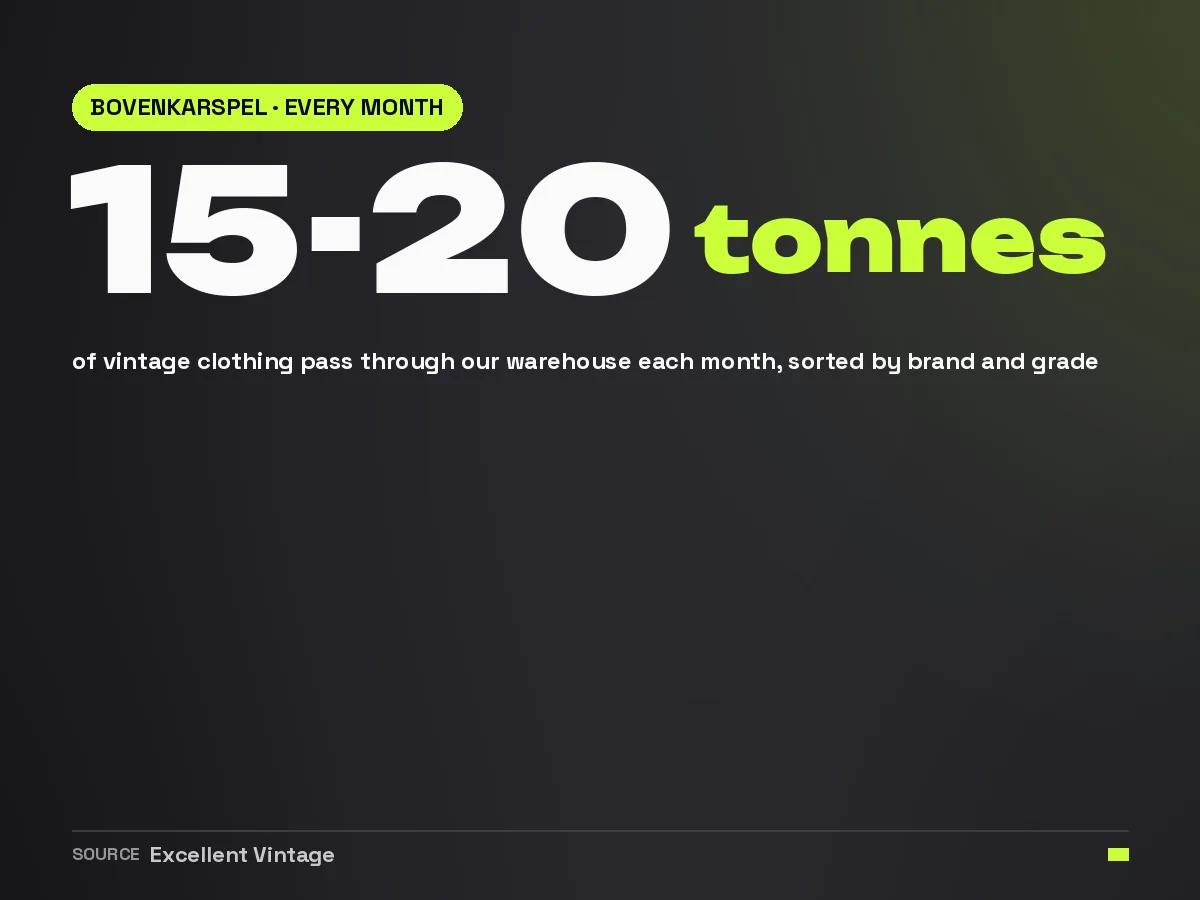
A label reading "M" on a vintage sweatshirt tells you what the garment was called when it was made, by a brand with its own idea of medium, in a decade with its own idea of fit. It does not tell you whether the piece will suit a buyer who wears a modern medium. I have run Excellent Vintage since 2012, and with 15 to 20 tonnes of clothing passing through our warehouse in Bovenkarspel every month, I treat a size label as a name that a brand gave a garment, and never as a measurement. If you sell vintage online, you should too.
This guide explains why vintage sizing drifts away from modern sizing, with real sizing-standard data, and then gives you the method that replaces the label: measure every garment flat, note the same points every time, and put the numbers in your listing.
Why do vintage sizes not match modern sizes?
Because there has never been one fixed meaning of a size. In the United States, where a great deal of vintage stock originates, there is no mandatory clothing size or labelling standard, only voluntary ones that have existed since the 1930s. The US National Bureau of Standards did try to set a system for women's clothing in 1958, known as CS 215-58, and updated it in 1970. It was later downgraded to a voluntary standard and abolished altogether in 1983. Since then each brand has decided for itself what its medium or its size 12 means.
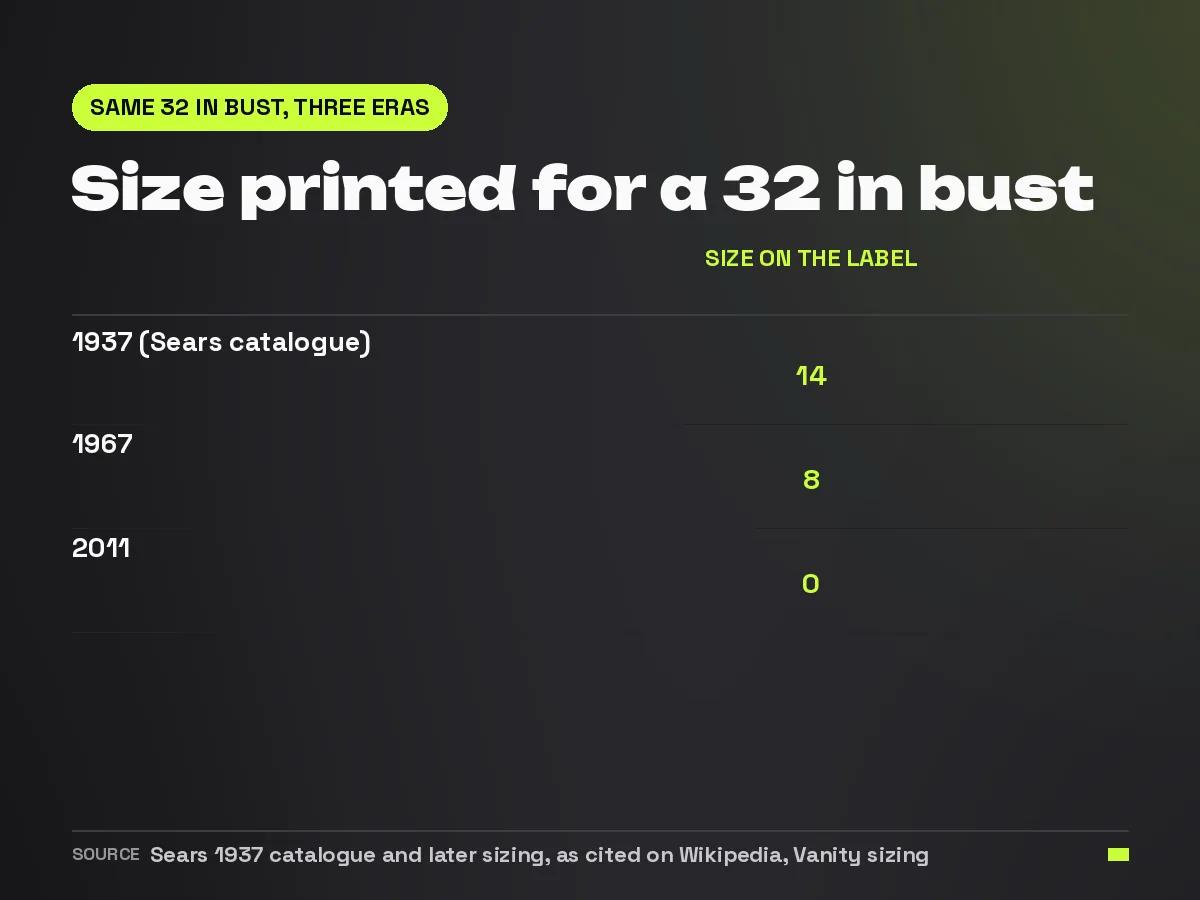
The drift is documented. According to the Wikipedia article on vanity sizing, the 1937 Sears catalogue listed a size 14 dress with a bust of 32 inches. The same 32 inches was a size 8 in 1967 and a size 0 in 2011. The same body kept receiving a smaller and smaller number, which means a given number on a label now describes a larger body than it once did.
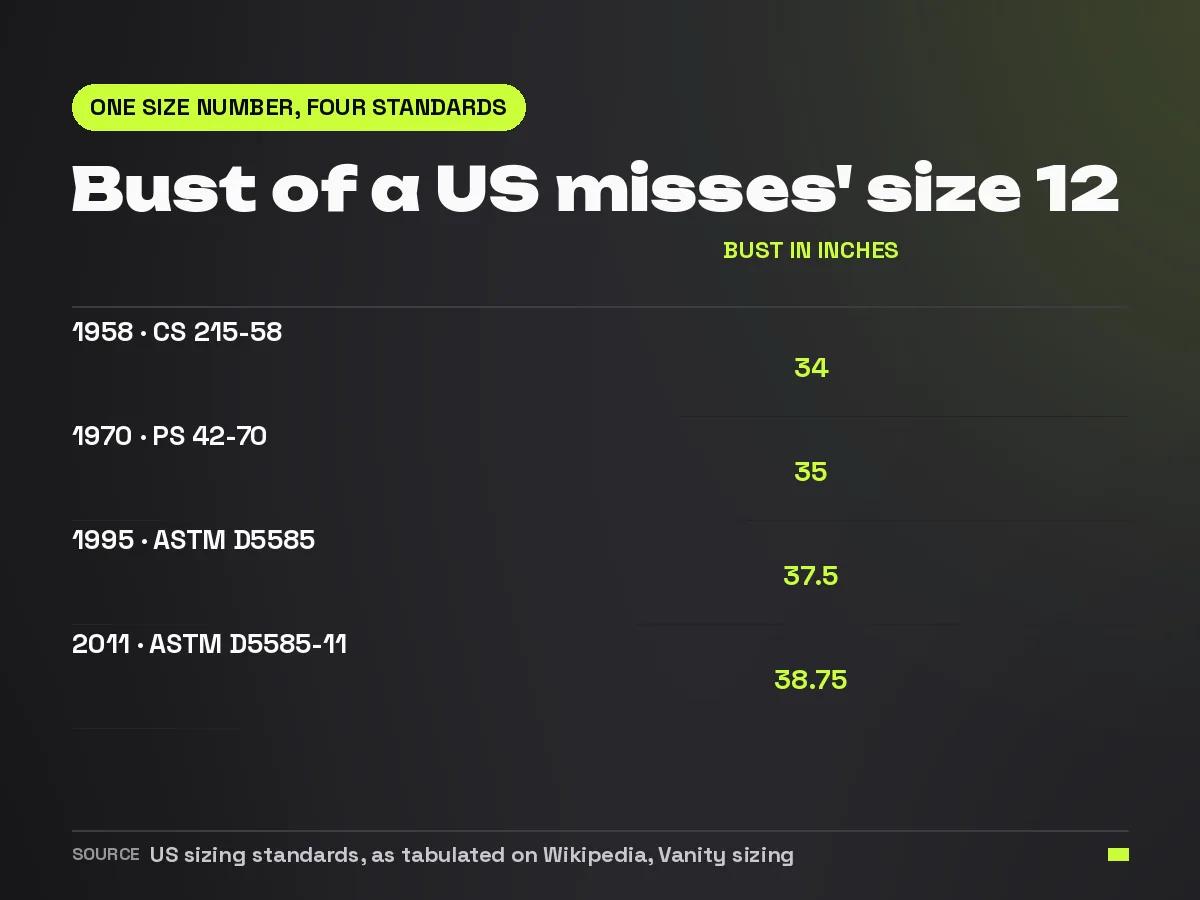
The standards tell the same story. In CS 215-58, a misses' size 12 had a bust of 34 inches. The 1970 standard, PS 42-70, gave 35 inches, the 1995 ASTM D5585 table 37½ inches, and the 2011 revision of ASTM D5585 38¾ inches. Those are standards, not what any particular brand cut, and most companies no longer use them. They are also tables for women's misses' sizes; men's and unisex pieces such as sweatshirts, workwear or denim follow other conventions, which is one more reason to measure those too. But they show how a single size number slid by nearly five inches, roughly twelve centimetres, over half a century. If a dress from the 1950s says 12, do not assume it fits a modern 12. Measure it.
Are vintage sizes really smaller than modern sizes?
Often, but not always, and that is exactly why the label is unreliable. The standards above point in one direction: a size number in the 1950s described a smaller body than the same number does today, so a vintage dress from that era may run smaller than its modern namesake. But size is only half of fit. The cut of the garment, how much ease the designer allowed, the fabric and the era's idea of a good silhouette all change how a garment sits on a body.
A boxy sweatshirt cut wide on purpose and a fitted 1950s dress can carry the same letter or number and have nothing in common. The same goes for trousers: waist labelled in inches in one decade, in metric or in a letter size in another, with a rise and a leg that reflect the style of the day. A buyer reading "size M" is comparing your garment with a modern medium in their wardrobe, and that comparison fails for reasons no one can see from the photo.
So stop relying on the label. A tape measure gives you a number that means the same thing to every buyer in every country, which the UK, US and European size systems never quite manage.
How do you measure a vintage garment flat?
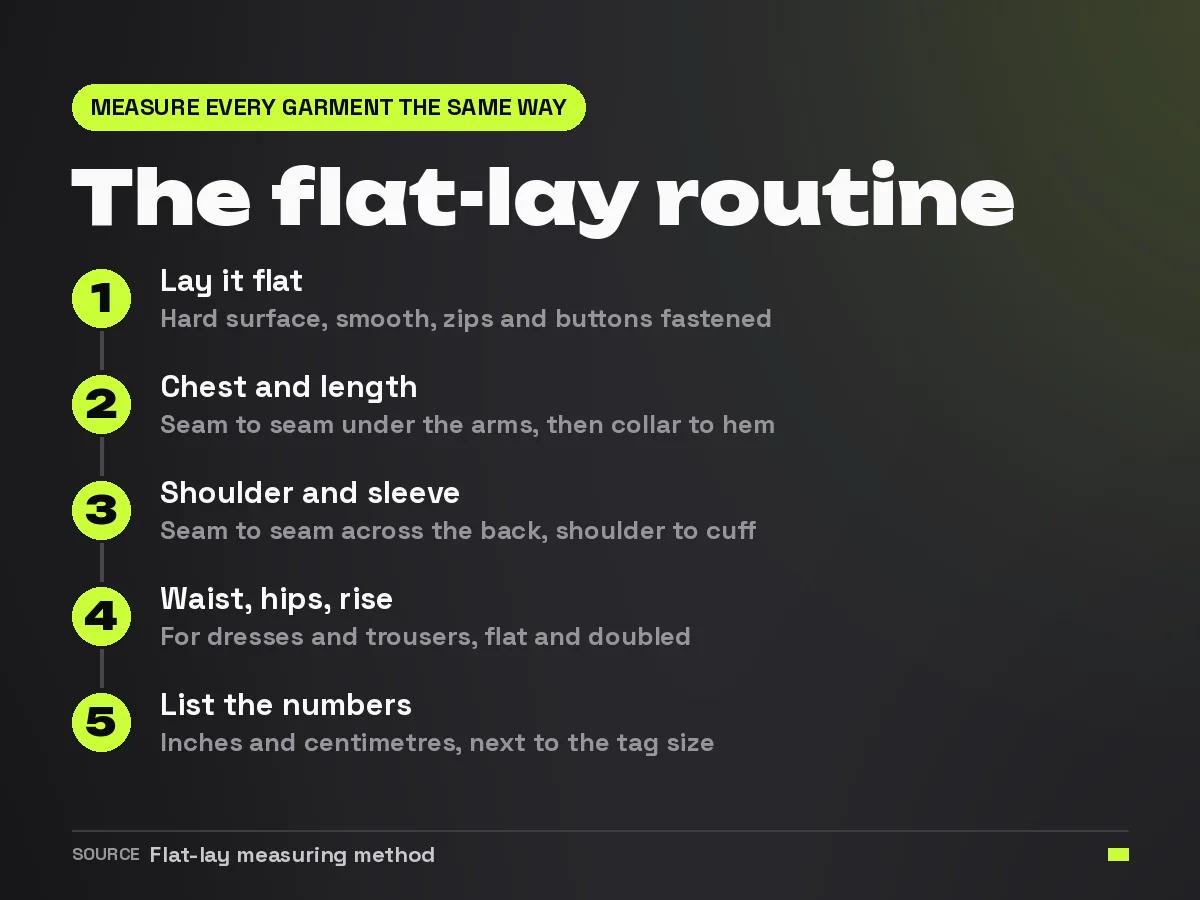
Lay the garment on a hard, flat surface, such as a table, and smooth it out without stretching it. Fasten zips and buttons. Use a soft measuring tape and measure the same points on every garment you list, so your numbers are comparable across your shop. Measure twice, and write the result in both inches and centimetres, since buyers in different countries are used to different units.
For a top such as a sweatshirt, a shirt or a jacket, measure the width across the chest from the seam under one arm to the seam under the other, which is the widest and most useful measurement. Double it if you also want the circumference. Then measure the length from the top of the shoulder seam next to the collar down to the hem, the shoulder width from seam to seam across the back, and the sleeve length from the shoulder seam to the end of the cuff. For a dress or a blouse, add the bust at its fullest part, the waist at the narrowest point and the hips at the fullest point, each measured flat and doubled, and the total length.
For trousers and jeans, measure the waist across the top of the waistband and double it, then the hips at the fullest point, the rise from the crotch seam up to the top of the waistband, the inseam from the crotch to the hem, and the width of the leg opening at the hem. If the label says one size and the waist measured flat says another, that difference is precisely the information a buyer wants.
Choose your bales, then measure them at home Two hours on the bale floor in Bovenkarspel, choosing bales pre-sorted by brand and grade. Patrick walks the floor with you, and you take home bales you can measure and list on your own table. No deposit, free cancellation up to 24 hours before. Book a visit
What should you put in the listing?
Put the measurements first and the tag size second. The buyer wants to know whether the garment will fit, and the measurements answer that better than any label. State the tag size as information, for example "labelled M", and follow it with the numbers: chest width, length, shoulder, sleeve, and waist, hips and inseam where they apply. Say whether the numbers are flat or doubled, because a buyer who takes your flat chest width for a circumference will order the wrong size.
Add the fabric and whether it has any stretch, since a knit garment forgives a size difference that a woven garment will not. If you photograph the garment with the tape laid along it, the numbers become visible in the picture, and a buyer scrolling on a phone reads them at a glance. How to shoot the garment itself is a separate skill, and how to photograph vintage clothing for Vinted covers it as the last sorting step before you list.
When the buyer has the chest width and the length in front of them, they can lay a garment of their own on a table and compare it with your numbers before they ask you anything.
Not sure which bale fits how you list? Send a message on WhatsApp with the brand you sell and the way you photograph and measure. Patrick answers himself, usually within an hour on weekdays, and tells you which bales are worth a look. Message Patrick
Does fabric change how a vintage garment fits?
Yes, and that is why a measurement taken flat is a starting point and leaves part of the story out. A knit sweatshirt or t-shirt gives a little when worn, a woven shirt or a denim jacket does not, and elastic in an old waistband may have lost some of its grip. Older fabrics can also have shrunk in the wash over the years, so the garment you measure today may be smaller than the one that left the factory.
For that reason, measure the garment as it is now, in its current condition, and let the buyer judge the fit from the real numbers. If a garment is stretched out at the cuffs or the hem, or has shrunk in length, mention it and record the measurement anyway. That honesty belongs to the same discipline as grading: a defect you describe and measure is a known quantity, and a defect the buyer discovers is a complaint. The grading guide for resellers explains how grade A, B and C differ, and shrinkage or stretching that changes the fit is one of the things worth writing down. Write it as a number, for example a sleeve two centimetres shorter than it should be.
How do you build a size sheet for each brand?
A size sheet is a small table you build yourself, one per brand, and it is one of the most useful tools you can have for a brand that keeps coming back. Take three to five pieces of the same brand and type, for example sweatshirts, from your first bale. For each one, write down the tag size next to the flat chest width, the length, the shoulder width and the sleeve length. After a few pieces you can see how that brand's medium behaves: whether it runs narrow or wide, long or short, and how far the tag can be trusted. When the next bale of the same brand arrives, measure fewer pieces, compare them with the sheet, and only stop to look closely at the ones that fall outside it.
The sheet only works when you compare like with like, so keep sweatshirts, shirts and jackets on separate rows. Improve it with every bale. A chart copied from someone else is worth little, because the value of the sheet is that the numbers come from the pieces you actually sell.
How do sizes work when you buy vintage by the bale?
Pre-sorted bales are sorted by brand and grade, which is not the same as being sorted by fit. A bale of one brand at one grade can contain pieces with a range of labels and a range of real measurements, so the measuring happens on your own table once the bale is open. That is also why a bale is a judgement about a brand and a grade, and the size sheet is how you turn it into a list of pieces with numbers.
A by-weight bale is sold per kilo and averages 70% grade A and 30% grade B, and a by-piece bale comes as a fixed count, but neither tells you the sizes inside. Buying vintage wholesale for Vinted explains how to choose a bale for the way you list, and starting on Vinted with vintage bales, step by step puts the measuring routine into the daily workflow.
If you want to see how a bale is put together before you buy, the complete guide to vintage wholesale clothing in the Netherlands describes the formats, the grades and the sorting, and what to do with your grade B and leftovers covers the pieces with flaws and the stock that does not sell.
Frequently asked questions
Why do vintage sizes not match modern sizes?
A size label was never a fixed measurement. US sizing standards changed several times between 1958 and 2011, the official standard was abolished in 1983, and brands set their own sizes. A garment labelled 12 in the 1950s is not a modern 12.
How do you measure vintage clothing for a listing?
Lay the garment flat on a hard surface, smooth it, and measure the same points every time: chest width from seam to seam under the arms, length from shoulder seam to hem, shoulder width and sleeve length for tops, and waist, hips, rise and inseam for trousers. Write the numbers in inches and centimetres.
How do you convert a vintage size to a modern size?
You cannot do it reliably from the label. Conversion charts assume that a size meant the same thing across decades and brands, which it did not. Measure the garment flat and let the buyer compare the numbers with a garment they own.
Are vintage clothes smaller than modern clothes?
Often, particularly dresses from the 1950s and 1960s, because the sizing standards for a given number described smaller measurements than they do now. But the cut, the ease and the fabric also matter, so a smaller label does not always mean a smaller garment. The measurements decide.
Should you list the tag size or the measurements?
Both, with the measurements first. The tag size is useful as background, and the measurements tell the buyer whether the garment will fit. State whether the numbers are flat or doubled.
Written by Patrick of Excellent Vintage in Bovenkarspel: 2,500 m², since 2012, 32 years in the trade, for resellers who buy bales and want to list them properly. Sourcing bales for your own shop? Read about our wholesale offer, book a warehouse visit, or ask on WhatsApp.
See your bales on the floor before you commit Two hours on the floor in Bovenkarspel, where you choose bales pre-sorted by brand and grade, or remotely through a WhatsApp video call. No deposit, free cancellation up to 24 hours before. Monday to Friday, nine to five. Book a visit
Ready to buy?
Visit our warehouse · no deposit required · free cancellation.